All practical guides
Buying a Norfolk house with a private water supply: boreholes, wells and springs
Off the mains water in Norfolk? Who checks a borehole or well, what it costs to test, what the seller can give you, and what changes if you let the house.

Some Norfolk houses don’t get their water from the mains at all. It comes from a borehole, a well or a spring on the property, or on a neighbour’s land, and it is called a private water supply. There’s no water bill. There’s also no water company standing behind it. If the pump fails, the source runs low or a test finds bacteria, the cost and the fix fall on whoever owns or uses the supply.
The part buyers miss is who checks the water. The council has to risk assess and sample a supply that serves more than one home or is used for a business. A supply to a single house lived in by its owner usually isn’t checked unless someone asks and pays, or the council sees a risk to health. So the house you are buying may come with no test results, no risk assessment and no site plan, because nobody was ever required to produce them. You have to ask for them, and if they don’t exist, you have to get the water tested yourself.
Councils in England recorded 36,335 private supplies in 2025, serving about 866,230 people, according to the Drinking Water Inspectorate (DWI), which says that population is significantly under-reported because supplies don’t have to be registered. North Norfolk District Council says it has about 450. Of the tests councils reported for 2025, 2.21% failed a drinking water standard (5,979 of 271,024), and E. coli was found in 3.67% of the samples tested for it. Those figures count tests, not supplies, and they come from supplies councils already monitor. A single house nobody has tested isn’t in them.
The listing may say “borehole” or “private water”. Don’t rely on it. The seller’s property information form, the Law Society’s TA6, covers the water supply, and your conveyancer should get the details of any private supply through it or through further enquiries. Its 6th edition (2025) has been mandatory for firms in the Conveyancing Quality Scheme since 30 March 2026. Your solicitor’s drainage and water search shows only what the water company knows, which is its own pipes. If the house isn’t on the mains, the detail has to come from the seller. This guide covers the rules in England.
Who has to check it, and who pays
The Private Water Supplies (England) Regulations 2016 set what the council must do, and it turns on who the water reaches. A supply averaging 10 cubic metres a day or more, or one used for any commercial or public activity, comes under regulation 9: the council must risk assess it and sample it on a set schedule. A smaller supply shared by two or more homes with no business use must be risk assessed every five years, North Norfolk says, with testing on top. Mains water piped on by someone other than the water company, as on some caravan sites, comes under regulation 8. A single house that isn’t let or used for a business comes under regulation 10. The council may monitor it, and must if the owner or occupier asks. In practice, unless someone asks, it usually goes untested.
Letting changes this, and it is where buy-to-let buyers get caught. A holiday let or a B&B makes the supply commercial. An ordinary tenancy of a single house is less clear-cut. The DWI’s information note on regulation 9 (15 December 2022) sets three tests for whether a let house’s supply counts. Two of them are that the tenant doesn’t take full responsibility for the supply under the tenancy, and that the house isn’t social or not-for-profit housing. So a long let often counts, but not always. South Norfolk and Broadland’s single-property category excludes rented homes, and North Norfolk lists a rented house as a case where a single supply must be tested. Check with the council before you buy. If the supply is caught, you take on routine sampling, a risk assessment at least every five years and the fees for both, and South Norfolk and Broadland also expect a written contingency plan. Our buy-to-let guide covers the rest of the sums.
If a risk assessment or test shows a supply is a potential danger to health, the council must serve a notice under regulation 18 on the person responsible. The notice can require the supply to be made safe, and it can prohibit or restrict its use. Failing to comply is an offence. Ask the seller whether a notice has ever been served.
The regulations let a council charge the reasonable cost of a risk assessment, a sampling visit, an investigation or the analysis. Whoever asks for the work pays, and on a shared supply the council can split the bill between the users. Each Norfolk council sets its own charges:
- South Norfolk and Broadland: sampling £94 plus the analysis at cost; a risk assessment £51.50 an hour plus a £10 administration charge. It asks for at least three weeks’ notice.
- King’s Lynn and West Norfolk: £85.40 for the first hour, including the site visit, then £40.60 for each further hour; £122.80 for an authorisation; £28.10 for a late cancellation. A standard laboratory analysis takes about 28 days. It samples commercial supplies every year.
- North Norfolk charges for risk assessments and checks but doesn’t publish the amount online. It warns that arranging one may delay a purchase.
- Breckland and Great Yarmouth don’t show fees we could read. Ask the council’s environmental health team (Breckland: 01362 656870).
- Norwich City Council has no private water page we could find. Ask its environmental health team.
Three weeks’ notice in South Norfolk and Broadland, or a 28-day analysis in West Norfolk, can push a result close to exchange if you leave it late, so ask early. A private laboratory can test the water too, but a council risk assessment looks at the whole supply from source to tap.
Before you exchange
The law firm Michelmores’ guide for buyers makes most of these points. Put them to the seller through your conveyancer:
- Tell your lender early that the house is on a private supply. Most lenders are satisfied if there are adequate legal rights over the supply, so that is what your conveyancer has to show.
- What is the source (borehole, well or spring), and is it on this property or someone else’s land? If the source or the pipes cross another owner’s land, check you have the right to reach them, repair them and take the water.
- Does the supply serve any other house, holiday let or business, and is there a written agreement on who controls it and who pays for repairs?
- Ask for the council’s risk assessments, monitoring results and any notices served. North Norfolk says it can’t release what it holds without the current owner’s permission, so the seller has to hand it over or agree to its release.
- Ask for the latest test results. For a single house the law’s basic check covers E. coli, enterococci, pH, conductivity and turbidity, and you want nitrate on top: ask for the nitrate result by name.
- Has the supply ever run low or dry, or had a taste, smell or colour problem? Ask for maintenance records and a plan showing the source, the pipes and any treatment.
- What treatment is fitted (a UV unit, filters, a nitrate or iron removal unit), and when was it last serviced?
- Have the supply itself inspected: the flow, the pump and the treatment kit.
- If the supply takes more than 20 cubic metres a day (unlikely for one house), is there an abstraction licence, and will it transfer to you?
If there is no recent test, make one a condition of the purchase, or arrange it yourself and leave time for the notice period and the laboratory.
Nitrate gets its own page on North Norfolk’s site. The limit is 50 mg/l. Water above it must not be used to make up bottle feeds for babies under six months, and boiling doesn’t remove nitrate. The council says high nitrate comes mainly from shallow groundwater, such as wells and shallow boreholes. The treatments it names are ion exchange and reverse osmosis. A general test result that says “satisfactory” without a nitrate figure doesn’t answer the question.
Then plan for the supply stopping. South Norfolk and Broadland warn that private supplies can be hit by drought, a dry spell, a pump failure or a leak. Neither the council nor the water company has a general duty to provide water when a private supply fails, unless there is a danger to life or health, and if the council does arrange emergency water it may recover the cost from the person responsible. A spare pump and an engineer’s number matter more than they look on a viewing.
One household’s use won’t need an abstraction licence. The Environment Agency exempts 20 cubic metres a day or less, about 20,000 litres, but that limit covers the whole operation. A borehole that also serves other homes, livestock or land could go over it. If the whole operation will take 20 cubic metres a day or more, drilling a borehole or well, or running pumping tests, needs the Environment Agency’s consent to investigate a groundwater source first. Below that, neither a consent nor a licence is needed.
If the drainage is private too, our septic tank guide covers how far a discharge must be from a drinking water source. What the searches and the solicitor’s work cost is set out in the cost of buying a house in Norfolk.
We read the 2016 regulations, the DWI’s 2025 figures and guidance, the Environment Agency’s licensing guidance and each Norfolk council’s private water pages on 11 and 12 November 2026. Council fees change, so confirm them before you book.
Moving to Norfolk this year?
Get the free Norfolk Relocation Pack: all 46 towns we cover on one table, on price, council tax, population, trains and distance to Norwich, plus a week-by-week move checklist. The download appears here as soon as you enter your email.
Unsubscribe any time.
Questions people ask
Does the council test a private water supply to a single house?
Not routinely. Under the 2016 regulations a council may monitor a supply to a single house that isn’t let or used for a business, and must do so if the owner or occupier asks. It charges for the work.
Do I pay water rates on a private water supply?
Not to a water company for the water itself. If someone else owns the supply, you may pay them under an agreement, and you still pay to have it tested and maintained.
Does a borehole need a licence?
Not for one household. The Environment Agency exempts abstractions of 20 cubic metres a day or less across the whole operation. A borehole that also supplies other homes, livestock or land could need one, and at 20 cubic metres a day or more, drilling a borehole needs consent first.
Planning a move to Norfolk?
Our guides to hiring the firms a move needs.
We earn no commission on these links. Paid placements are sold separately and always labelled. See our advertising and disclosure page.
Keep reading


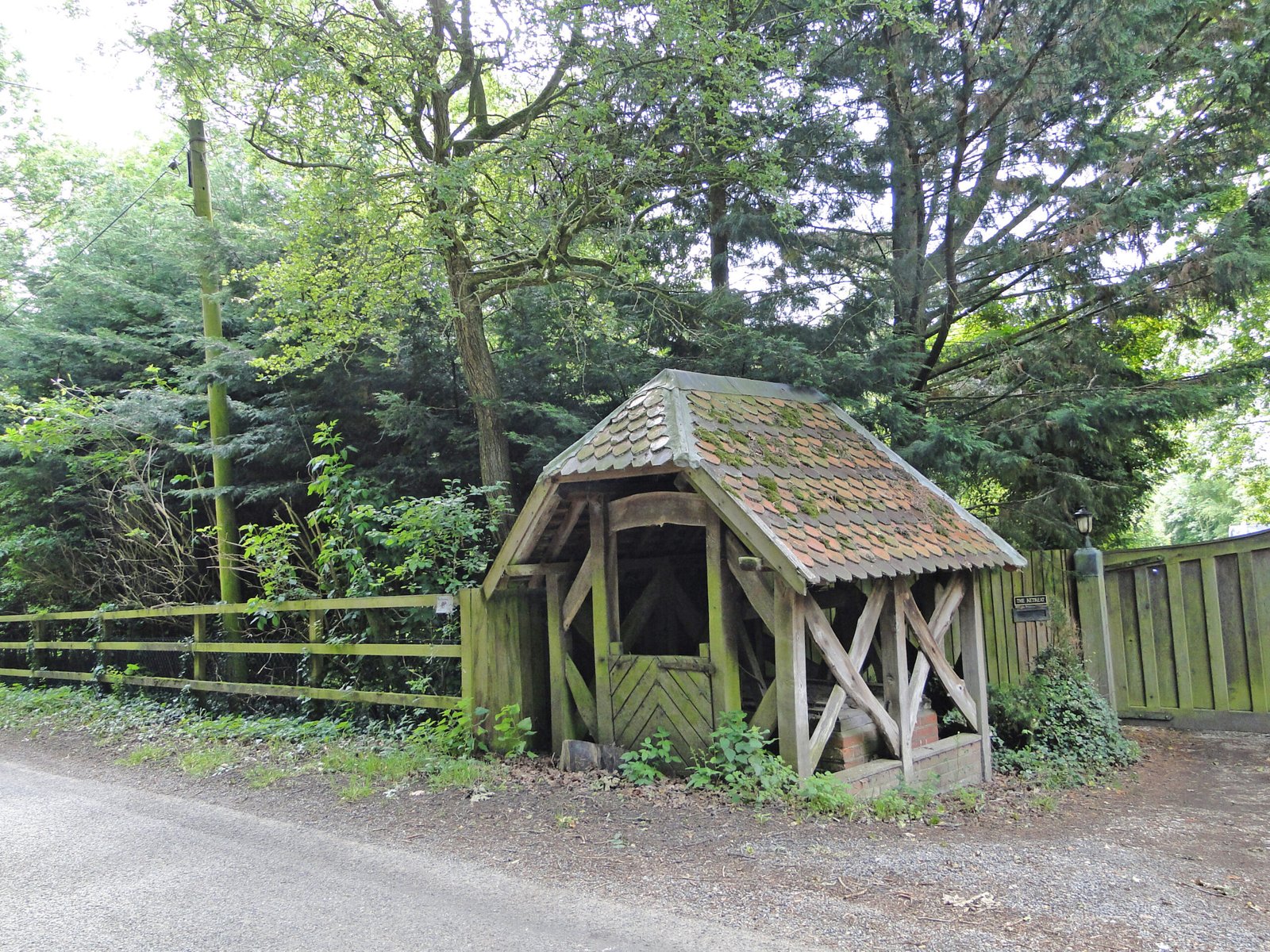
The old village well at Tacolneston, South Norfolk, under its oak and pantile shelter, with the pump just inside the doors, June 2019. Photo: Adrian S Pye via Geograph, CC BY-SA 2.0.