Carrstone: west Norfolk’s gingerbread stone
Carrstone is a rust-brown sandstone found in Norfolk walls only along the western edge of the county, from Hunstanton south to the Fen edge. On a carrstone house, check the mortar.

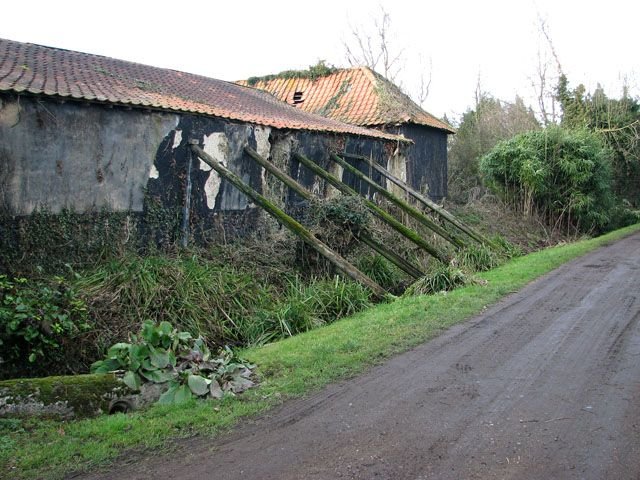
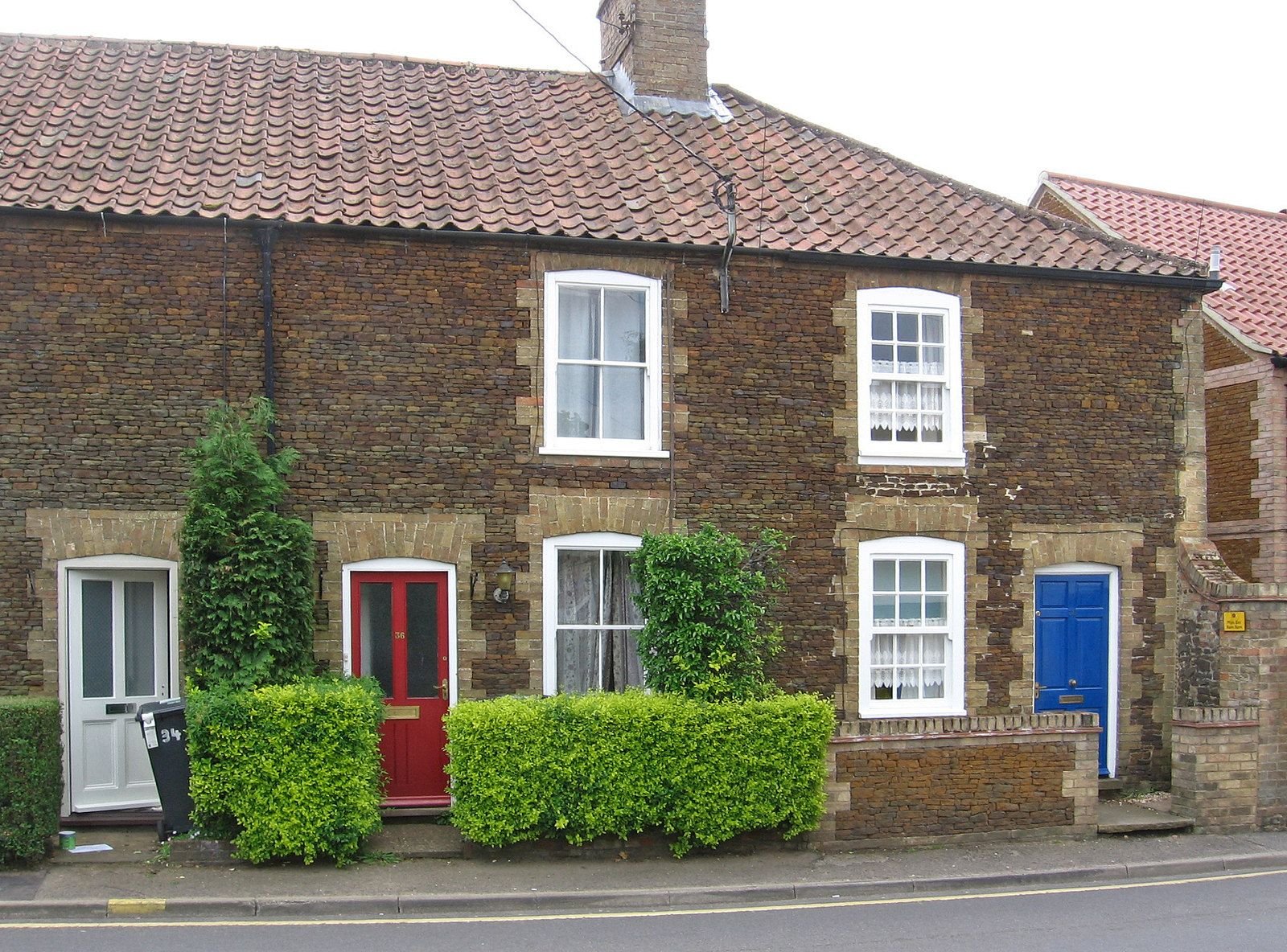
Downham Market is sometimes called the Gingerbread Town, because so many of its buildings are carrstone, a rust-brown sandstone that turns up in Norfolk walls only along the western edge of the county, from Hunstanton south to the Fen edge. Many older houses, barns and garden walls in that strip are built of it, and if you are buying one, the thing to check is the mortar.
What carrstone is
The British Geological Survey records the rock as the Carstone Formation, laid down in the Albian stage of the Lower Cretaceous, and describes it as a greenish-brown sandstone that goes rusty when weathered, cross-bedded and ferruginous, meaning rich in iron, and pebbly in places, especially at its base. Carrstone and carstone are both in use; the BGS spells it with one r.
It is a thin bed. The BGS gives its usual thickness as up to about 5 metres, with a maximum of 18.9 metres proved in a borehole at Hunstanton. In southern and central Norfolk it lies under the Gault clay and in the north under the Hunstanton chalk, which is why it reaches the surface, and the walls, only in the west.
Where you find it
The outcrop runs south from Hunstanton. The borough council’s character statement for Hunstanton notes that the line of the cliffs carries on inland as an escarpment at Snettisham and Dersingham. Snettisham’s neighbourhood plan, in force since November 2018, calls the parish the major source of carrstone, says the stone gives many of its houses their gingerbread look, and requires new development to use local materials such as carrstone.
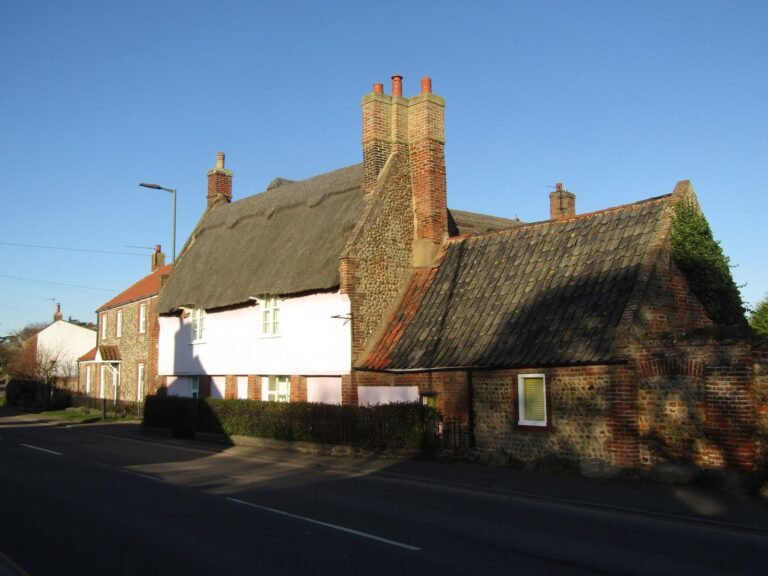
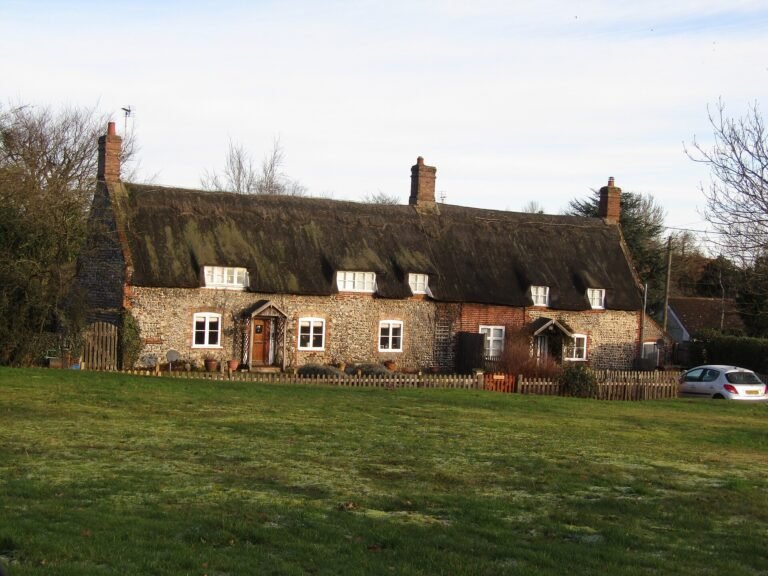
Listed buildings show how far the tradition runs and how long it lasted. Hunstanton Hall, listed Grade I, has carrstone in its 17th-century wings, and the walls of its entrance courtyard, dated 1623, are coursed, galleted carrstone. Ingoldisthorpe Hall, built in 1757 and listed Grade II*, has a red-brick centre and carrstone wings. Norfolk House at Heacham, late 18th century, is carrstone and split flint with brick dressings. At Snettisham a pair of cottages on Hall Road from about 1840 are rubble carrstone with brick dressings, and the old gate lodge at 44 Lynn Road, dated 1867, is carrstone with gault brick. The Sandringham and West Newton primary school, built in 1881 for the Prince of Wales, is mainly carrstone with brick quoins. Downham Market Town Hall, of 1887, is white brick with small carrstone panels.
Moving to Norfolk this year?
Get the free Norfolk Relocation Pack: all 46 towns we cover on one table, on price, council tax, population, trains and distance to Norwich, plus a week-by-week move checklist. The download appears here as soon as you enter your email.
Unsubscribe any time.
How it is laid
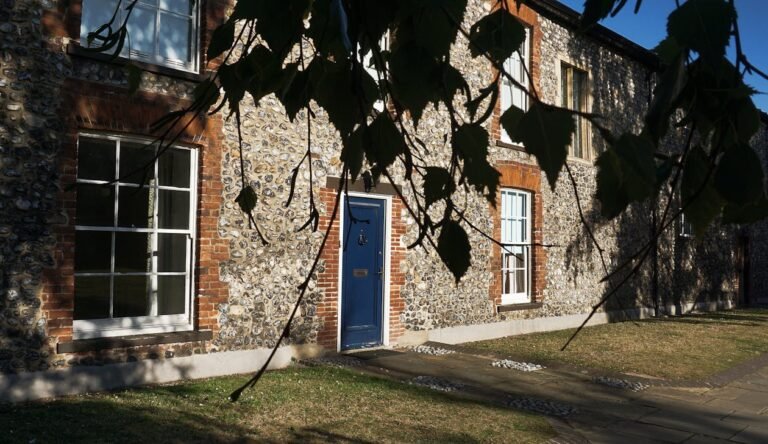
Hunstanton’s character statement describes carrstone there as usually squared and crudely coursed, and sometimes laid as rubble. Brick often frames the corners and openings. Finely cut ashlar is rarer, though Snettisham’s county primary school of 1895 is built of it, with Bath stone dressings.
Many older carrstone walls are galleted. Small chips of stone were pressed into the mortar between the blocks while it was still wet. The borough council lists galleting among the traditional materials of the Old Hunstanton conservation area, alongside carrstone, red brick and knapped flint. Repointing that rakes the chips out removes part of the original wall.
The Hunstanton cliffs
The cliffs at Hunstanton, one of the Geological Society’s 100 Great Geosites, show the stone in section. The base is red-brown carstone, sandstone and pebbly sandstone laid down in a shallow sea. Above it sits the Hunstanton Red Rock, which is chalk coloured red by iron pigment, and above that the white chalk. The BGS notes that the top 10 metres of the Carstone are well exposed in the cliffs between the Esplanade and St Edmund’s Point.
Looking after a carrstone wall
The pointing must be lime, not cement. The Society for the Protection of Ancient Buildings (SPAB) explains that lime mortar is more permeable than the stone, so the joints weather and are renewed while the stone survives. Repoint in hard cement and the stones become the most permeable part of the wall and take the frost and salt damage instead.
SPAB’s advice on doing the work is specific. Repoint only when the mortar has weathered back to a depth equal to the width of the joint, or is loose. Match the old mortar in colour, texture and strength, using lime, and finish flush or nearly flush with the face; SPAB counts weather-struck, bucket-handle and ribbon joints as typical of cement work. Where cement pointing already holds well it may be best left, and any removal should start with a trial patch using hand tools, because power tools in the wrong hands damage the edges of the stone. Our directory lists masons who work with carrstone.
New stone is still produced locally. Middleton Aggregates at Blackborough End, near King’s Lynn, sells several grades of carrstone, including one with reduced fines that it recommends for walling.
Before you buy, look at the joints. SPAB describes cement-rich mortar as very hard, smooth and dull grey, where lime mortar is weaker, more open in texture and lighter in colour. If a carrstone elevation has been repointed in grey cement, ask when and by whom, and name the material when you brief a Level 3 surveyor.
Is carrstone the same as ironstone?
Carrstone is sometimes called ironstone, after the iron that colours it. Geologically it is a ferruginous sandstone, which the British Geological Survey records as the Carstone Formation.
Can I repoint a carrstone wall with cement mortar?
No. SPAB advises that hard cement pointing makes the stones wear away in place of the joints. Use a lime mortar matched to the existing pointing in colour, texture and strength, finished flush or nearly flush.
Where can I still get carrstone for repair work?
Middleton Aggregates at Blackborough End, near King’s Lynn, produces carrstone in several grades, including a walling grade. Snettisham’s neighbourhood plan describes the parish as the major source of the stone. For work on a listed or older wall, use a mason who has laid carrstone before.
Planning a move to Norfolk?
Our guides to hiring the firms a move needs.
We earn no commission on these links. Paid placements are sold separately and always labelled. See our advertising and disclosure page.