All practical guides
Home insurance in Norfolk: thatched, listed, flood and coastal homes
The average UK household paid £383 for buildings and contents cover between April and June 2026. Thatch, a listing, a flood zone or an eroding coast changes who will insure a Norfolk house.

The average UK household paid £383 for combined buildings and contents insurance between April and June 2026, on the Association of British Insurers’ figures. Many Norfolk houses will not be quoted on those terms. The county has around 11,000 listed buildings, thatched roofs, flood zones across the Broads and the Fens, coastal erosion at Happisburgh and Hemsby, and at the 2021 Census 17.3% of its households used oil heating alone, against 3.5% across England and Wales. Each of those changes who will insure a house and on what conditions.
What cover costs
The ABI tracker counts the prices people paid for policies they bought, so it is a better guide than quotes. In the second quarter of 2026 a combined policy averaged £383, 2% less than a year earlier. Buildings-only cover averaged £309 and contents-only £118.
Those are UK averages. Nobody publishes a Norfolk figure, or one for thatched or listed homes, and we do not collect quotes ourselves. A thatched, listed or flood-zone house is priced on its own details, and some insurers will not quote at all.
| Factor | Mainstream insurer | Specialist (thatch / flood / coastal) | Broker |
|---|---|---|---|
| How you buy | Direct or through a comparison site | Direct or through a broker | The broker takes the property to the insurers it deals with |
| Thatched roof | Often declined | What the policy is written for | Sourced on request |
| Flood Re | If the home is eligible | If the home is eligible | If the home is eligible |
| Suits | Standard modern build, no flood risk | Thatched, listed, coastal, flood zone | Anything complex; several properties |
For a modern house in a Norwich suburb with no flood history, an hour on Compare the Market or MoneySupermarket is the right place to start. The comparison sites price standard risks. Thatch, a listing or a flood zone falls outside their assumptions, and that is where a cheap quote tends to be wrong.
Thatched houses
Thatch is the feature most likely to rule out a mainstream insurer: many decline it or add a large loading. If you are buying a thatched house, a specialist policy is almost always worth the extra over a reluctant mainstream quote. Specialist insurers set conditions, and a claim can be disputed if you have not met them.
Everywhen (formerly Towergate), a broker with its own thatch team, lists among its conditions an inspection by a thatcher within the last 10 years, chimneys swept every year, an electrical inspection within 10 years and no naked flames in the loft. Some insurers also want spark arrestors on chimneys close to the thatch and a HETAS-certified installation for any wood burner. Read the conditions on your own policy and keep the receipts.
The buildings sum insured must cover a full rebuild including the thatch, which is slow, skilled work. Do not accept a generic insurer estimate. Some specialists will arrange a yearly thermal image of the chimneys, which picks up flue cracks and hot spots before they start a fire. If a re-thatch is planned, ask what cover runs while the roof is open.
Own, or about to own, a Norfolk home?
Get the newsletter for occasional Norfolk updates: our area guides, practical property reads and the county news worth knowing.
Occasional emails. Unsubscribe any time.
Listed houses
A listed house has to be rebuilt like for like, in matching materials, so its rebuild cost is not the figure an online calculator gives. The Building Cost Information Service (BCIS) says its own rebuild calculator is not appropriate for most listed buildings, or for most built before 1800. Grade II* and Grade I houses usually go to a specialist. Lycetts, a rural and private-client broker, is one firm that arranges specialist cover for listed houses; Everywhen is the thatch example above. These are illustrative examples, not paid recommendations.
Flood cover and Flood Re
The Environment Agency’s flood maps show risk across the Broads, the lower Wensum valley, the Fens and the Gorleston to Yarmouth corridor, and those maps affect what insurers charge.
Flood Re is a reinsurance scheme that sits behind your insurer. You do not apply to it. When an insurer covers an eligible home, it can pass the flood part of the risk to Flood Re for a set premium that depends on the council tax band, which keeps the flood element of your premium down. Flood claims on those policies carry a fixed excess of £250.
Flood Re’s eligibility rules say the home must be:
- built before 1 January 2009 (a home demolished and rebuilt keeps its eligibility if the original was built before then);
- in domestic council tax band A to H, which in England is every band;
- used for private residential purposes, with the policyholder or their immediate family living there;
- a single home, or a building of two or three homes;
- insured by one or more individuals, on an individual policy or premium.
Flood Re lists second homes, holiday homes and buy-to-let homes as eligible when they meet all of its criteria. Properties used to earn commercial income are excluded, so a holiday let run as a business is likely to fall outside it. Ask the insurer whether the policy is ceded to Flood Re.
If a mainstream quote for a flood-zone house looks unreasonably high, ask whether Flood Re is being used. Some quote systems miss it.
The scheme is temporary. Flood Re is due to close in 2039, and it publishes a transition plan every five years on how flood insurance should work after that. Anyone buying a flood-zone house now may still own it in 2039. The ABI’s flood insurance guidance sets out the industry’s account of how cover works in flood-risk areas.
The Environment Agency replaced its national flood risk data on 28 January 2025. The gov.uk service for checking long-term flood risk now shows risk from rivers, the sea and surface water, likely flood depths and, for the first time, future risk allowing for climate change. The risk for some homes changed. Check the address before you buy and again before each renewal.
Coastal erosion
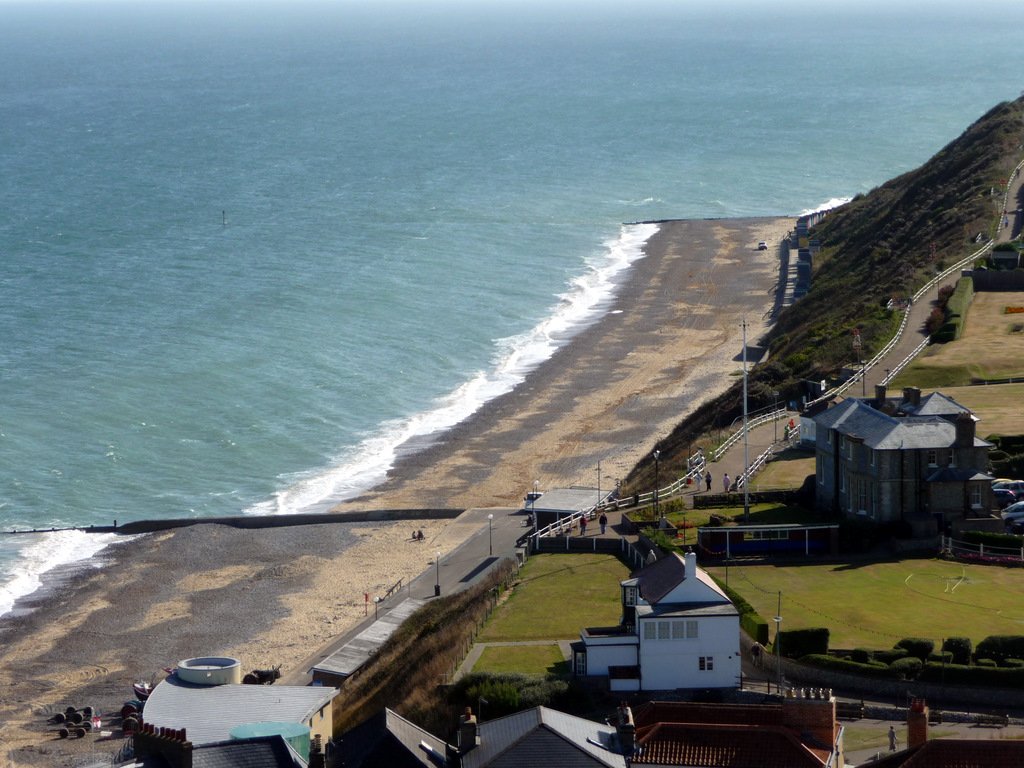
On frontages the Shoreline Management Plan does not plan to defend (managed realignment at Happisburgh and Hemsby, and no active intervention on undefended cliff stretches), insurers decline cover or exclude erosion-related damage. Buildings insurance is hard to secure in the zones marked “no active intervention”. Insurers do not cover the loss of land, only structural damage, and many decline new policies altogether in the affected stretches, particularly Happisburgh, parts of Hemsby and specific cliff stretches around Trimingham and Overstrand.
- Ask the seller for their current insurer and policy number. Existing policies sometimes transfer.
- Contact specialist coastal-property brokers before you offer on the property, not after.
- Expect higher excesses and lower contents limits.
- Do not count on a council buy-out scheme. They exist only in narrow form.
- Check the lender’s position at the same time: many mainstream mortgage lenders also decline these zones.
Our Norfolk coastal erosion buyer’s guide covers which stretches are affected.
Oil tanks
At the 2021 Census 69,985 Norfolk households heated with oil alone, and a leaking tank is a pollution problem as well as a repair. Some insurers cap environmental liability cover; specialist policies include it.
Gov.uk’s rules for storing oil at home say a domestic tank needs a bund, a second container holding 110% of the tank’s capacity, if it is within 10 metres of a river, stream, lake or coastal water, within 50 metres of a well, borehole or spring, where a spill could run into an open drain, or if it holds more than 2,500 litres. Ask the seller whether the tank is bunded and when it was installed.
If oil escapes, the gov.uk advice includes contacting your insurer. Before you buy the policy, check its limit for lost oil and for pollution clean-up. Our oil heating guide covers the tank rules in more detail.
Where buyers under-insure
The first mistake to avoid is insuring the market value. The sum insured should be the cost of rebuilding. For a modern house that is often less than the sale price; for a listed cottage that needs lime render, lead valleys and specialist roofing it can be more. The BCIS online calculator will not give a figure for a house built before 1720. For anything listed, old or unusual, pay a RICS chartered surveyor for a rebuild cost assessment.
A thatched garden store or outbuilding counts as a thatched structure under most policies. Declare it.
If earlier work on a listed house was done without listed building consent, the insurer may refuse a claim linked to that work. Ask your conveyancer to check at survey stage.
Contents limits get set too low. A farmhouse kitchen with a range cooker and a dresser, garden machinery and a workshop full of tools all add up. List them and check they are covered, including anything kept in outbuildings.
When to use a specialist broker
Most Norfolk homes are well served by mainstream insurers. Use a specialist broker if the property has:
- a thatched roof;
- Grade II* or Grade I listing;
- Environment Agency flood zone 2 or 3 classification;
- a position in a coastal erosion “no active intervention” zone;
- an annexe, outbuildings or stabling of significant value;
- an oil tank within 10 metres of a watercourse or surface drain;
- self-build or part-converted status, such as a barn conversion still in progress;
- any holiday-let or short-let use alongside your main home.
Many specialist brokers are paid commission by the insurer and charge you nothing directly. Others charge an arrangement fee. Either is reasonable if it gets you the right policy. Check any broker or insurer on the Financial Services Register at register.fca.org.uk before you pay.
The rest of the move
How we produced this guide
The premium figures are from the ABI’s Property Insurance Premium Tracker for April to June 2026, published on 3 August 2026. Flood Re’s eligibility rules, excess and closing date are from Flood Re’s own website. The bund rules are from gov.uk’s guidance on storing oil at home, and the flood data changes from the Environment Agency’s announcement of January 2025. Heating figures are from the 2021 Census (table TS046) and the listed building count from Historic England. The rebuild calculator limits are from BCIS, and the conditions quoted for a thatch policy are from Everywhen’s website. Coastal policy zones are from the published Shoreline Management Plan documents. We do not collect insurance quotes. We update this guide quarterly. See our methodology page for source links.
Frequently asked questions
How much is home insurance for a thatched cottage in Norfolk?
There is no published average. Specialist insurers quote each thatched house on its roof, chimneys, heating and rebuild cost, and mainstream insurers often decline thatch or load the premium heavily. For comparison, the ABI’s UK average for combined buildings and contents cover was £383 in the second quarter of 2026.
Can I get home insurance in a Norfolk flood zone?
Usually, yes. Flood Re keeps down the flood element of the premium on eligible homes built before 1 January 2009, and flood claims on those policies carry a fixed £250 excess. Homes outside the scheme, such as newer builds, can usually be placed by a specialist broker, but at a higher premium.
Do I need specialist insurance for a Norfolk listed building?
Often, particularly for Grade II* or Grade I. A listed house must be rebuilt like for like, and BCIS says its online rebuild calculator is not appropriate for most listed buildings, so get a surveyor’s rebuild figure. A Grade II house with a tiled roof can sometimes be insured mainstream if you declare the listing.
What happens if my oil tank leaks in Norfolk?
Gov.uk’s advice after a spill includes contacting your insurer, so check the policy’s limit for lost oil and pollution clean-up before you need it. A tank within 10 metres of inland or coastal water, or 50 metres of a well or borehole, must have a bund.
Can I insure a coastal erosion zone property in Norfolk?
It depends on the Shoreline Management Plan zone. Properties in “hold the line” zones are usually mortgageable and insurable through specialist channels. Properties on frontages with no plan to hold the line (Happisburgh and Hemsby, which are managed realignment, and the undefended cliffs between Overstrand and Mundesley) are increasingly hard to insure, so talk to specialist coastal-property brokers before you offer.
Is Flood Re available for second homes or holiday lets in Norfolk?
Flood Re lists second homes and holiday homes as eligible if they meet all its criteria, which include being used for private residential purposes. Properties used to earn commercial income are excluded, as are homes built after 1 January 2009. Ask the insurer whether your policy is ceded to Flood Re.
How do I get a Norfolk listed-property rebuild-cost assessment?
Commission a rebuild cost assessment from a RICS chartered surveyor with listed-building experience. It sets out the materials, methods and time needed for like-for-like reconstruction, and insurers accept it for the sum insured. The free BCIS online calculator will not give a figure for a house built before 1720.
Should I bundle buildings and contents insurance in Norfolk?
Usually, because one insurer then handles a claim that hits both, such as flood damage to a fitted kitchen, and nothing falls between two policies. The exception is a non-standard building such as a thatched house, where a specialist buildings policy plus mainstream contents cover can work.
What is the typical excess on Norfolk home insurance?
Flood claims on a policy ceded to Flood Re carry a fixed £250 excess. Other excesses are set by each insurer and are usually higher on thatched, listed and flood-zone specialist policies, so ask for the general excess and the flood excess separately.
A Norfolk insurance broker? See how to be featured on this guide.
Data sources: Association of British Insurers (ABI), Flood Re, Environment Agency, gov.uk, BCIS, ONS 2021 Census, Historic England, Shoreline Management Plan. Premium figures for April to June 2026. Author: James Ward, Property and Money Editor.
Last reviewed
Planning a move to Norfolk?
Our guides to hiring the firms a move needs.
We earn no commission on these links. Paid placements are sold separately and always labelled. See our advertising and disclosure page.