All area guides
Living in King’s Lynn
King's Lynn is the one large Norfolk town with a direct train to London King's Cross, and its houses are among the cheapest in the county.

King’s Lynn is the one large Norfolk town with a direct train to London King’s Cross, and its houses are among the cheapest in the county. Standard sales at King’s Lynn addresses had a median of £190,000 in the year to June 2026. The fastest train reaches King’s Cross in 1 hour 47 minutes, and most take 1 hour 51 to 1 hour 58. Norwich is about an hour east on the A47.
Where it is: about 39 miles west of Norwich city centre as the crow flies, in the borough of King’s Lynn and West Norfolk, postcode PE30.
Population 47,615 (2021 Census, built-up area) · King’s Cross from 1h 47m · Roads A47, A10, A149 · Sandringham 8 miles
Buy in King’s Lynn if you need London two or three days a week and want a house you can walk to the station from.
The Victorian streets around The Walks are a few minutes’ walk from the station, and the same trains run to Cambridge. Families get a choice of secondaries, including one sixth form rated Good in every area. Do not buy here if your working life is in Norwich: the drive is an hour, the bus over two. And if you will depend on the Queen Elizabeth Hospital, know that its replacement is not due to open until 2033.
Where to live in King’s Lynn
The town splits into distinct areas, and the prices split with them. The figures below are HM Land Registry medians for standard sales in the 12 months to June 2026.
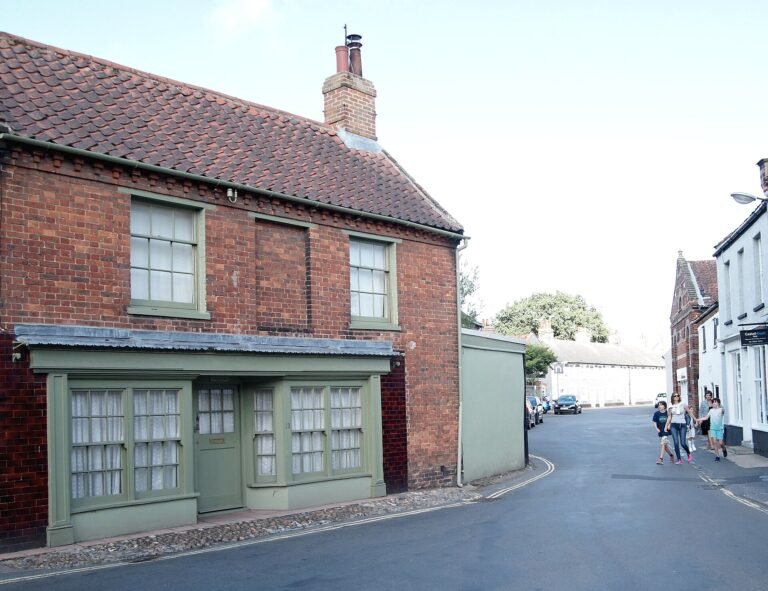
The old town runs along the Great Ouse between the Tuesday Market Place and the Saturday Market Place: Queen Street, King Street, Nelson Street and the lanes between them. It has the Georgian merchants’ houses and the medieval buildings. Houses there rarely reach the market. In the year to June 2026 the Land Registry recorded no standard house sale on Queen Street, King Street or Nelson Street, only two flats, at £180,000 and £90,000. If you want one, register with the agents and wait.
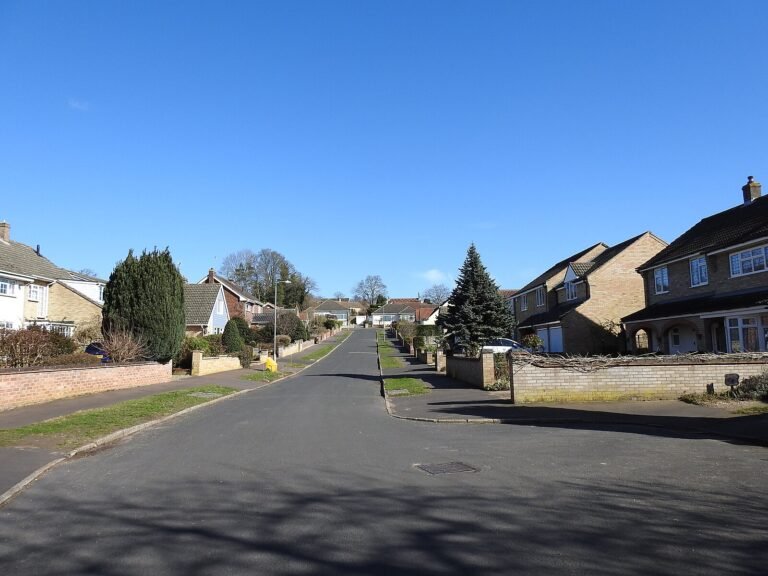
Around The Walks, the 42-acre (17-hectare) park in the middle of town, the stock is mostly Victorian terraces. Terraced houses across the town had a median of £171,000. The park, the town centre and the station are all within walking distance, which is why these streets suit anyone commuting to London.
Gaywood, east of the centre, is the established family area. It has the Queen Elizabeth Hospital, King Edward VII Academy on Gaywood Road and Springwood High School on Queensway. Its 53 sales had a median of £235,000.
South Wootton, on the northern edge, is a separate parish with larger houses. Its 71 sales had a median of £322,500, and two thirds of them were detached.
West Winch, on the southern edge, is where the town will grow. Of its 42 sales, 36 were detached houses, with an overall median of £300,000. The West Winch Growth Area is planned for up to 4,000 homes. Norfolk County Council appointed Costain in June 2026 to design and build the West Winch Housing Access Road, a 1.5-mile link between the A47 and the A10 with new roundabouts, a cycle path and just under a mile of dualling on the A47. Construction is due to start in 2027, after gas mains are moved, and the whole project is costed at £122 million. Buyers of new homes there will get choice for years. People already living on the A10 will get the construction traffic first.
Property prices
HM Land Registry recorded 331 standard sales at King’s Lynn addresses with no separate village or suburb named in the year to June 2026. The median was £190,000 and the mean £202,814. By type:
| Property type | Median price | Sales |
|---|---|---|
| Detached | £299,995 | 47 |
| Semi-detached | £225,000 | 102 |
| Terraced | £171,000 | 142 |
| Flat | £105,000 | 40 |
For the borough as a whole, the UK House Price Index put the King’s Lynn and West Norfolk average at £265,715 in July 2026, up 3.0% on a year earlier. The borough figure includes the coast villages from Heacham to Snettisham and is adjusted for the mix of homes sold, so it will not match the town medians above.
Thinking about moving to King’s Lynn?
Get the free Norfolk Relocation Pack: King’s Lynn and the other 45 towns we cover on one table, on price, council tax, population, trains and distance to Norwich, plus a week-by-week move checklist. The download appears here as soon as you enter your email.
Unsubscribe any time.
Council tax
The borough’s average Band D bill for 2026-27 is £2,430.13. Norfolk County Council takes £1,843.38 of that and the police £344.79. The borough council’s share is £157.44, of which £67.54 is passed on to the internal drainage boards, which manage water levels on the low-lying land. The exact bill depends on the parish, and the borough council’s website gives it by postcode.
Schools
Primary choices vary more than the secondary ones. Whitefriars Church of England Primary Academy, on Whitefriars Road, was rated Outstanding in every area in May 2024. St Martha’s Catholic Primary kept its Good rating in January 2024. Gaywood Primary had one of Ofsted’s new report-card inspections in January 2026 and was judged at the expected standard in all seven areas. For admissions and catchments, see our Norfolk schools guide.
There are three state secondaries in the town. King Edward VII Academy, part of the Inspiration Trust, was rated Good in every area, including its sixth form, in October 2024. Springwood High School in Gaywood kept its Good rating in November 2022 and also has a sixth form. King’s Lynn Academy takes pupils aged 11 to 16. At its June 2026 inspection it met the expected standard in five areas, and achievement was judged to need attention.
The College of West Anglia is the main further education college, with vocational courses, apprenticeships and some degree-level study. For independent schools, families look to the wider area or Norwich. Downham Market Academy, in Downham Market, is another option to the south.
Getting around
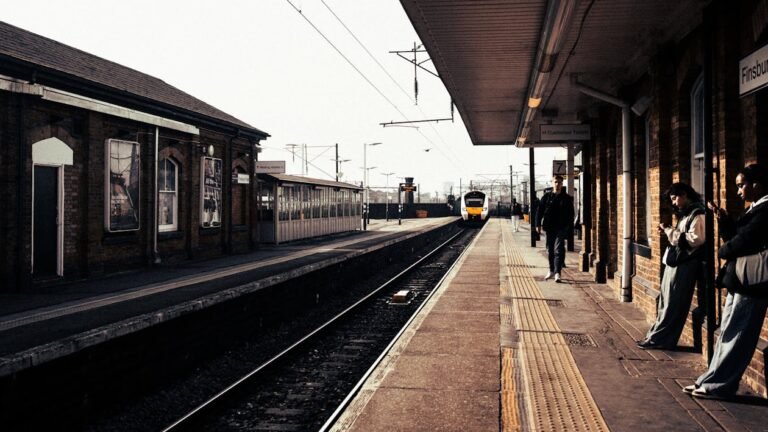
Great Northern runs direct trains from King’s Lynn to London King’s Cross via Ely and Cambridge. On a weekday the first leaves at 04:45. Trains run every half hour until 08:41 and hourly through the middle of the day, and the morning trains take between 1 hour 51 minutes and 1 hour 58 minutes. Coming back is quicker in the middle of the day: trains from King’s Cross take 1 hour 45 minutes until mid-afternoon and 1 hour 54 minutes in the evening peak. The last direct train home leaves King’s Cross at 22:48. Downham Market, two stops south, is on the same line.
By road, the A47 runs east to Norwich, about an hour away, and west to Peterborough and the A1. The A10 goes south to Ely and Cambridge, and the A149 north to Hunstanton and the coast.
Buses to Norwich are slow. First’s Excel service runs roughly every half hour from the Transport Interchange through Swaffham and Dereham, and the 08:25 is due at Norwich bus station at 10:30. Lynx, which is based in the town, runs the routes to Hunstanton, Fakenham, Wisbech and the villages, and Go to Town runs the town circulars to North Lynn, Gaywood and South Wootton.
Shops, work and the hospital
King’s Lynn is the main shopping town for west Norfolk. The Vancouver Quarter shopping centre has the chains. The supermarkets are Tesco, Sainsbury’s, Asda at South Wootton, Morrisons on Coburg Street, Aldi and Lidl. The weekly market is on Tuesdays on the Tuesday Market Place. The Merchants Market, with food and craft stalls, takes over the same square on the last Saturday of each month from April to September.
The town has large industrial employers. Associated British Ports runs the Port of King’s Lynn on the Great Ouse. Palm Paper’s mill at Saddlebow is converting its paper machine from newsprint to the paper used for cardboard boxes, with production due to start in the first quarter of 2027. The Queen Elizabeth Hospital and the College of West Anglia are two of the largest employers.
Anyone relying on the Queen Elizabeth Hospital should know its position. The main building, opened in 1980, was built with reinforced autoclaved aerated concrete (RAAC) planks, and the hospital runs a rolling programme of steel and timber props across the first floor. A new hospital is being built on the same site. A 1,335-space multi-storey car park comes first, because the new building will go on the current car park. The trust expects work on the main building to begin in 2028 and the new hospital to take patients in 2033. Until then the QEH remains the district general hospital, with A&E and maternity.
For evenings out, the Alive Corn Exchange has a cinema, live music, comedy and theatre. There is also the King’s Lynn Arts Centre, and the King’s Lynn Festival runs every year.
The old port
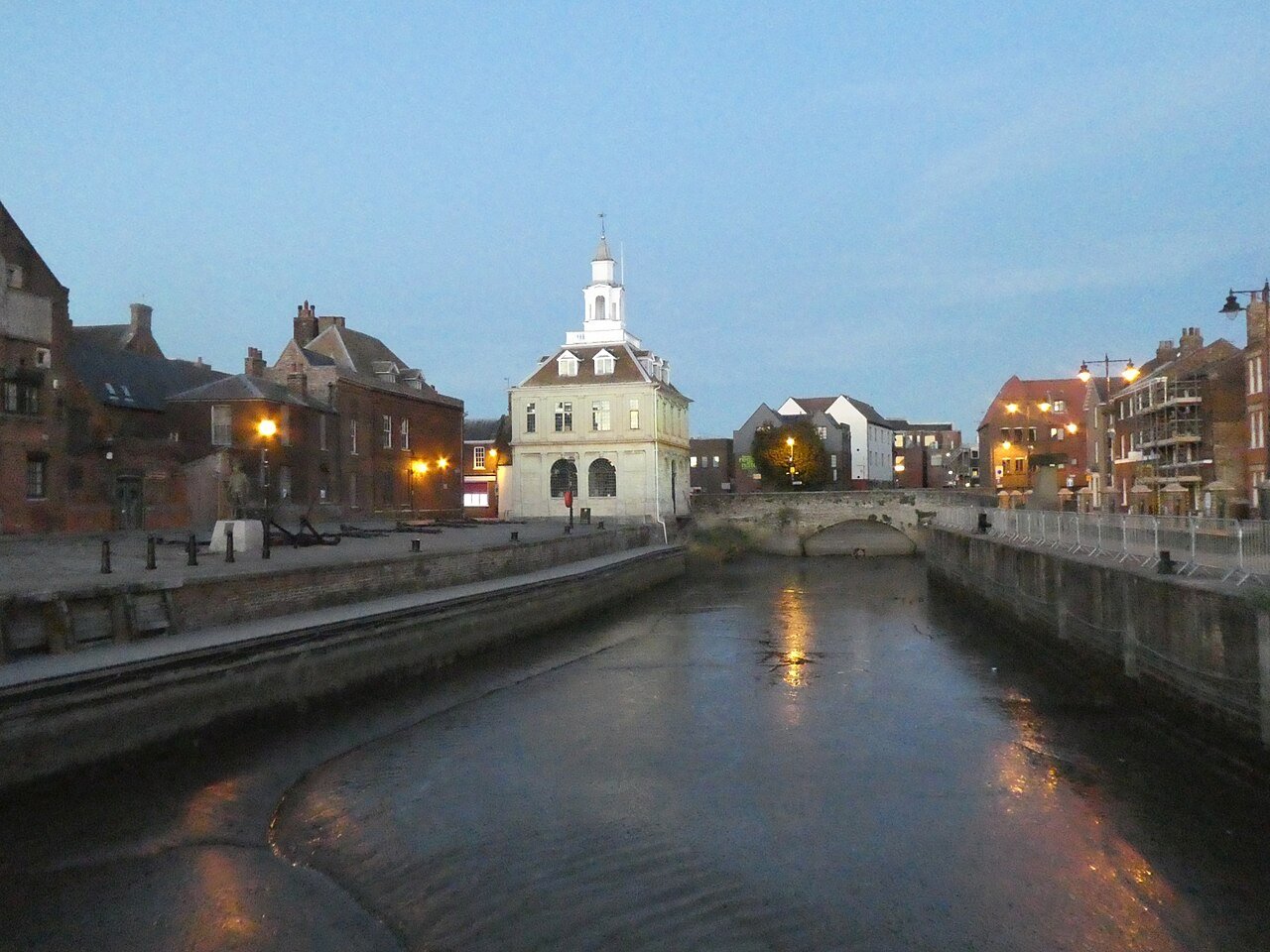
King’s Lynn was one of England’s main ports in the Middle Ages, and much of the building from that time survives: the Custom House of 1683 on the Purfleet, St Margaret’s Church (founded in the 12th century), the Hanseatic Warehouse and the Red Mount Chapel. The Red Mount, from the 15th century, stands in the middle of The Walks. True’s Yard Fisherfolk Museum is in the last remaining fishermen’s cottages in the town.
Sandringham, the royal estate, is about 8 miles north-east. The Wash and RSPB Snettisham are further up the same coast. Hunstanton is about 30 minutes north, and because it faces west across the Wash it is the one East Anglian resort where the sun sets over the sea.
Broadband
There is no town-only figure. Across King’s Lynn and West Norfolk, thinkbroadband’s September 2026 data shows 96.90% of premises can get superfast speeds of 30 Mbps or more and 74.73% can get full fibre. Check the exact address on Ofcom’s broadband checker before you buy.
To see how the town compares with the city, read our Norwich vs King’s Lynn comparison. Nearby, Downham Market is smaller and on the same railway, and Hunstanton is the nearest seaside town. All our town guides are on the area guides page.
Plan the move
Dates to watch
- Early 2027: Palm Paper’s converted machine at Saddlebow is due to start producing.
- 2027: construction of the West Winch Housing Access Road is due to start, and with it the first phases of the West Winch housing.
- 2028 and 2033: work on the main building of the new Queen Elizabeth Hospital is expected to begin in 2028, with the hospital open to patients in 2033.
How we produced this guide
Town and suburb prices are from HM Land Registry Price Paid Data, standard sales only, for the 12 months to June 2026, grouped by the locality in each registered address. The borough average is from the UK House Price Index, July 2026. Population is the 2021 Census figure for the King’s Lynn built-up area. Rents are from the ONS. School details are from Ofsted inspection reports. Train times are from the published timetable for Monday 28 September 2026, and bus times from bustimes.org. Council tax is from the borough council’s 2026-27 explanatory notes, and broadband coverage from thinkbroadband. Drive times are typical times on the main roads. We update this guide quarterly. See our methodology page for source links.
Frequently asked questions
Is King’s Lynn a good place to live?
For London commuters and buyers on a budget, yes. It has a direct King’s Cross line, houses at a median of £190,000 and a district hospital. The drawbacks are an hour’s drive to Norwich and a hospital that will not be replaced until 2033.
What is the average house price in King’s Lynn?
The median of 331 standard sales at King’s Lynn addresses in the year to June 2026 was £190,000. Terraced houses had a median of £171,000 and detached houses £299,995. Gaywood (£235,000) and South Wootton (£322,500) cost more.
What are the schools like in King’s Lynn?
Whitefriars Church of England Primary Academy was rated Outstanding in May 2024. King Edward VII Academy was rated Good in every area, including its sixth form, in October 2024, and Springwood High School is also Good. King’s Lynn Academy’s June 2026 inspection found achievement needs attention.
Related guides
More guides
Data sources: HM Land Registry, ONS, Ofsted, Great Northern timetable, Borough Council of King’s Lynn and West Norfolk. Prices to June 2026; latest Ofsted inspections. Author: James Ward, Property and Money Editor.
Last reviewed
Still weighing it up? See how King's Lynn compares with Norwich on prices, schools, broadband and council tax, or answer five quick questions and get a shortlist of the Norfolk towns that fit you.
Planning a move to Norfolk?
Our guides to hiring the firms a move needs.
We earn no commission on these links. Paid placements are sold separately and always labelled. See our advertising and disclosure page.