Norfolk reed and the thatched roof
Norfolk reed is the trade name for water-reed thatch, not a guide to where it grew. Historic England puts imported reed at 97% of all reed now used in thatching.

“Norfolk reed” describes the material on a roof, not where it grew. It is the trade name for thatch made of water reed, Phragmites australis, and Historic England puts imported reed, from Eastern Europe and beyond, at 97% of all the reed now used in thatching. Reed is still cut in the Broads every winter, but a new Norfolk reed roof is more likely to have been grown abroad than on the Broads.
What Norfolk reed is
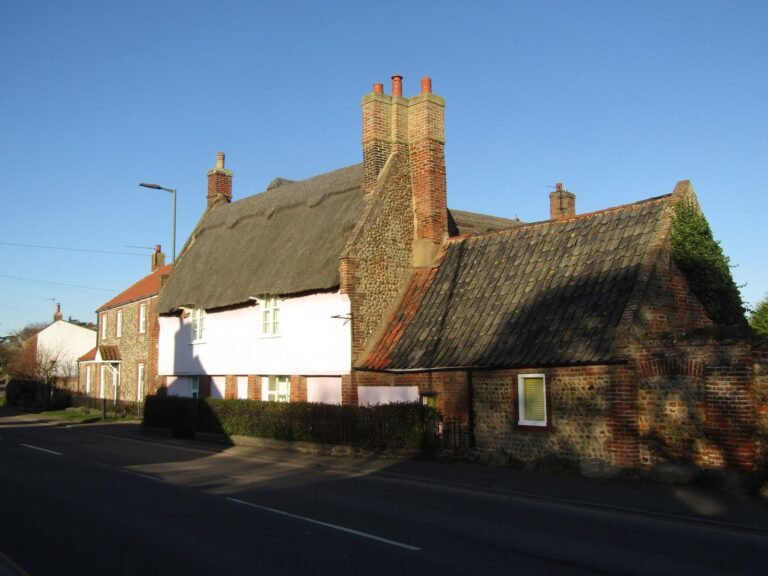
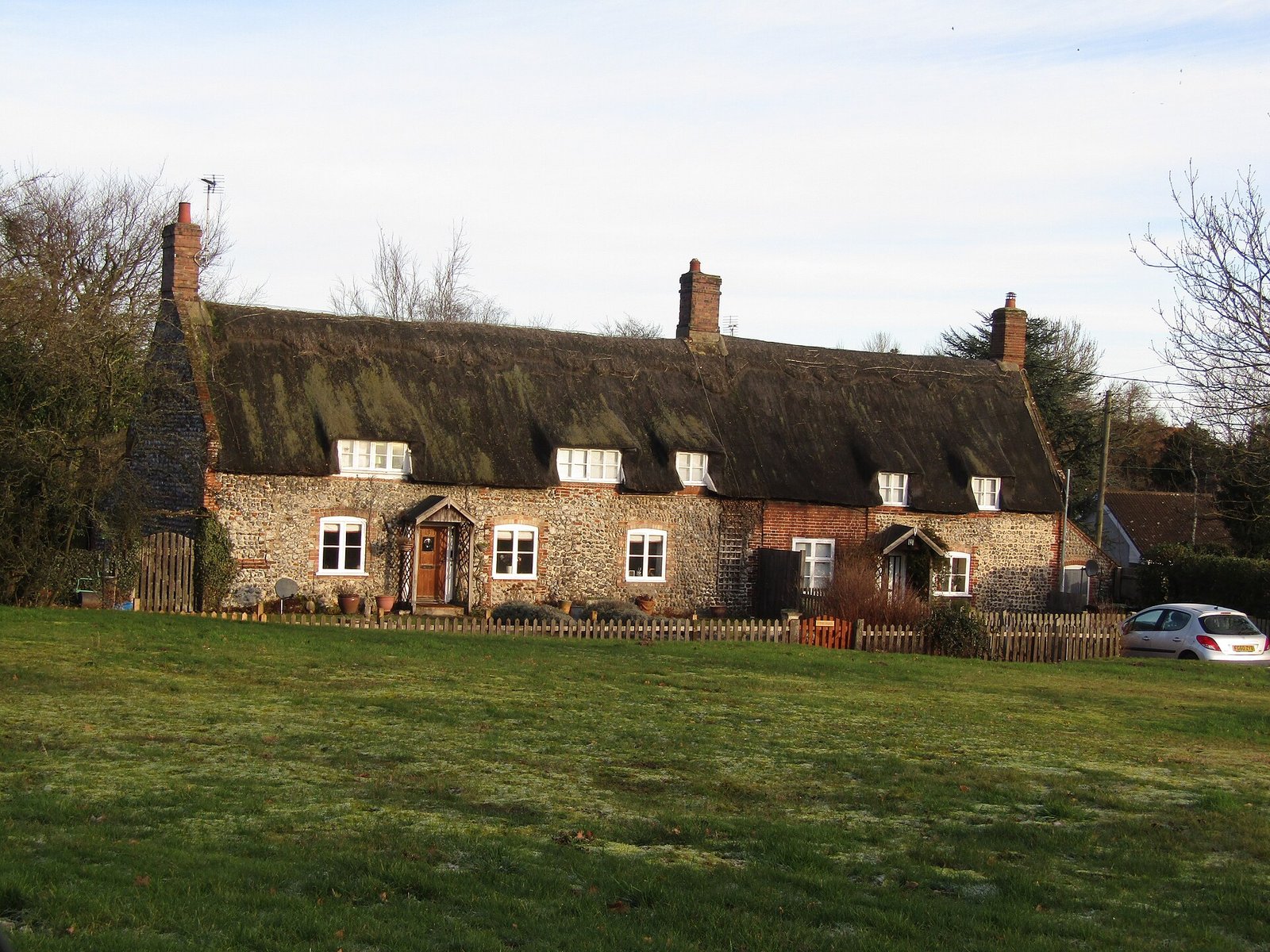
England has three main thatching materials. The Society for the Protection of Ancient Buildings (SPAB) lists long straw, which looks shaggy and has hazel stitching at the eaves and is found in southern, central and eastern England; combed wheat reed, which is straw laid like reed and belongs to the West Country; and water reed, known as Norfolk reed, which is traditional in wetland areas. A water-reed roof has a crisp, cropped surface. The East Anglia Master Thatchers Association explains that the eaves are dressed into place with a wooden bat called a leggett rather than cut with a knife, and the ridge is often made of sedge.
Historic England traces the local tradition to the Broads, where reed beds were managed for thatch after peat digging for fuel came to an end. It also records that after the Second World War the growth in imported water reed was matched by a decline in straw thatching, because many thatchers promoted reed to their clients as more durable and better value than straw. That is how some straw roofs came to be rethatched in reed, which matters if the house is listed.
Where the reed on a particular roof came from is a question for the thatcher who laid it. SPAB warns that imported reed varies in quality.
Cutting reed in the Broads
The Broads Reed and Sedge Cutters Association (Brasca) was formed in March 2003 to represent the self-employed cutters of the Norfolk and Suffolk Broads. Its members harvest reed every winter between December and April, with small pedestrian mowers, and move it off the marsh by boat or small trailer. Sedge for ridges is cut from mid-April to the end of September, each bed every three or four years. Brasca says most of the reed cut in Norfolk is sold to thatchers, and that Norfolk reed can last up to 70 years, longer than some imported reed, though that figure is the association’s own.
The trade came close to ending. The Broads Authority says that at the turn of this century only about a dozen cutters were left, more than half of them near or past retirement age. After the Authority commissioned a study in 2002 the numbers recovered, younger cutters came in, and the area of fen managed commercially has doubled from 200 to 400 hectares, about a quarter of the Broads fenland.
Moving to Norfolk this year?
Get the free Norfolk Relocation Pack: all 46 towns we cover on one table, on price, council tax, population, trains and distance to Norwich, plus a week-by-week move checklist. The download appears here as soon as you enter your email.
Unsubscribe any time.
Pitch, ridge and lifespan
Thatch needs a steep roof. North Norfolk District Council’s design guide notes that thatch was used on roofs pitched at 50 degrees or more, and that some steeply pitched pantile roofs in the district are where tiles have replaced thatch. It also points out that there are limits on using thatch near site boundaries and on attached properties, because of fire spread, so check with building control before planning a new thatched building or extension.
The main coat of a reed roof lasts a long time. The East Anglia Master Thatchers Association says many water-reed roofs are known to have lasted at least 70 years; SPAB, more cautiously, says straw and reed roofs may perform well for at least 30 years before rethatching is needed, which happens when the fixings come near the surface.
The ridge wears out first. SPAB says it will need renewing several times between rethatchings, typically every 10 to 15 years, and that re-ridging is the time to strip the thatch around the chimney and check the masonry for fire risk. Historic England notes that a flush ridge lasts as long as a raised block ridge and takes less material. Between times, SPAB recommends patching channels worn by rainwater and damage from birds, squirrels or wind, which can greatly extend the life of the roof; moss can be left.
When the coat is finished, the whole roof comes off. A straw roof can be renewed by fixing a new surface coat over the old base coats, which SPAB prefers for straw, but the Master Thatchers Association states that rethatching in water reed means removing all the existing thatch back to the roof timbers.
Owning a thatched house
Historic England counts about 25,000 listed thatched buildings in England, most of them in the South West, the South East and the East. Changing the thatching material on a listed building is a matter for listed building consent. Historic England’s guidance is that switching from long straw or combed wheat reed to water reed, where straw is the local tradition, could well harm the building’s significance and will need consent, and it advises applying at least two months before the work is due to start. The buying guide for period homes covers listing, surveys and insurance in more detail.
Fire is the risk to plan around. SPAB says most thatch fires are chimney-related, and that because thatch burns slowly, deaths are rare. Research funded by Historic England and NFU Mutual found that thatch can be set alight by sparks and embers thrown from the chimney, for instance when a bird’s nest in the flue catches, and by hot gases escaping through cracks in the stack. Historic England’s basic recommendation is that wood-burning and multi-fuel stoves should not be used in thatched buildings at all.
If a stove stays, Historic England lists the measures to take together: sweep the chimney regularly (one serving a stove burning wood daily may need sweeping four times a year), make sure the chimney pot is far enough above the thatch, fit a mesh bird guard, line the flue with a twin-walled stainless steel liner, and fit a stove pipe thermometer. The same research found that spark arrestors had little or no effect, and SPAB advises resisting pressure from insurers to fit them because they clog. SPAB also recommends a loft hatch of at least 900 by 600 mm for firefighters and any netting fixed so that it can be removed quickly.
Insurance for thatch is a specialist market, and policies can carry conditions on sweeping and stove use. SPAB’s advice line can suggest insurers and mortgage lenders who understand thatched buildings.
Does “Norfolk reed” mean the reed came from Norfolk?
No. It is the trade name for a water-reed roof. Historic England puts imported reed at 97% of all the reed used in thatching, so ask the thatcher where the reed came from if it matters to you.
How often does a thatched roof need attention?
The ridge needs renewing about every 10 to 15 years, according to SPAB. The main coat lasts much longer: SPAB says at least 30 years, and the East Anglia Master Thatchers Association says many water-reed roofs have lasted at least 70.
Can a reed roof be patched or re-coated over the top?
It can be patched where rain has worn channels or birds have done damage. It cannot be re-coated: rethatching in water reed means stripping all the old thatch back to the timbers, unlike straw, where a new coat can be fixed over the old base.
Do I need special insurance for a thatched house?
Yes, thatch is insured through a specialist market, and policies can include conditions on chimney sweeping and stoves. SPAB’s advice line can suggest insurers who understand thatched buildings.
Planning a move to Norfolk?
Our guides to hiring the firms a move needs.
We earn no commission on these links. Paid placements are sold separately and always labelled. See our advertising and disclosure page.