Clay lump: Norfolk’s earth-built walls
Many older rendered cottages in south Norfolk villages are built of unfired clay blocks. A clay-lump wall lasts as long as it can dry out, so find out what the walls are before you buy.

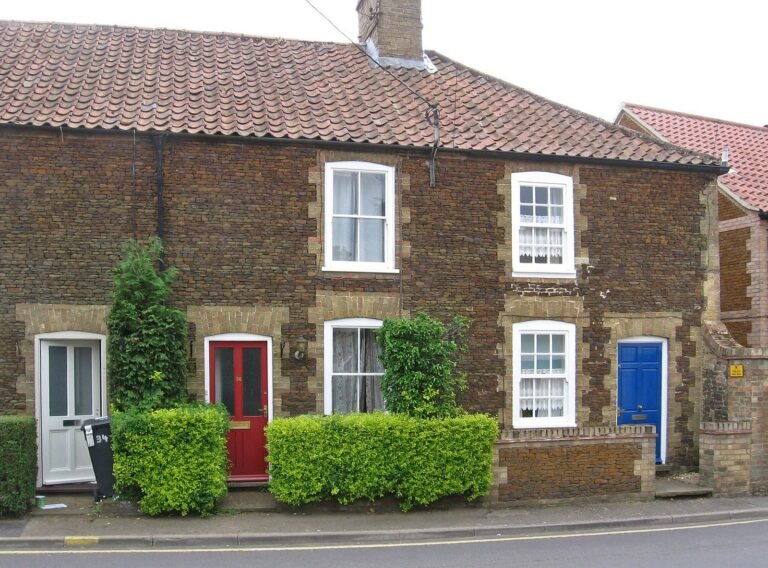
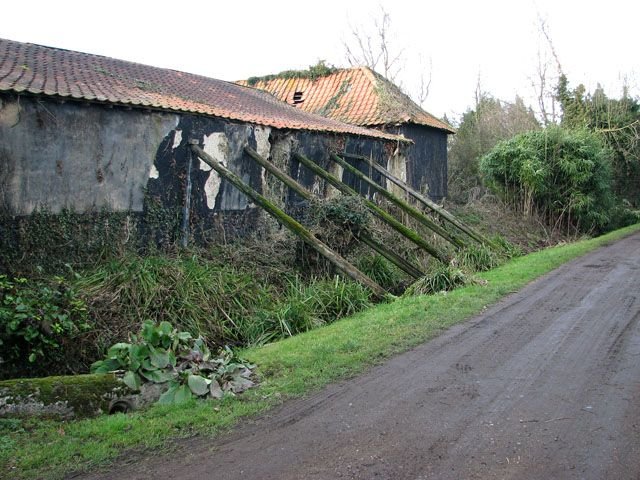
Under the render, a great many older cottages in the south Norfolk villages are built of dried mud. Clay lump is clay subsoil mixed with chopped straw, pressed into a wooden mould and left to dry into large blocks, which were then laid in courses like oversized bricks and plastered over. Historic England dates the first recorded clay-lump buildings in East Anglia to the late 18th century, and says that for more than a century afterwards it was the material of choice for nearly every kind of building in the clay-soil parts of the East of England.
A clay-lump wall lasts as long as it can dry out. EARTHA, the East Anglian earth-building group, says many of these buildings are being damaged by unsuitable materials and by builders and owners who do not recognise what the walls are made of. Anyone buying an older rendered house south of the A47 should find out which kind of wall it has before exchanging.
What clay lump is
The recipe was simple. John Curtis, a Norfolk writer quoted by Historic England, set it out in 1849: soft clay, water and as much short old straw as would mix in, trodden by horses until it had the consistency of mortar. The mix was pressed into a rectangular wooden mould, turned out, and left to dry for about three weeks, turned now and then so that every face dried. The blocks were laid in a mortar of wet clay. In 1821 the campaigner John Denson reckoned that a cottage for a rural family took about 1,000 blocks and could be built for £33.
Money explains why the method took hold. The Brick Tax, introduced in 1784, fell on fired bricks, and an unfired clay block escaped it. Malvern Tipping, who wrote up EARTHA’s survey of Diss, found that most surviving clay-lump buildings in East Anglia date from about 1790 to about 1860. The tax was abolished in 1850. Clay lump went out of use for houses around 1860 but carried on in farm buildings, and it was still being used here and there until the First World War.
There was one late revival, when councils tried clay lump as cheap housing around 1919 and 1920. The estates Thetford Rural District Council put up at Watton and Garboldisham have been demolished, but 1 to 16 The Crescent at East Harling, rendered clay-lump cottages designed by George Skipper and built between 1918 and 1920 as a Norfolk County Council experiment, still stand and are listed.
Where you find it in Norfolk
Clay lump follows the boulder clay. Dirk Bouwens, writing in the Building Conservation Directory in 1997, placed it east of the A1 and south of the A47, and Natural England describes the South Norfolk and High Suffolk Claylands as a plateau covered in chalky glacial till, the sticky subsoil the blocks were made from. Diss is the best-documented Norfolk town: in 2007 EARTHA applied for funding to survey the town’s clay buildings, putting in £1,000 against £4,000 from the Cittàslow Diss programme, and the database the survey produced became the reference used by local authorities.
Breckland needs more care than a map allows. The Norfolk and Suffolk Brecks Landscape Character Assessment (Breckland Council, 2013) describes free-draining sandy soils over glacial sand, clay and gravel, poor ground for making blocks, yet the 1919 estates at Watton, Garboldisham and East Harling were all built in the district, and Breckland reaches east onto the same chalky clay as South Norfolk around Attleborough. The wall tells you more than the council boundary.
On the north Norfolk coast and in the Broads villages the older houses are mostly flint and brick. Do not assume clay lump north of the A47 unless the wall itself shows it.
Moving to Norfolk this year?
Get the free Norfolk Relocation Pack: all 46 towns we cover on one table, on price, council tax, population, trains and distance to Norwich, plus a week-by-week move checklist. The download appears here as soon as you enter your email.
Unsubscribe any time.
How to recognise it
You rarely see the blocks. The Diss survey found clay-lump houses in two forms: solid clay-lump walls finished in lime render, and clay lump faced with a skin of red brick, usually half a brick thick. The surveyors identified the rendered kind by a brick or flint plinth at the foot of the wall, and by doors and windows set further in from the corners than on a brick house. They identified the brick-faced kind by the depth of the window reveals: the whole wall is usually about 350 mm thick, deeper than an ordinary brick wall.
The render itself is worth reading. The Society for the Protection of Ancient Buildings (SPAB) describes cement render as more uniform, with sharper corners and details, and as failing in patches that come away from the wall; lime render wears back gradually and evenly. A crisp grey render with hollow-sounding patches on an old cottage in these villages is a reason to ask what is underneath.
Why it has to stay dry
SPAB’s explanation is the one to keep in mind. Old walls rely on being permeable, so that water they take in can evaporate out again. A Portland cement render restricts that evaporation, cracks because it is more rigid than the wall, and draws water in through the cracks, where it is trapped. SPAB warns that earth-built walls in particular can suffer major structural damage when moisture builds up behind cement. SPAB also warns that waterproof renders and coatings can make damp problems worse.
The repairs SPAB recommends are replacing hard cement render or pointing with a lime mortar and improving the drainage outside: gutters and downpipes that work, and ground kept below the top of the plinth rather than banked against the wall. It says physical and chemical damp-proof courses should be avoided in earth buildings, where they can cause major structural damage, so a damp-proofing quote for injection on a clay-lump house is one to turn down. Limewash, which SPAB describes as suitable over lime render and earth walls, gives the colour.
If the house already has a cement skin, do not take it off in a hurry. SPAB’s advice is that where cement render still sticks well it may be best left, that removing only the failing areas, such as the base of the wall or hollow patches, can be a workable compromise, and that levering off large sheets can badly damage the soft wall underneath. The SPAB Technical Advice Line (020 7456 0916, Monday to Friday, 9.30am to 12.30pm) is free. EARTHA runs demonstrations and workshops in the warmer months and puts owners in touch with earth-building specialists.
Buying a clay-lump house
Mortgage lenders and insurers treat clay lump as non-standard construction, so it narrows the choice of lender and insurer; it does not stop a purchase. Commission a Level 3 survey from a surveyor who has worked on earth walls, and say in the instruction that you suspect clay lump. In conservation areas an Article 4 direction can remove permitted development rights: South Norfolk made one on 5 November 2008 covering 126 to 134 Norwich Road, which it describes as a row of clay-lump properties important within the streetscape and conservation area. Lending, insurance and survey costs are covered in our guide to buying a period home in Norfolk, and our directory lists builders who work with earth and lime.
Common questions
Is clay lump the same as cob?
They are related. Historic England groups both as mud walls made of clay soil and straw. Clay lump is the East Anglian form, moulded into blocks and dried before building, and the Diss survey report says the true clay-lump block is found only in East Anglia.
Can I get a normal mortgage on a clay-lump cottage?
Not from every lender. Clay lump counts as non-standard construction, so a broker who knows the lenders that accept it is the quickest route, and most will expect a Level 3 survey.
Do I have to leave the render as it is?
No, but take advice before changing it. SPAB recommends replacing cement render with lime where it is causing damage, and leaving it where it still bonds well and the wall is dry. Its Technical Advice Line is free.
Planning a move to Norfolk?
Our guides to hiring the firms a move needs.
We earn no commission on these links. Paid placements are sold separately and always labelled. See our advertising and disclosure page.