All area guides
Living in Hingham
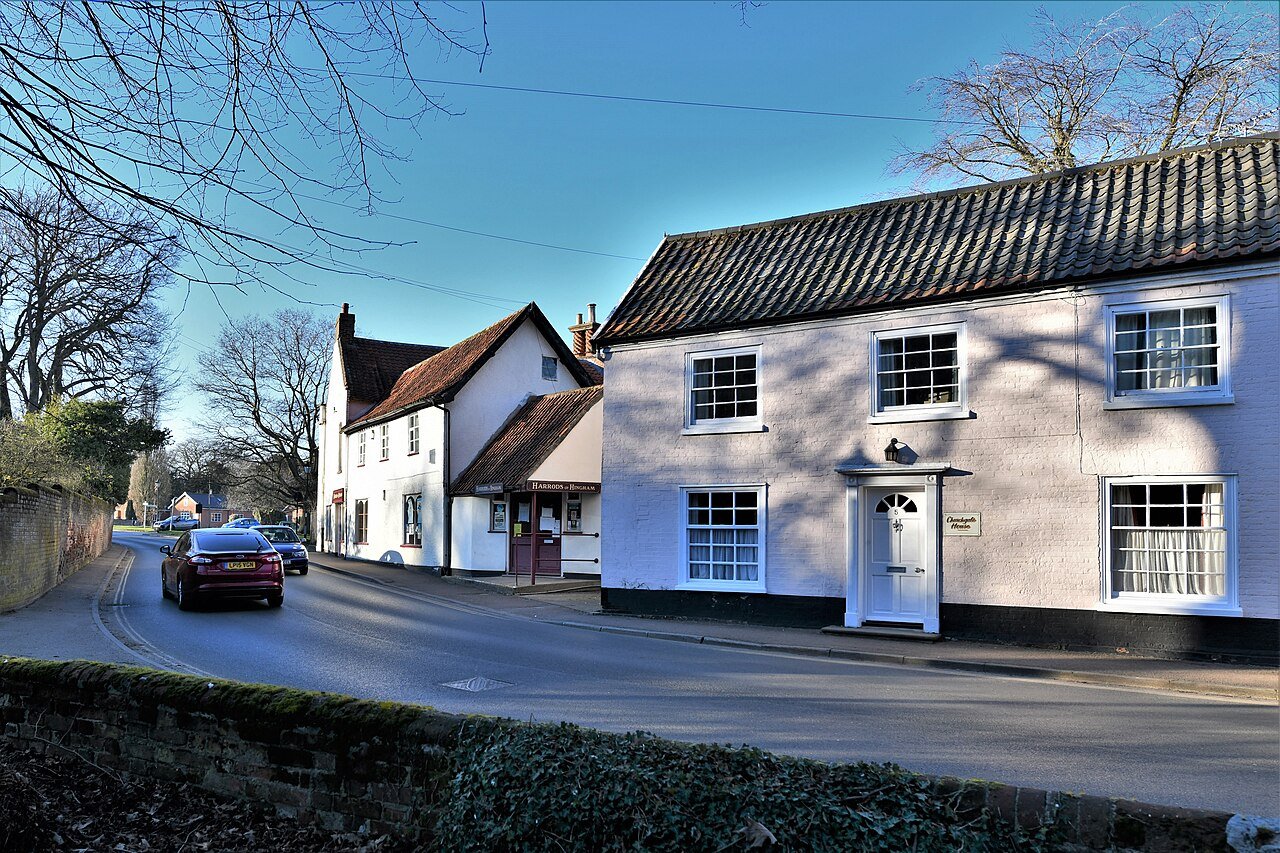
Hingham has the everyday things on foot: a primary school, a GP, a Co-op, a butcher and a bakery. It has no railway station and no secondary school.

Hingham has the everyday things on foot: a primary school, a GP surgery, a Co-op, a butcher and a bakery, all on or near the Market Place and the Fairland. It has no railway station and no secondary school. The nearest trains are at Wymondham and Attleborough, each about six miles away, and Norwich is about 13 miles east along the B1108.
Where it is: about 13 miles west of Norwich city centre as the crow flies, in South Norfolk district, postcode NR9.
The town
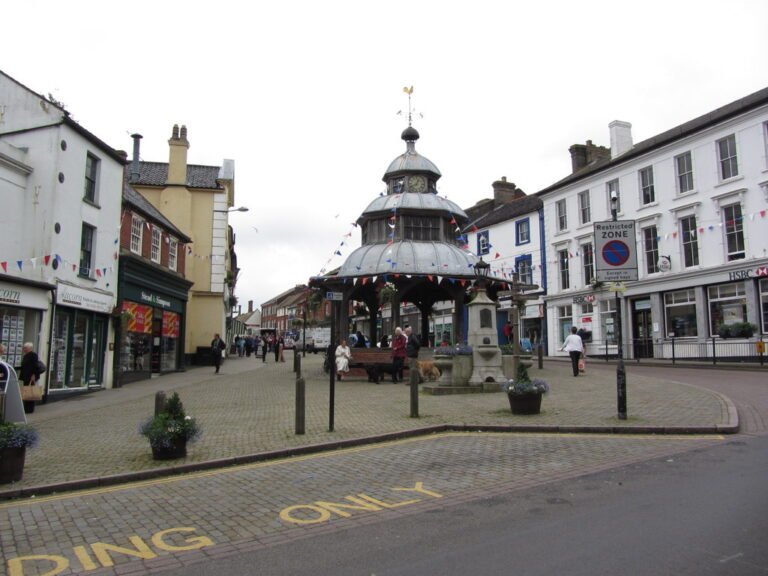
Hingham had 2,543 residents at the 2021 Census, most of them living within a few minutes’ walk of the Market Place and the Fairland, the large green beside it. James I granted the town a market charter in 1610. After a fire in 1688 destroyed many buildings, the town’s gentry rebuilt, which is why the centre is largely Georgian.
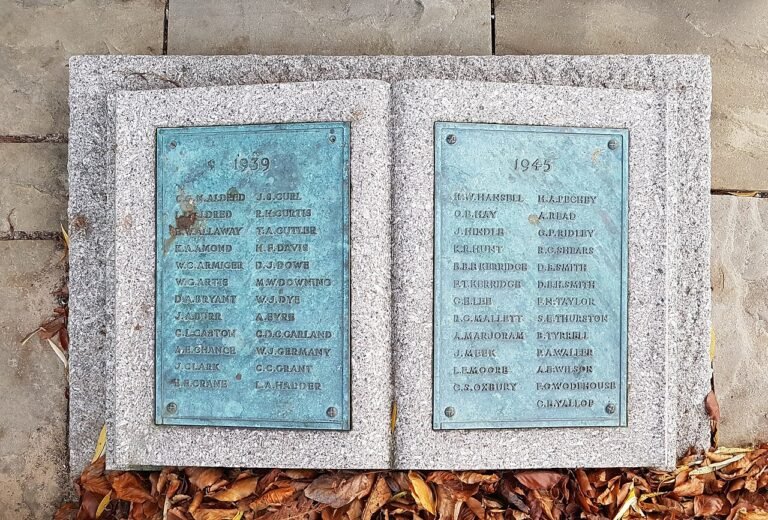
Hingham’s best-known link is American. Samuel Lincoln, an ancestor of Abraham Lincoln, left Hingham for Massachusetts in the late 1630s, and Hingham, Massachusetts, took its name from the town. A bust of Lincoln stands in the north aisle of St Andrew’s, the Grade I-listed parish church. The Lincoln Hall, the town hall, was built in 1922 and rebuilt and extended in 1977; most clubs and meetings use it.
Shops and the Market Place
The shops are small and mostly independent. On the Market Place are the White Hart Hotel at number 3, Fifteen On The Green at 15, The Hingham Bakery at 21, Dionne News at 35 and Hingham Butchers at 40. Lincolns of Hingham is on the Fairland, and Bond Street Greengrocer and Chalfonts share 8 Bond Street. When we checked the Food Standards Agency register in September 2026, all of them held a food hygiene rating of 5 except the greengrocer, which had 4.
The Co-op on Norwich Street is the only supermarket. For a bigger shop you drive to Wymondham or Attleborough; the 6 bus stops outside Waitrose in Wymondham. Ironside Way, on the edge of town, is the industrial estate.
Thinking about moving to Hingham?
Get the free Norfolk Relocation Pack: Hingham and the other 45 towns we cover on one table, on price, council tax, population, trains and distance to Norwich, plus a week-by-week move checklist. The download appears here as soon as you enter your email.
Unsubscribe any time.
Schools: primary in town, secondary in Attleborough
Hingham Primary School (URN 120818)
The town’s only primary school is on Hardingham Street. Ofsted rated it Good at its inspection on 11 July 2023, after a Requires Improvement judgement in 2019. It had 182 pupils in May 2026 and admits 26 a year, so a full year group leaves no fallback in the town.
Attleborough Academy (URN 140534)
Norfolk County Council lists Hingham Primary as one of the feeder schools for Attleborough Academy, an 11 to 18 school with 964 pupils in May 2026, including its sixth form. It was oversubscribed for September 2025. Ofsted inspected it on 3 March 2026 under the new report-card system (report published 29 April 2026) and graded it Strong for attendance and behaviour, curriculum and teaching, inclusion, and personal development and wellbeing, and at the expected standard in the other three areas.
Wymondham High Academy (URN 137461)
Rated Good at its inspection on 26 September 2023 (report published 10 November 2023), with a sixth form on Folly Road. Hingham is not among the villages in its published catchment, so a place there is an out-of-catchment application.
Getting around
Rail
Wymondham and Attleborough stations are both on the Greater Anglia line between Norwich and Cambridge. Wymondham to Norwich takes about 14 minutes on average by train. Neither station has direct London trains: you change at Norwich for Liverpool Street, where most trains take about 1 hour 50 minutes, or at Cambridge for King’s Cross.
Bus
Central Connect buses are the only public transport. On the weekday timetable (bustimes.org, checked 24 September 2026), the 6 runs hourly through the day via Wymondham and takes about 47 minutes to Norwich bus station; the first leaves Hingham at 06:08 and the last from Norwich leaves at 19:20. The 3, 3B and 3C take the B1108 instead, and some 3 journeys call at the Norfolk and Norwich University Hospital and the University of East Anglia on the way. The latest bus home is the 3B at 22:45 from Norwich, reaching Hingham at 23:29. The 17 runs to Dereham, and Sanders Coaches’ 59 goes to Easton College. Check Sunday times separately.
Roads
The B1108 runs through Hingham from Watton, six miles west, to Norwich. Typical drive times into Norwich are about 25 minutes off-peak and 35 to 45 minutes in the weekday rush hour. For Cambridge and London, the A11 is reached at Wymondham.
Broadband
We do not have a Hingham-only figure. Across South Norfolk, thinkbroadband’s data for 19 September 2026 shows 77.3% of premises can get full fibre and 97.5% can get superfast speeds of 30 Mbps or more. Some outlying lanes around Hingham are still on copper-based fibre-to-the-cabinet, so check the exact address on the Openreach or Ofcom checker before you buy.
House prices
HM Land Registry recorded 43 standard sales in Hingham in the 12 months to June 2026. The median price was £320,000 and the mean £356,000. With so few sales, one or two period houses move the figures: a house on the Market Place sold for £1,000,000 in August 2025 and a detached house on Watton Road for £815,000.
| Property type | Median sold price | Sales |
|---|---|---|
| Detached | £335,000 | 24 |
| Semi-detached | £300,000 | 12 |
| Terraced | £235,000 | 5 |
| Flat | £135,000 | 2 |
Hingham is not cheaper than Wymondham on these figures. Over the same 12 months Wymondham’s 278 standard sales had a median of £275,750; its semis sold for a median of £258,750, against £300,000 in Hingham, and its detached houses for £347,500. The small Hingham sample means that gap could move either way next year, but the idea that Hingham buys the same house for a fifth less does not hold.
For the district, the UK House Price Index put the South Norfolk average at £311,587 in July 2026, up 1.5% on a year earlier. The index adjusts for the mix of homes sold, so it will not match the simple town figures above.
Doctor
Hingham Surgery on Hardingham Street is the town’s only GP practice. The NHS website listed it as accepting new patients in September 2026. The nearest A&E is at the Norfolk and Norwich University Hospital, which some 3 buses serve directly.
Council tax
Hingham is in the South Norfolk Council area. The Band D council tax for 2026-27 is £2,471.51, made up of four charging bodies:
| Charging body | Band D 2026-27 | Source |
|---|---|---|
| Norfolk County Council | £1,843.38 | Norfolk CC 2026-27 budget |
| Norfolk Police and Crime Commissioner | £344.79 | Norfolk PCC 2026-27 precept |
| South Norfolk District Council | £180.00 | SNC council tax and budget information 2026-27 |
| Hingham Town Council | £103.34 | SNC parish precepts 2026-27 |
| Total Band D 2026-27 | £2,471.51 |
Hingham Town Council’s precept for 2026-27 is £99,000, up from £97,000. That is higher per home than most South Norfolk parishes but well below Diss, where the town council’s Band D share is £256.19.
Plan the move
How we produced this guide
Hingham and Wymondham sale prices are from HM Land Registry Price Paid Data: standard sales completed between 1 July 2025 and 30 June 2026, grouped by the locality in the registered address, queried on 24 September 2026. The district average is from the UK House Price Index for South Norfolk, July 2026. School ratings are from Ofsted reports, and pupil numbers, admission numbers and feeder schools from Norfolk County Council’s school finder. Council tax is from South Norfolk Council’s 2026-27 charges and budget information. Bus times are from the weekday timetables on bustimes.org, checked on 24 September 2026. Drive times are typical times on the main roads. Shop names and hygiene ratings are from the Food Standards Agency register, checked in September 2026. Broadband coverage is from thinkbroadband and population from the ONS 2021 Census. See our methodology page for source links.
Frequently asked questions
Is Hingham a nice place to live?
It suits people who drive or work from home and want a primary school, a GP and small shops within walking distance. There is no station, the bus to Norwich takes about 50 minutes, and secondary pupils travel to Attleborough.
Does Hingham have a train station?
No. The nearest stations are Wymondham and Attleborough, each about six miles away, on the Greater Anglia line between Norwich and Cambridge.
How long is the commute from Hingham to Norwich?
By car, about 25 minutes off-peak and 35 to 45 minutes in the weekday rush hour. The 6 bus runs hourly and takes about 47 minutes to Norwich bus station.
What is council tax in Hingham?
£2,471.51 at Band D for 2026-27. Hingham Town Council’s share is £103.34; the rest goes to Norfolk County Council, the Police and Crime Commissioner and South Norfolk Council.
What is the average house price in Hingham?
The median of the 43 standard sales HM Land Registry recorded in Hingham in the 12 months to June 2026 was £320,000. Detached houses had a median of £335,000.
How does Hingham compare with Wymondham?
Wymondham is much bigger and has a station and a Waitrose. It is not dearer: its median sale price over the same 12 months was £275,750, against £320,000 in Hingham. Choose Hingham for the small-town centre, Wymondham if you need the train.
What is the primary school in Hingham?
Hingham Primary School (URN 120818) on Hardingham Street, rated Good by Ofsted on 11 July 2023. It is the only primary in the town.
Is Hingham good for retirees?
The centre is walkable and Hingham Surgery was accepting new patients in September 2026. Without a car, you depend on buses for hospital visits and a big supermarket shop.
What is the broadband like in Hingham?
Across South Norfolk, 77.3% of premises can get full fibre, but some outlying lanes around Hingham are still on fibre-to-the-cabinet. Check the exact address before you buy.
How big is Hingham?
The parish had 2,543 residents at the 2021 Census. It lies about 13 miles west of Norwich on the B1108, between Wymondham and Watton.
Related guides
Data sources: HM Land Registry, ONS, Ofsted, Norfolk County Council, South Norfolk Council, bustimes.org, Food Standards Agency, thinkbroadband. Sales to June 2026; district index to July 2026; latest Ofsted inspections. Author: Tom Fletcher, Property and Relocation Editor.
Last reviewed
Still weighing it up? See how Hingham compares with Reepham on prices, schools, broadband and council tax, or answer five quick questions and get a shortlist of the Norfolk towns that fit you.
Planning a move to Norfolk?
Our guides to hiring the firms a move needs.
We earn no commission on these links. Paid placements are sold separately and always labelled. See our advertising and disclosure page.