All area guides
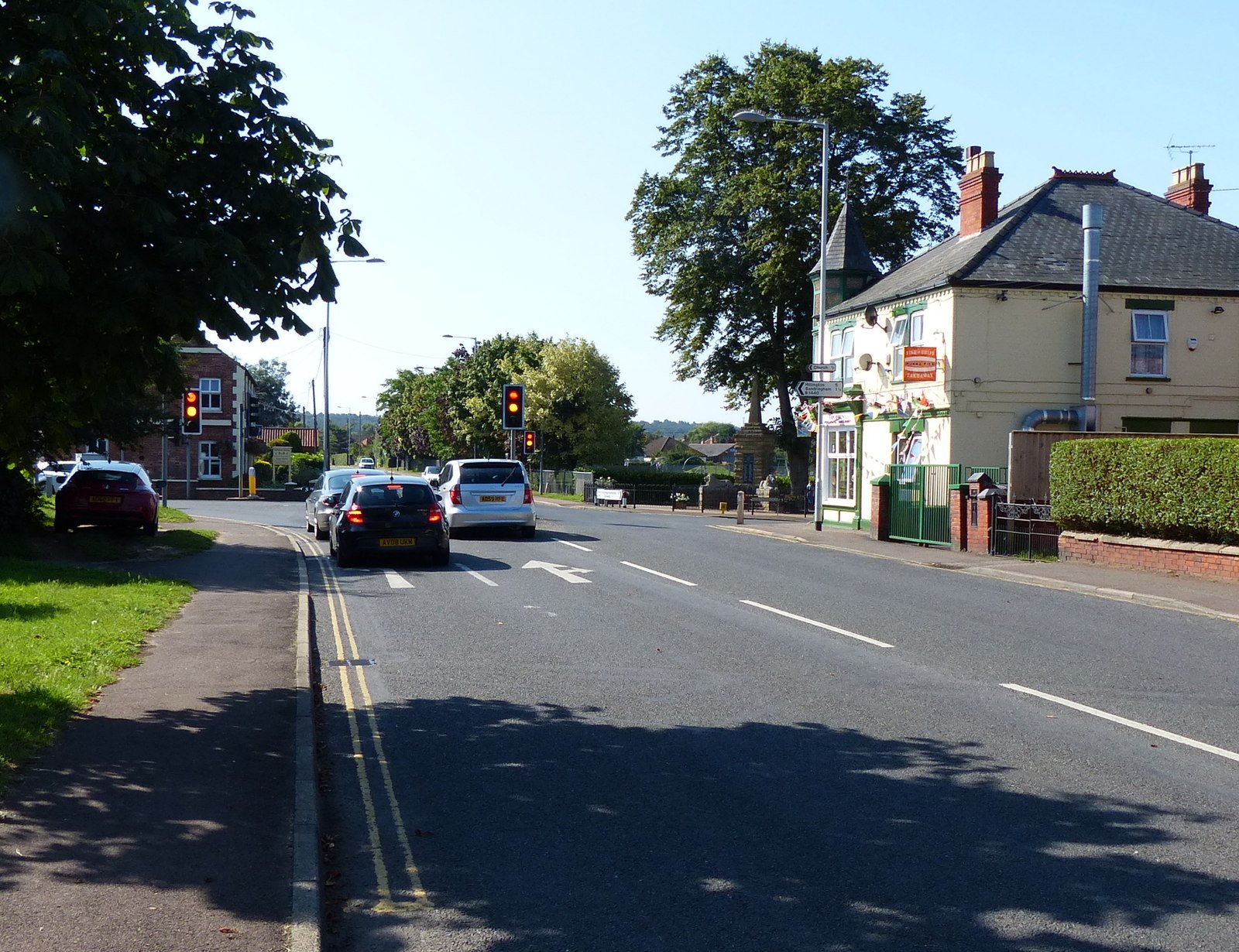
Living in Dersingham
Dersingham is a large village on the edge of the Sandringham estate, with a GP, a Co-op and a half-hourly bus to King's Lynn. It is no cheaper than Hunstanton.

Dersingham is a large village on the western edge of the Sandringham estate, with its own GP surgery, a Co-op, two pubs and a bus to King’s Lynn every half hour through the day. Buyers expecting a cheap alternative to Hunstanton will not find one. Semi-detached houses sold for a median of £250,000 in both places in the year to June 2026.
Where it is: about 36 miles west of Norwich city centre as the crow flies, in the borough of King’s Lynn and West Norfolk, postcode PE31.
Population 4,755 (2021 Census) · Postcode PE31 6 · To Sandringham 2 mi · Band D council tax £2,443.00
Dersingham suits people whose work, shopping and hospital visits point towards King’s Lynn, and anyone who wants to walk in the Sandringham parkland most days.
The village has the everyday things within walking distance and a bus that stops outside King’s Lynn station, which makes it workable both for retirement and for a Cambridge commute by train. It is the wrong choice if you work in Norwich, an hour away on mostly single-carriageway roads, or if you want to see the sea from the house. Anyone moving here to save money on Hunstanton should compare like with like first, because for houses the prices are much the same.
The village
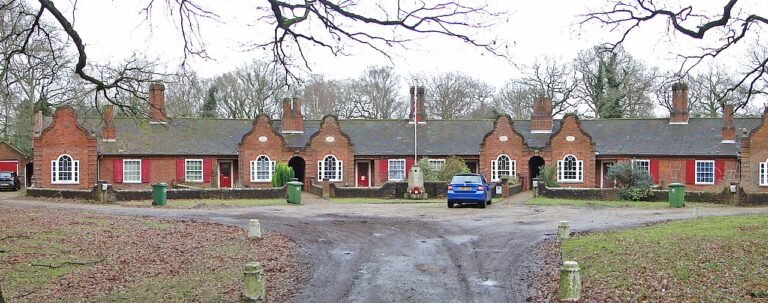
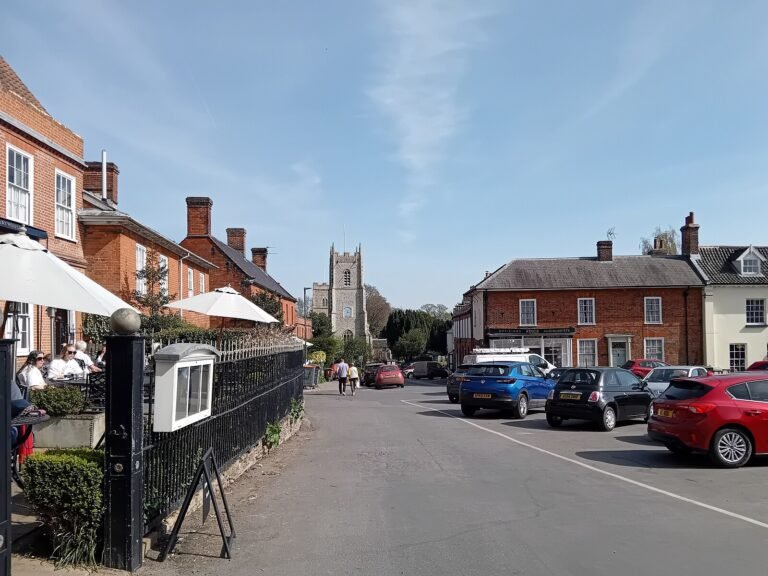
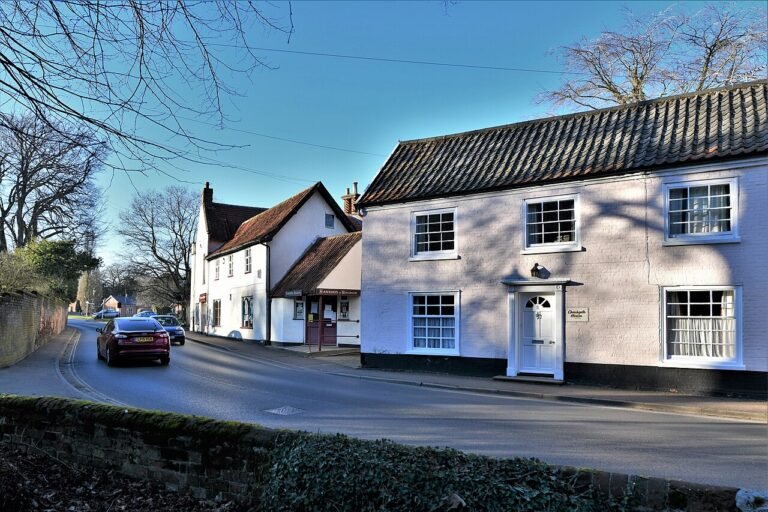
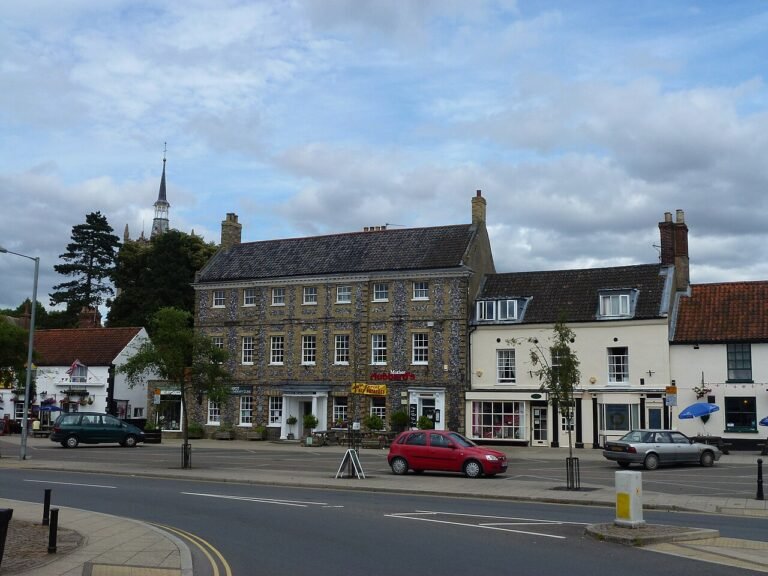
Dersingham comes in two parts. The older core, along Manor Road, Hunstanton Road and Post Office Road, has the Feathers Hotel, the village hall, St Nicholas Church, which is 14th century and Grade I listed, and cottages of flint and carstone, the brown local sandstone that turns up in buildings all along this side of west Norfolk. Around and behind it are the estates built between the 1960s and the 1990s, off Hill Road, Jubilee Drive and Lynn Road, low-rise and mostly with garages and gardens. There is no seafront and none of the summer crowd that Hunstanton gets.
The village covers its own daily needs. The Central Co-op is at 10 Lynn Road, and Visit West Norfolk lists a Post Office, a chemist, a dentist, an optician, butchers and a newsagent. The GP surgery is the Carole Brown Health Centre on Church Lane, run by Vida Healthcare. The two pubs are the Feathers and the Coach and Horses. For a large supermarket you go to Hunstanton, where there is a Tesco, or to King’s Lynn, and the Queen Elizabeth Hospital, with the nearest A&E, is 12 minutes away on the 34 bus.
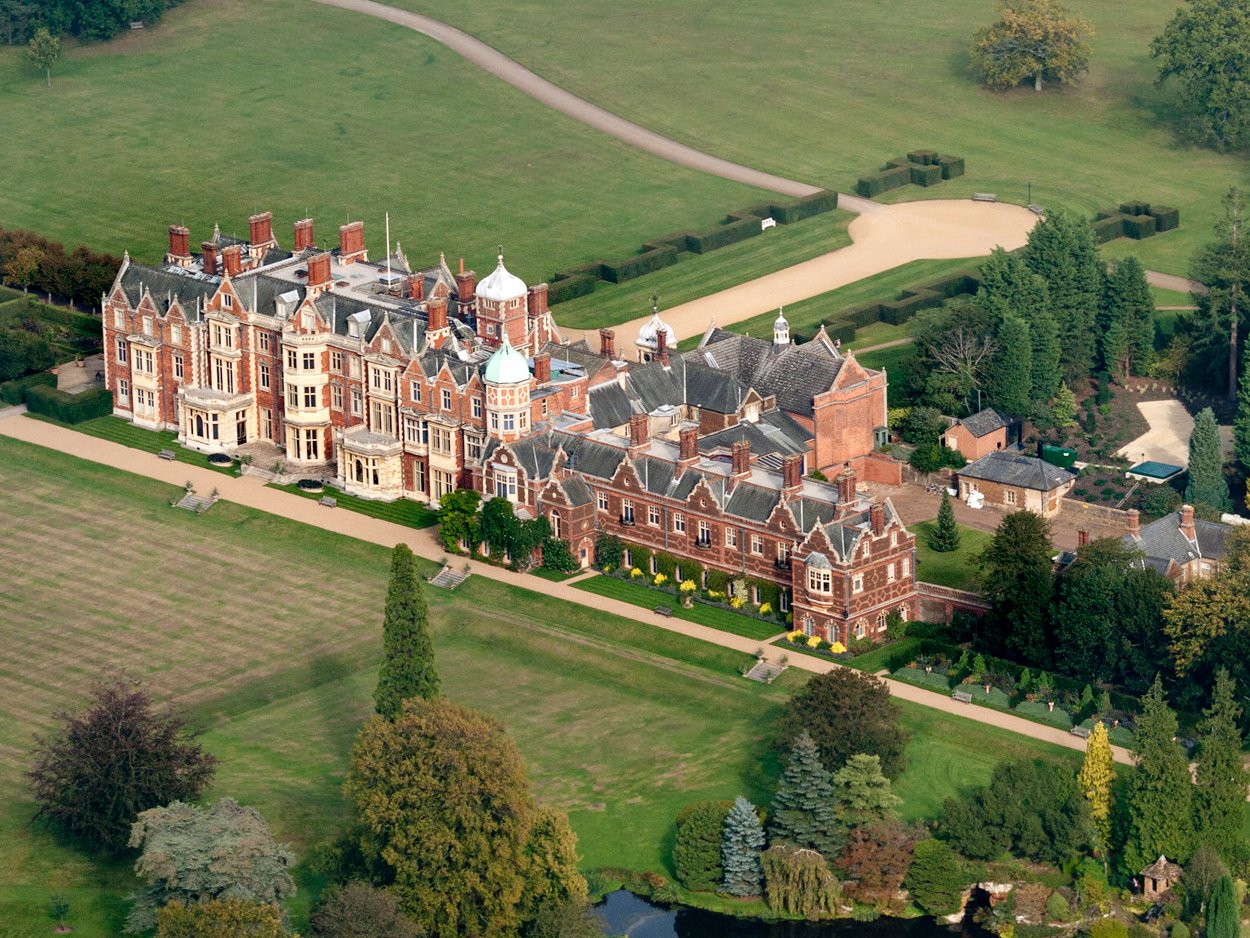
Sandringham, the bog and the Wash
The Sandringham estate runs along the south side of the village. Its Royal Parkland, about 600 acres of woodland and way-marked trails, is open all year and free to walk, although the estate charges for parking. The nearest way in from the village is the Scissors Cross car park, roughly a 25-minute walk (about 1.5 miles) from the centre, and closer from the southern estates. The house and formal gardens are ticketed and open only for part of the year.
On the western edge of the village, Dersingham Bog is a National Nature Reserve managed by Natural England, a mix of lowland heath, mire and woodland that is free to enter. Its birds include nightjars, crossbills and long-eared owls.
RSPB Snettisham is about 10 minutes north along the A149. On the biggest winter high tides, tens of thousands of knot, dunlin and oystercatcher lift off the Wash mudflats there. Heacham’s beach is closer still, and Hunstanton’s cliffs and beach are about eight miles north. For a market town, King’s Lynn is 20 minutes away and Fakenham about 25.
Thinking about moving to Dersingham?
Get the free Norfolk Relocation Pack: Dersingham and the other 45 towns we cover on one table, on price, council tax, population, trains and distance to Norwich, plus a week-by-week move checklist. The download appears here as soon as you enter your email.
Unsubscribe any time.
Schools
Dersingham Primary School on Admirals Drive takes children from 2 to 11. It had 199 pupils against a capacity of 250 at the latest count, and Ofsted confirmed it as Good at an ungraded inspection on 14 November 2023.
For secondary school, Smithdon High School in Hunstanton, which has its own stop on the 34 bus route, takes pupils from 11 to 16. Ofsted rated it Good in every area on 7 November 2023, up from Requires Improvement in 2019. It has no sixth form, so at 16 students move on, usually to King’s Lynn, where Springwood High School (rated Good) and King Edward VII Academy both teach to 18. At King Edward VII, Ofsted judged every area Good, the sixth form included, in October 2024.
Buses, trains and roads
The Lynx 34 runs every half hour through the day between Hunstanton and King’s Lynn, and reaches the stop outside King’s Lynn railway station about 22 minutes after leaving Manor Road. The first weekday bus towards Lynn leaves Dersingham at 06:33 and the last at 22:30. The 35 adds an hourly bus through the Church Lane end of the village, and the 36 Coastliner runs hourly along the coast to Wells and Fakenham.
From King’s Lynn, direct trains reach Cambridge in 55 minutes and London King’s Cross in 1 hour 47 minutes on the fastest train and 1 hour 51 to 1 hour 58 on most. They leave every half hour until about 9am and hourly after that. A daily Cambridge commute is realistic from Dersingham once you allow for the bus or the drive to the station; London works better two or three days a week than five.
By car King’s Lynn is 15 to 20 minutes down the A149, rising to about 25 minutes in summer when the coast traffic builds. Norwich is about an hour, along the A148 to Fakenham and then the A1067, single carriageway for most of the way, which is why Dersingham looks west to King’s Lynn and not east to Norwich.
House prices
HM Land Registry recorded 77 standard sales in Dersingham in the 12 months to June 2026, none of them new builds. The median price was £300,000 and the mean £312,192. Detached houses made up 45 of the 77 and had a median of £335,000; the 25 semis had a median of £250,000, and the six terraced houses £210,000. Manor Road alone had eight sales, from £130,000 for a terraced house to £585,000 for a detached one.
Hunstanton had 100 standard sales over the same months, with a median of £268,000. The lower figure comes mostly from the mix of homes sold: 29 of Hunstanton’s sales were flats, which Dersingham barely has. Semis sold for a median of £250,000 in both places, and detached houses for £335,000 in Dersingham against £350,000 in Hunstanton.
Across the borough of King’s Lynn and West Norfolk, the UK House Price Index put the average at £265,715 in July 2026, up 3.0% on a year earlier. The index is adjusted for the mix of homes sold, so it will not match the simple Dersingham median.
The parish council is preparing a neighbourhood plan to run to 2040, which will shape where any new housing goes. Its published timetable set public consultation for summer 2026, submission to the borough council in autumn 2026 and a referendum in mid 2027; the parish council website shows where it has reached.
Council tax
Dersingham’s Band D bill for 2026-27 is £2,443.00 and Band A is £1,628.67, a little below Hunstanton’s Band D of £2,458.93. Since 1 April 2025 the borough has charged a 100% premium on second homes, so a house kept as a weekend place pays double.
Nearby places to compare
- Hunstanton: the seaside town eight miles north, with more flats and a seafront.
- King’s Lynn: the nearest town, with the station, the hospital and a medieval centre.
- Best Norfolk villages for families: our shortlist with school details.
- Best affordable places in Norfolk: where prices are lowest across the county.
Plan the move
How we produced this guide
Sale prices are from HM Land Registry Price Paid Data, standard sales with Dersingham (and, for the comparison, Hunstanton) in the address, for the 12 months to June 2026. The borough average is from the UK House Price Index, July 2026 release. Population is from the 2021 Census. School details are from Ofsted reports. Council tax is from the Borough Council of King’s Lynn and West Norfolk’s 2026-27 charges. Bus times are from the timetables on bustimes.org and train times from the National Rail timetable for a weekday in late September 2026. Drive times are typical times on the main roads. We update this guide quarterly. See our methodology page for source links.
Frequently asked questions
Is Dersingham a nice place to live?
For people whose lives point towards King’s Lynn, and for retired buyers who want a doctor, a Co-op and a half-hourly bus inside the village, yes, with the Sandringham parkland on the doorstep. Norwich is an hour away by car, so it suits a west Norfolk life far better than a Norwich one.
How much does a house in Dersingham cost?
The median of 77 standard sales in the 12 months to June 2026 was £300,000 (HM Land Registry). Semis had a median of £250,000 and detached houses £335,000.
Can you walk to Sandringham from Dersingham?
Yes. The Scissors Cross car park, the nearest entrance to the Sandringham parkland, is roughly a 25-minute walk (about 1.5 miles) from the village centre. The parkland is free and open all year; the house and formal gardens are ticketed and seasonal.
Data sources: HM Land Registry, ONS Census 2021, Ofsted, Borough Council of King’s Lynn and West Norfolk, bustimes.org, National Rail timetables. Sales to June 2026; latest Ofsted inspections. Author: Sarah Ellis, Coast and Broads Editor.
Still weighing it up? See how Dersingham compares with Hunstanton on prices, schools, broadband and council tax, or answer five quick questions and get a shortlist of the Norfolk towns that fit you.
Planning a move to Norfolk?
Our guides to hiring the firms a move needs.
We earn no commission on these links. Paid placements are sold separately and always labelled. See our advertising and disclosure page.