All area guides
Living in Rackheath
Rackheath is where north-east Norwich is being built. Most homes sold in the past year were new builds, and a scheme of up to 3,850 more has not yet started.

Rackheath is where north-east Norwich is being built. Of the 102 homes sold in the village in the year to June 2026, 61 were new builds, and the ONS estimates the parish grew from 2,147 people at the 2021 Census to 2,965 by mid-2024. The biggest scheme has not started yet: Taylor Wimpey has outline planning permission for up to 3,850 homes on the land north of the village.
Where it is: about 4 miles north-east of Norwich city centre as the crow flies, in Broadland district, postcode NR13.
What is being built
The older village is 20th-century housing either side of Salhouse Road, and a large part of the parish sits in the Growth Triangle, the area north-east of Norwich set aside for new housing. The Broadland Northway (A1270) now cuts through the parish, separating the village from Rackheath Hall and its parkland. The village’s Neighbourhood Plan was made in July 2017 and runs to 2037.
Charles Church, part of Persimmon, has been building Prince’s Park off Salhouse Road (NR13 6PG). Our guide to new-build developments in Norfolk lists what is on sale across the county.
The next stage is much larger. The land north of Rackheath was a Second World War airfield, home to the USAAF’s 467th Bombardment Group and its B-24 Liberators, and in 2008 it was proposed as an eco-town of more than 5,100 homes. Taylor Wimpey submitted an outline application for the site in March 2022 (Broadland reference 20220663), ran a third round of public consultation in January and February 2024, and has since been granted outline permission. The permission allows up to 3,850 homes, with two primary schools, a secondary school, two local centres, employment land, sports and community space, and affordable housing. None of it can be built until reserved matters are approved phase by phase.
Some sales material mentions the Norwich Western Link. That road would run west of the city, on the far side from Rackheath, and it has no current planning application: Norfolk County Council withdrew the last one after Natural England objected over a colony of protected barbastelle bats. Rackheath’s main roads are the Northway and the A1151.
Our Rackheath Garden Village 2026 guide goes through each scheme and its planning history in more detail.
House prices
HM Land Registry recorded 102 standard sales in Rackheath in the 12 months to June 2026. The median was £341,000 and the mean £362,000. That is above the Broadland district average of £313,407 in the July 2026 UK House Price Index (up 2.9% on a year earlier), mostly because so many of the sales were new houses. The index adjusts for the mix of homes sold, so it will not match the simple Rackheath figures.
New semis carry a premium; new detached houses do not. New-build semis had a median of £317,500 (24 sales) against £285,000 for the 13 older semis that changed hands, a gap of about 11%. New detached houses had a median of £402,599 (34 sales) and older ones £400,000 (25). Established semis are the cheapest way into the village; a new detached house costs about the same as an older one.
| Property type | Sales | Median price | Lowest and highest |
|---|---|---|---|
| Detached | 59 | £400,000 | £245,000 to £665,000 |
| Semi-detached | 37 | £308,453 | £240,000 to £390,000 |
| Terraced | 6 | £268,798 | £108,000 to £305,000 |
| All standard sales | 102 | £340,879 | of which 61 new builds |
Standard sales only. No flats were sold in the period. Recent months are still being registered, so the counts will rise.
Thinking about moving to Rackheath?
Get the free Norfolk Relocation Pack: Rackheath and the other 45 towns we cover on one table, on price, council tax, population, trains and distance to Norwich, plus a week-by-week move checklist. The download appears here as soon as you enter your email.
Unsubscribe any time.
Schools: Outstanding primary, secondary in Hoveton
Rackheath Primary School on Willoughby Way (URN 120843, ages 4 to 11) was rated Outstanding in every area at its Ofsted inspection on 16 July 2024. It had 214 pupils against a capacity of 210 on the Department for Education register and takes 30 children a year. With the parish growing this fast, check the admissions position with Norfolk County Council before you buy for the school.
The secondary school it feeds is Broadland High Ormiston Academy on Tunstead Road in Hoveton (NR12 8QN, ages 11 to 16). Ofsted confirmed it as Good at an inspection on 8 and 9 November 2022. It has 725 pupils against a capacity of 700, and no sixth form. Sprowston Community Academy in Sprowston and Thorpe St Andrew School and Sixth Form both run to 18 and are closer to Norwich, but neither is Rackheath’s catchment school, so a place is not guaranteed. The secondary school in the Taylor Wimpey permission is not yet built.
Getting around
By car, the A1151 Wroxham Road runs south through Sprowston into the city, and the Broadland Northway goes round the north of Norwich towards the airport and the A47. The drive to the centre typically takes about 15 minutes outside the rush hour. The A1151 also runs north to Wroxham.
The Central Connect 5 is the village bus into Norwich. On weekdays it runs every 30 minutes through the day and hourly in the evening; the first leaves the village hall at 06:30 and reaches Castle Meadow at 06:53, and the 08:00 gets there at 08:27. The last bus back leaves St Stephens Street at 22:20.
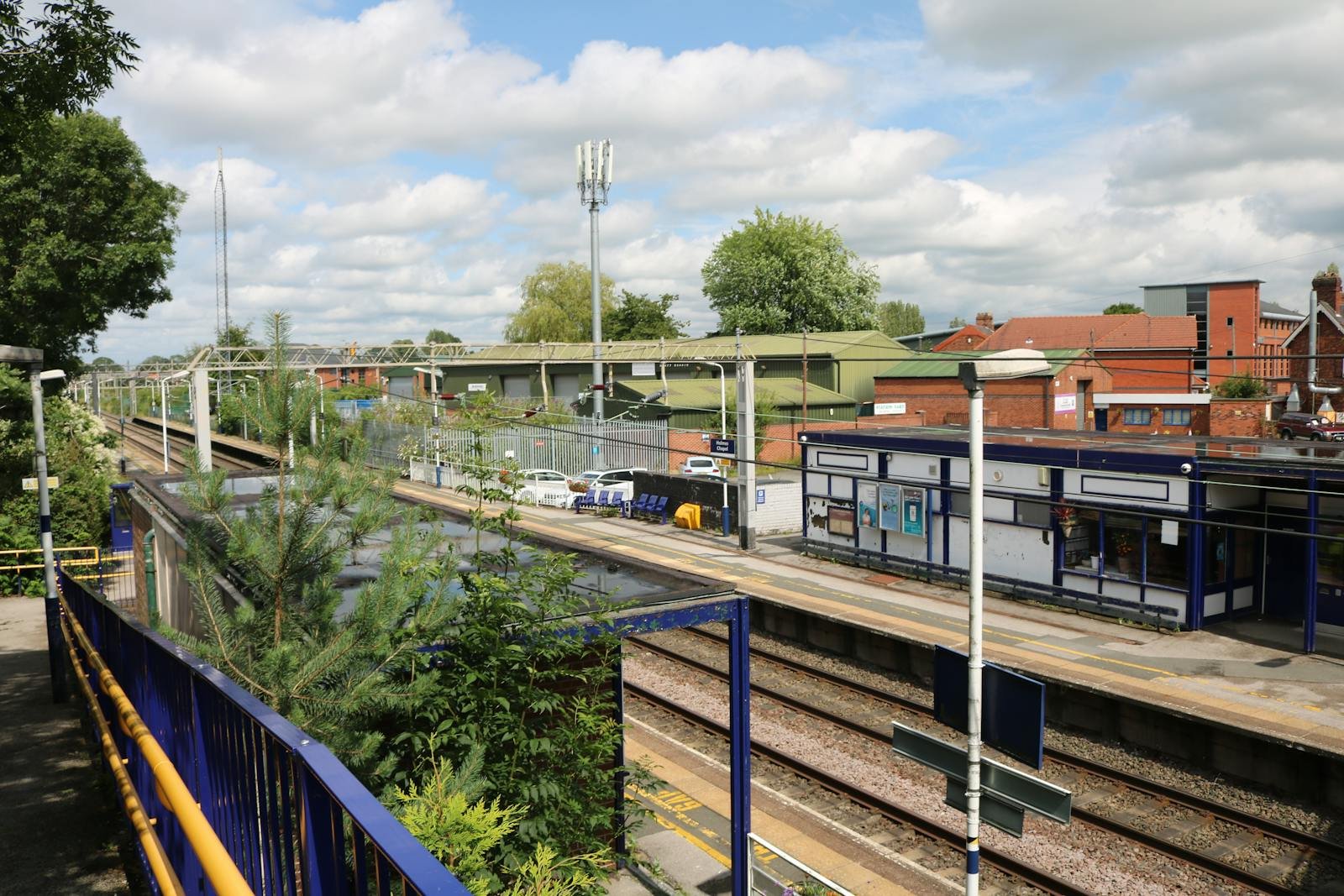
The nearest station is Salhouse, on the Bittern Line between Norwich and Sheringham. Trains run about once an hour in each direction on weekdays, and the run into Norwich takes 11 to 14 minutes. Norwich station is where you change for London Liverpool Street (an average of 1 hour 51 minutes, according to Greater Anglia) and for Great Yarmouth.
Shops, doctors and pubs
Day-to-day shopping is one convenience store with a Post Office counter at 1 Bernard Close, and Rackheath Pharmacy at the same address. For a supermarket you drive to Sprowston or to the Sainsbury’s superstore on Pound Lane in Thorpe St Andrew.
There is no GP surgery in the village. Hoveton & Wroxham Medical Centre, on Stalham Road in Hoveton, accepts registrations from the new development in Rackheath, including the roads off Tudor Road. Check which practice covers your address before you move.
The two pubs are the Sole and Heel at 2 Salhouse Road, a 1930s art deco building, and the Racecourse Inn, also on Salhouse Road. Local jobs are at Rackheath Industrial Estate off Green Lane West and at Broadland Business Park on the edge of Thorpe St Andrew.
Council tax
Rackheath’s Band D bill for 2026-27 is £2,473.89. A Broadland parish with no parish precept pays £2,323 at Band D (Broadland District £134.91, Norfolk County £1,843.38, police £344.79), so Rackheath Parish Council’s share is £150.81 a year. The other bands are A £1,649.26, B £1,924.14, C £2,199.01, E £3,023.64, F £3,573.40, G £4,123.15 and H £4,947.78.
Nearby areas
Sprowston is next door, one ring closer to the city, with the supermarkets, a secondary school with a sixth form and far more established housing.
Wroxham is a short drive north-east on the A1151, for buyers who want the Broads on the doorstep more than a short commute.
In Norwich itself, similar money buys a Victorian terrace or a city-centre flat where Rackheath buys a new house with a garden.
Plan the move
Coming up
Taylor Wimpey consulted on the first two phases of North Rackheath, 368 homes (136 in phase 1a and 232 in phase 1b), from 1 to 14 September 2026, and says it will submit them to Broadland District Council in October 2026. Those reserved matters applications will show the first streets, the house types and where the first homes go.
How we produced this guide
Rackheath sale prices are from HM Land Registry Price Paid Data: standard sales in the Rackheath locality of the NR13 6 postcode sector between 1 July 2025 and 30 June 2026, queried on 24 September 2026. The district average is from the UK House Price Index for Broadland, July 2026. Population figures are the 2021 Census and the ONS mid-2024 parish estimate. School details are from Ofsted reports, the Department for Education register and Norfolk County Council’s Schoolfinder. Bus times are from the Central Connect 5 timetable on bustimes.org, checked 24 September 2026, and train times from Greater Anglia’s Norwich to Sheringham timetable valid from 17 May 2026. Council tax is from Broadland District Council’s 2026-27 charges. Planning details are from Rackheath Parish Council and Taylor Wimpey. Drive times are typical times on the main roads. See our methodology page for how we choose sources.
Frequently asked questions
Is Rackheath a good place to live?
It suits buyers who want a recent house near Norwich and an Outstanding primary school, and who do not mind years of construction nearby. It has few services of its own: one shop, a pharmacy, two pubs and no GP surgery.
What is the average house price in Rackheath?
The median of the 102 standard sales HM Land Registry recorded in the 12 months to June 2026 was £341,000. Semis had a median of £308,453 and detached houses £400,000.
How far is Rackheath from Norwich?
About 6 miles north-east of the city centre, typically a 15-minute drive outside the rush hour. The Central Connect 5 takes about 25 minutes to Castle Meadow.
What are the schools like in Rackheath?
Rackheath Primary School was rated Outstanding on 16 July 2024 and is slightly over its capacity. It feeds Broadland High Ormiston Academy in Hoveton, an 11 to 16 school confirmed as Good in November 2022.
What’s being built in Rackheath in 2026?
Taylor Wimpey has outline permission for up to 3,850 homes north of the village (reference 20220663). It plans to submit detailed plans for the first 368 homes in October 2026; see our Rackheath Garden Village 2026 guide for the full scheme.
Related guides
Data sources: HM Land Registry, ONS, Ofsted, Norfolk County Council, Broadland District Council, bustimes.org, Greater Anglia. Prices to June 2026; latest Ofsted inspections. Author: Tom Fletcher, Property and Relocation Editor.
Last reviewed
Still weighing it up? See how Rackheath compares with Taverham on prices, schools, broadband and council tax, or answer five quick questions and get a shortlist of the Norfolk towns that fit you.
Planning a move to Norfolk?
Our guides to hiring the firms a move needs.
We earn no commission on these links. Paid placements are sold separately and always labelled. See our advertising and disclosure page.