All area guides
Living in Great Yarmouth
Great Yarmouth has the lowest average house price of any Norfolk district and a train to Norwich in about 30 minutes. Most of the homes that sell are terraced.

Great Yarmouth has the lowest average house price of any Norfolk district and a railway station about 30 minutes from Norwich. Most of what sells in the town is terraced: three in four homes sold in the year to June 2026 were terraced houses, at a median of £138,000.
Where it is: about 18 miles east of Norwich city centre as the crow flies, in the borough of Great Yarmouth. The postcode is NR30, and NR31 for Southtown on the south side of the river.
Population 28,985 in the town (built-up area), 99,700 in the borough (2021 Census) · Rail to Norwich 30 min · Borough average price £209,114 (July 2026)
Buy in Great Yarmouth if the price and the train matter more to you than the look of the street, or if your work is at the port or in offshore energy.
The three secondary schools most Yarmouth families use are all rated Good, and a lot of public money has gone into the seafront and the centre. The case against is deprivation in parts of the town and a single-carriageway A47 across the marshes to Acle. Gorleston-on-Sea, across the river, is the obvious comparison: its median sale price over the same 12 months was £190,000, and fewer than half its sales were terraced houses.
Property prices
HM Land Registry recorded 269 standard sales in Great Yarmouth in the 12 months to June 2026. That count covers addresses in the town itself. Gorleston, Bradwell, Belton and Caister-on-Sea are recorded separately and are not included. The median price was £140,000 and the mean £154,000.
| Property type | Median price | Sales |
|---|---|---|
| Detached | £292,500 | 13 |
| Semi-detached | £225,000 | 32 |
| Terraced | £138,000 | 201 |
| Flat | £97,000 | 23 |
Prices vary by postcode sector. The cheapest in the period was NR30 3, the streets at the south end of town around Admiralty Road, Exmouth Road and Ordnance Road, with a median of £107,500 across 33 sales. The dearest was NR30 4, north of the centre around Salisbury Road and Caister Road, at £195,500 across 62 sales.
The older stock runs from the Georgian merchants’ houses on South Quay to the Victorian terraces behind the seafront. In the town centre, period houses that need work sell at the bottom of the market.
For the borough as a whole, the UK House Price Index put the average at £209,114 in July 2026, up 0.7% on a year earlier. That was the lowest of Norfolk’s districts; the county average was £269,185. The index is adjusted for the mix of homes sold, so it will not match the simple town figures above. Our guide to the most affordable places in Norfolk sets Yarmouth against the rest of the county.
Schools and the hospital
Great Yarmouth Charter Academy on Salisbury Road, for ages 11 to 16, was rated Good by Ofsted on 11 June 2024. It had 882 pupils against a capacity of 1,500.
The other two are across the river in Gorleston. Lynn Grove Academy was rated Good in October 2023. Cliff Park Ormiston Academy was judged Good in all four areas at its inspection on 29 April 2025, up from Requires Improvement in 2022. Primary ratings vary from school to school, so check each one on the Ofsted site and in our Norfolk schools guide.
East Norfolk Sixth Form College is on Church Lane in Gorleston; Ofsted’s last visit was a short inspection in February 2024. East Coast College has a Great Yarmouth campus for further education. The nearest private schools are in Norwich.
The James Paget University Hospital in Gorleston is the district general hospital, with an A&E, maternity and outpatient services. The trust says it serves 250,000 people across Great Yarmouth, Lowestoft and Waveney. A replacement hospital is planned under the national New Hospital Programme, with building due to start in 2027-28.
Thinking about moving to Great Yarmouth?
Get the free Norfolk Relocation Pack: Great Yarmouth and the other 45 towns we cover on one table, on price, council tax, population, trains and distance to Norwich, plus a week-by-week move checklist. The download appears here as soon as you enter your email.
Unsubscribe any time.
Getting around
Greater Anglia trains reach Norwich in about 30 minutes on the Wherry Lines, which run via Acle or Reedham. For London and Cambridge you change at Norwich.
The Herring Bridge, the town’s third crossing of the Yare, opened to all traffic on 1 February 2024. It cost £121 million and runs from Harfrey’s roundabout on the A47 straight to South Denes Road, which keeps port and energy traffic out of the town centre.
West towards Norwich, the A47 crosses the marshes to Acle on the Acle Straight, a single carriageway. There is no funding to dual it. The A47 Alliance is asking for it in the next national roads programme, and the Environment Agency and the Broads Authority have opposed dualling on wildlife grounds. Do not price it into a decision to buy. Further west, the new dual carriageway between Blofield and North Burlingham opened on 6 May 2026. Southward, the A47 runs to Lowestoft, where it meets the A12.
First’s route 8 runs from Caister through the Market Gates bus station to the James Paget every 15 minutes in the daytime, and routes 1 and 1A carry on to Lowestoft. Route 7 goes to Norwich via Caister about every two hours.
Energy and employment
The port has served North Sea oil and gas for decades and now also services offshore wind. Equinor has run the operations and maintenance base for its Dudgeon wind farm from the river quayside since July 2016, with about 70 permanent staff, and controls its Hywind floating wind farm off Scotland from the same building. The county and borough councils’ £24.8 million operations and maintenance campus at the tip of the South Denes peninsula adds quay and pontoon space for more of this work.
The jobs are mostly engineering, technical and skilled trades.
Regeneration
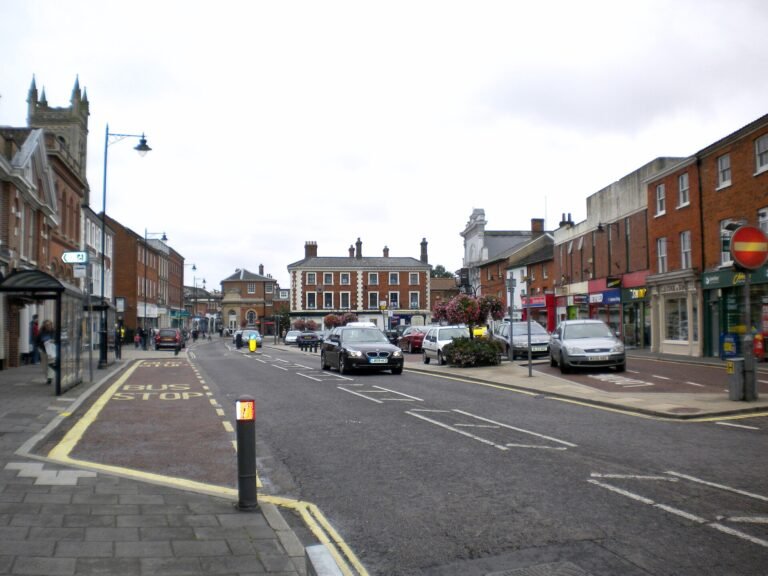
Great Yarmouth won a £20.1 million Town Deal from the government, on top of £13.77 million from the Future High Streets Fund and £8 million from the Getting Building Fund. Some of the results are already open. The £26 million Marina Centre on Marine Parade, with a pool, gym and climbing wall, opened on 5 August 2023. The market has a new covered building, which opened in February 2024; stalls trade six days a week, with the main market days on Wednesday and Saturday and an extra Friday market from May to October.
The Winter Gardens, the Victorian iron-and-glass building on the seafront, has been shut since 2008. An £18 million restoration, funded mainly by the National Lottery Heritage Fund, is under way, with reopening planned for 2028.
A buyer here is betting on the energy jobs and this public spending over the next several years, from a low starting price.
Beach and Broads
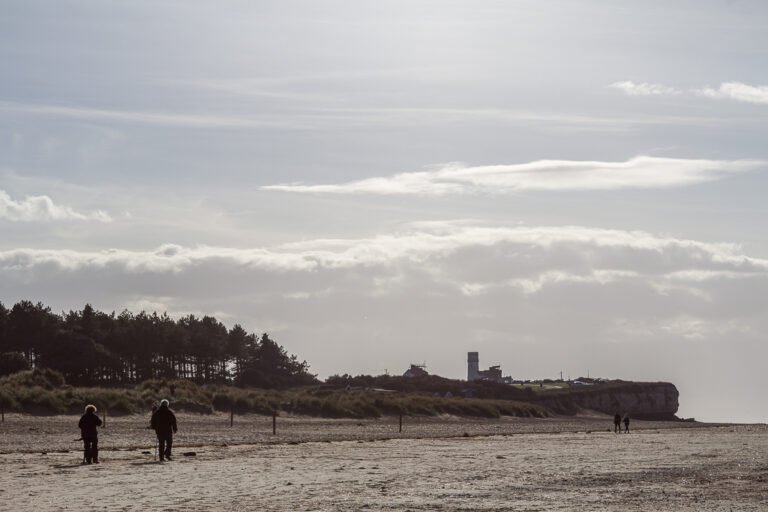
The beach runs north from the Pleasure Beach towards Caister. The seafront has the Britannia and Wellington piers, the Sea Life Centre and the amusements.
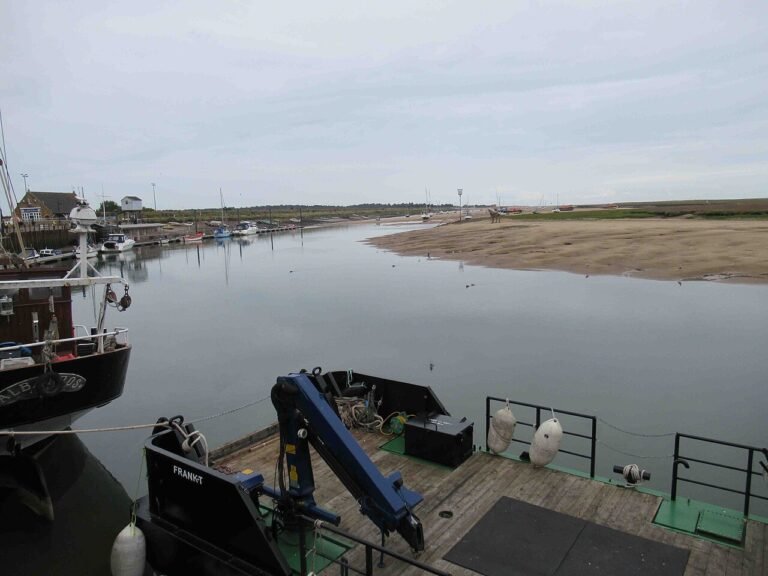
The Broads start at the western edge of town. Breydon Water, the tidal estuary behind Yarmouth, is fed by the Yare and the Waveney, and the Bure joins its outflow before the river reaches the sea, so you can put a boat or a kayak in without leaving the town. Hickling Broad and Horsey, where grey seals come ashore, are a short drive north.
Plan the move
How we produced this guide
Town sale prices are from HM Land Registry Price Paid Data, standard sales only, for the 12 months to June 2026. We counted addresses with a Great Yarmouth post town and no separate locality, so Gorleston, Bradwell, Belton and Caister are excluded. Borough and county prices are from the UK House Price Index, July 2026 release. Population is from the ONS 2021 Census. School details are from Ofsted reports. Bus details are from First’s timetables on bustimes.org, checked for Thursday 24 September 2026. Road scheme details are from National Highways and Norfolk County Council; regeneration figures are from Great Yarmouth Borough Council and the National Lottery Heritage Fund. Deprivation is from Norfolk County Council’s summary of the 2025 Index of Multiple Deprivation. The train time is a typical journey time. We update this guide quarterly. See our methodology page for source links.
Frequently asked questions
Is Great Yarmouth a good place to live?
For a buyer on a tight budget who wants a station and the sea, or who works in the port or offshore energy, yes. Its secondary schools are rated Good and it has a district hospital. Deprivation is concentrated here, so look at each street before you buy.
What is the average house price in Great Yarmouth?
The median of the 269 standard sales in the town in the 12 months to June 2026 was £140,000. Terraced houses, three quarters of all sales, had a median of £138,000. The borough average in the UK House Price Index was £209,114 in July 2026.
What are the schools like in Great Yarmouth?
Great Yarmouth Charter Academy was rated Good in June 2024, and the two Gorleston secondaries, Lynn Grove Academy and Cliff Park Ormiston Academy, are both rated Good. Sixth-formers go to East Norfolk Sixth Form College in Gorleston or East Coast College.
Related guides
Data sources: HM Land Registry, ONS Census 2021, Ofsted, bustimes.org, National Highways, Great Yarmouth Borough Council. Prices to June 2026; latest Ofsted inspections. Author: James Ward, Property and Money Editor.
Last reviewed
Still weighing it up? See how Great Yarmouth compares with Gorleston-on-Sea on prices, schools, broadband and council tax, or answer five quick questions and get a shortlist of the Norfolk towns that fit you.
Planning a move to Norfolk?
Our guides to hiring the firms a move needs.
We earn no commission on these links. Paid placements are sold separately and always labelled. See our advertising and disclosure page.