Norwich vs King’s Lynn: house prices, trains and schools compared
Every type of home costs less in King's Lynn than in Norwich. A terraced house had a median of £245,000 in the city and £171,000 in Lynn in the year to June 2026.

Every type of home costs less in King’s Lynn than in Norwich, and the gap is widest on the terraces. A terraced house in the city sold for a median of £245,000 in the year to June 2026, against £171,000 at a King’s Lynn address. Norwich has what the money pays for: the county’s teaching hospital, two universities and the widest choice of schools in Norfolk. Lynn has the faster train to Cambridge, 55 minutes, and the two towns are level on London.
House prices
The official averages point the wrong way. The UK House Price Index put Norwich at £224,323 in July 2026 and the King’s Lynn and West Norfolk borough at £265,715, which makes the city look cheaper. It is not. Flats made up 427 of the 1,602 standard sales in the Norwich City Council area in the year to June 2026, and they pull the city figure down. The borough figure includes the coast villages from Heacham to Snettisham, which pull Lynn’s up.
Compare the same kind of house and Lynn is cheaper in every category. Beyond the terraces, HM Land Registry medians for the year to June 2026 put semis at £225,000 against £265,000, detached houses £299,995 against £390,000, and flats £105,000 against £150,000.
Median sold price by property type, 12 months to June 2026
Norwich is standard sales in the Norwich City Council area. King’s Lynn is standard sales at King’s Lynn addresses with no separate village or suburb named, so Gaywood and South Wootton are not included. Source: HM Land Registry Price Paid Data, July 2025 to June 2026.
Inside each town the spread is wide. In Norwich’s Golden Triangle, in NR2, terraced houses had a median of £280,000; north of the river in NR3 they were £230,000. Cringleford, the family suburb just over the city boundary in South Norfolk, sold at a median of £369,995. In Lynn, Gaywood’s median was £235,000 and South Wootton’s £322,500. The Georgian merchants’ houses of the old town hardly come up: the Land Registry recorded no standard house sale on Queen Street, King Street or Nelson Street in the year.
The two markets are also moving in different directions. The index had Norwich down 2.3% in the year to July 2026 and the borough up 3.0%.
Side by side
| Factor | Norwich | King’s Lynn |
|---|---|---|
| Median sold price, 12 months to June 2026 | £236,000 (city council area) | £190,000 (King’s Lynn addresses) |
| Population, 2021 Census | About 144,000 (city council area) | 47,615 (built-up area) |
| Band D council tax, 2026-27 | £2,503.43 | £2,430.13 (borough average) |
| London by train | Liverpool Street, fastest 1h 39m, most trains about 1h 50m | King’s Cross via Ely and Cambridge, fastest 1h 47m, most trains 1h 51m to 1h 58m |
| Cambridge by train | Fastest 1h 11m | Fastest 55 minutes |
| Hospital | Norfolk and Norwich University Hospital, teaching hospital with A&E | Queen Elizabeth Hospital, district general with A&E; replacement due 2033 |
| Higher education | University of East Anglia, Norwich University of the Arts | College of West Anglia, with degrees validated by Anglia Ruskin University |
| State secondaries (latest Ofsted) | City of Norwich School: leadership strong, other areas expected standard (June 2026) | King Edward VII Academy: Good in every area (October 2024); Springwood High: Good (November 2022) |
| Full fibre coverage, September 2026 | 78.12% of premises | 74.73% (borough) |
Still deciding where in Norfolk?
Get the free Norfolk Relocation Pack: all 46 towns we cover on one table, on price, council tax, population, trains and distance to Norwich, plus a week-by-week move checklist. The download appears here as soon as you enter your email.
Unsubscribe any time.
Trains to London and Cambridge
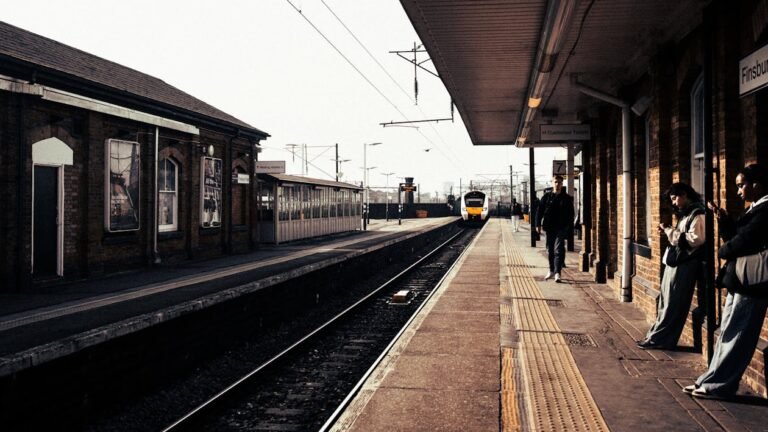
For London there is little between them. Greater Anglia runs 33 trains a weekday from Norwich to Liverpool Street, 32 of them direct, the fastest taking 1 hour 39 minutes and most about 1 hour 50. The last train home leaves Liverpool Street at 23:30. Great Northern runs direct from King’s Lynn to King’s Cross through Ely and Cambridge, every half hour until 08:41 and hourly after that. The fastest takes 1 hour 47 minutes and most take between 1 hour 51 minutes and 1 hour 58 minutes; coming back, trains take 1 hour 45 minutes until mid-afternoon and 1 hour 54 minutes in the evening peak. The last direct train to Lynn leaves King’s Cross at 22:48.
So choose by the end of London you work in. Liverpool Street is at the edge of the City; King’s Cross is further west. Cambridge is where Lynn pulls ahead. Its trains reach Cambridge in 55 minutes, against 1 hour 11 minutes at fastest from Norwich, which makes Lynn the better base for anyone working there.
The A47 joins the two towns, and the drive takes about an hour. The bus is First’s Excel through Swaffham and Dereham, and the 08:25 from King’s Lynn is due in Norwich at 10:30.
What Norwich has that Lynn does not
The Norfolk and Norwich University Hospital is the county’s teaching hospital, with the main A&E, and it is a trauma unit in the regional network. Norwich also has two universities, the University of East Anglia on the western edge of the city and Norwich University of the Arts in the centre. The larger employers are here too. Aviva, the former Norwich Union, has its registered office on Surrey Street, and the Norwich Research Park is beside the hospital.
Schools are the other reason families choose the city. City of Norwich School, for 11 to 18, was judged strong for leadership and at the expected standard in every other area, sixth form included, in June 2026. Thorpe St Andrew School, just outside the city, was Good in all areas in April 2025. The main independent schools are Norwich School and Norwich High School for Girls, both 3 to 18, and Town Close, a prep school.
Norwich is also the one place in the county where you can do without a car. The centre is small enough to cross on foot, signed cycle routes called pedalways run out to the suburbs, and there are six Park and Ride sites. Norwich Market has more than 190 stalls, open Monday to Saturday, and the Theatre Royal and Cinema City cover the evenings. Our Norwich guide goes through the neighbourhoods.
What Lynn has, and what to check
Lynn was a major port in the Middle Ages, and the old town between the Tuesday Market Place and the Saturday Market Place still has the buildings to show for it, including the Custom House of 1683 on the Purfleet. The Walks, a 17-hectare (42-acre) park, is in the middle of town, a few minutes’ walk from the station. The Alive Corn Exchange has a cinema, music and theatre, and the King’s Lynn Festival runs every year. Sandringham is about 8 miles north-east. Hunstanton is about 30 minutes north, and the Lynx 36 Coastliner bus runs up the coast to it.
There are three state secondaries. King Edward VII Academy was rated Good in every area, including its sixth form, in October 2024. Springwood High School kept its Good rating in November 2022 and also has a sixth form. King’s Lynn Academy, for 11 to 16, met the expected standard in five areas in June 2026, and its achievement was judged to need attention. Parents who want an independent school or a wider choice will find more of both in Norwich.
Check the hospital before you rely on it. The Queen Elizabeth Hospital’s main building was built with RAAC concrete planks and is held up by a rolling programme of steel and timber props. A new hospital is being built on the same site, and the trust expects it to take patients in 2033. The town is growing to the south: the West Winch Growth Area is planned for up to 4,000 homes. Our King’s Lynn guide has the prices by area and the full bus and train times.
Verdict
Buy in Norwich if your work, your children’s schooling or your health care depends on the city. It is also the only choice for a household that wants to live without a car. Expect to pay about £74,000 more than in Lynn for a terraced house, and more again for a detached one.
Buy in King’s Lynn if you work in Cambridge, or in London two or three days a week near King’s Cross, and want the most house for the money. Do not buy there if your job is in Norwich, which is an hour’s drive each way.
Plan the move
Dates to watch
- March 2027: National Highways expects to finish dualling the A47 between North Tuddenham and Easton, on the road between the two towns, by the end of the 2026-27 financial year.
- 2027: construction of the West Winch Housing Access Road, linking the A47 and the A10 south of Lynn, is due to start.
- 2028 and 2033: work on the main building of the new Queen Elizabeth Hospital is expected to begin in 2028, with patients from 2033.
How we produced this guide
Prices by property type are medians of standard sales in HM Land Registry Price Paid Data for 1 July 2025 to 30 June 2026: for Norwich, addresses in the Norwich City Council area; for King’s Lynn, addresses in the King’s Lynn post town with no separate village or suburb named. Averages and annual changes are from the UK House Price Index, July 2026. Train times are from the Greater Anglia and Great Northern timetables for Monday 28 September 2026. School details are from Ofsted reports. Council tax is from Norwich City Council and the Borough Council of King’s Lynn and West Norfolk. Broadband coverage is from thinkbroadband. The drive time is a typical time on the A47. We update this guide quarterly. See our methodology page for source links.
Frequently asked questions
Is Norwich or King’s Lynn cheaper?
King’s Lynn, for every type of home. In the year to June 2026 the median terraced house sold for £171,000 at a King’s Lynn address and £245,000 in Norwich; detached houses were £299,995 and £390,000. The official index shows Norwich as cheaper only because so many of its sales are flats.
Which has the better London commute?
They are about level. The fastest Norwich train to Liverpool Street takes 1 hour 39 minutes and the fastest from King’s Lynn to King’s Cross 1 hour 47 minutes; most take about 1 hour 50 and 1 hour 51 to 1 hour 58 respectively. Lynn is the better choice for Cambridge, 55 minutes away by train.
How do the schools compare?
Norwich has more choice, including Norwich School, Norwich High School for Girls and Town Close among the independents. In King’s Lynn, King Edward VII Academy was rated Good in every area in October 2024 and Springwood High is rated Good; King’s Lynn Academy’s achievement was judged to need attention in June 2026.
Can you live in either without a car?
In Norwich, yes: the centre is walkable, buses and six Park and Ride sites cover the suburbs, and pedalways run out to the hospital and the university. In King’s Lynn the station, town centre and The Walks are close together, and Lynx buses run to Hunstanton and the villages, but the bus to Norwich takes about two hours.
Is King’s Lynn improving?
Prices in the borough rose 3.0% in the year to July 2026 while Norwich’s fell 2.3%. The big projects are all still to come: a new Queen Elizabeth Hospital due in 2033 and up to 4,000 homes at West Winch, with the access road due to start in 2027.
Data sources: HM Land Registry, ONS Census 2021, Ofsted, Greater Anglia and Great Northern timetables, Norwich City Council, Borough Council of King’s Lynn and West Norfolk, thinkbroadband. Sale prices to June 2026; UK House Price Index July 2026. Last updated: 24 September 2026. Author: James Ward, Property and Money Editor.
Last reviewed
Want the raw numbers side by side? Run Norwich and King's Lynn through the data tool, or answer five quick questions for a shortlist across all 46 places we cover.
Planning a move to Norfolk?
Our guides to hiring the firms a move needs.
We earn no commission on these links. Paid placements are sold separately and always labelled. See our advertising and disclosure page.