All practical guides
Norwich population: what the ONS figures count
Norwich had 145,676 residents at mid-2025 in the city council area. Count the suburbs joined to it and the 2021 Census found 200,770. Which figure to use depends on the comparison.

Norwich had 145,676 residents at mid-2025, according to the Office for National Statistics estimate published on 29 July 2026. That was 1,443 fewer than a year earlier. The figure covers the Norwich City Council area only, and the city boundary is tight: count the suburbs that run on from it without a break and the 2021 Census found 200,770 people.
Which number you want depends on what you are comparing. Sprowston, Thorpe St Andrew, Hellesdon and Old Catton are in Broadland district, and Costessey is in South Norfolk. Buy a house in any of them and you have a Norwich postcode, a bus into the city and a council tax bill from a different council.
Four figures, four boundaries
| Population | What it counts | Source |
|---|---|---|
| 145,676 | Norwich City Council area | ONS mid-2025 estimate |
| 143,922 | Norwich City Council area | 2021 Census |
| 200,770 | Norwich built-up area: the city plus the suburbs joined to it in Broadland and South Norfolk | 2021 Census |
| 435,724 | Greater Norwich: Norwich, Broadland and South Norfolk districts together | ONS mid-2025 estimates |
The smallest figure is for the 39 square kilometres run by Norwich City Council, split into 13 wards, among them Bowthorpe, Catton Grove, Lakenham and Thorpe Hamlet. It is the figure to use against other council areas, such as Cambridge, Exeter or York. ONS revises its recent estimates each year: the mid-2024 figure first published in July 2025 was 147,182, and the July 2026 release puts it at 147,119.
On Census day in 2021 the same area had 143,922 residents, which ONS rounds to 144,000. The 2011 Census counted about 132,500.
The built-up area is the one to use for the size of the city. ONS draws built-up areas from satellite mapping of continuous development, ignoring council borders. The Norwich one includes the city and the suburbs that touch it. Some places that feel like Norwich are counted separately because open land divides them from it: Taverham and Drayton had 14,985 residents in their own built-up area, Cringleford 4,685 and Queen’s Hills 4,465.
The largest figure, Greater Norwich, is a planning area. Norwich, Broadland and South Norfolk share the Greater Norwich Local Plan, which decides where new housing goes. Their three mid-2025 estimates add up to 435,724, or 46% of Norfolk’s 945,427.
How Norwich has grown since 2011
Between the 2011 and 2021 Censuses the city council area grew 8.7%, from about 132,500 to 144,000. England grew 6.6% and the East of England 8.3%. Norwich moved from 158th to 150th of England’s 309 council areas by population.
It aged more slowly than the country. The number of Norwich residents aged 65 and over rose 10.6% in the decade, against 20.1% across England. People aged 15 to 64 rose 8.6% and children under 15 rose 6.3%.
In 2021 Norwich was the fourth most densely populated of the East of England’s 45 council areas, which ONS puts at about 26 people on every football-pitch-sized piece of land. At mid-2025 it had 3,735 people per square kilometre. Great Yarmouth, the next densest district in Norfolk, had 579.
Moving to Norfolk this year?
Get the free Norfolk Relocation Pack: all 46 towns we cover on one table, on price, council tax, population, trains and distance to Norwich, plus a week-by-week move checklist. The download appears here as soon as you enter your email.
Unsubscribe any time.
The fall in the year to mid-2025
The latest estimate is the first fall in the series since mid-2021. In the year to mid-2025, 78 of the 318 council areas in England and Wales did not grow, and Norwich was one of them.
The loss was to the rest of the UK. ONS estimates 16,688 people left Norwich for elsewhere in the UK and 14,266 moved in, a net loss of 2,422. Migration from abroad still added people: 3,262 arrived and 2,316 left, a net gain of 946. Births (1,224) slightly outnumbered deaths (1,151).
The districts on either side kept growing. Broadland added 1,760 people in the same year and South Norfolk 2,012.
The official projections expected more. ONS’s 2022-based projections have Norwich at about 151,800 by 2032. One year is not a trend, and ONS says small changes should be read with caution, but the mid-2025 figure is moving the other way.
Students and suburbs
The University of East Anglia had 16,945 students in 2024/25: 12,535 undergraduates and 4,410 postgraduates, or 14,855 on a full-time-equivalent basis. Norwich University of the Arts had 2,765. Those are enrolment counts from the Higher Education Statistics Agency and include part-time students, so they cannot simply be added to the population. The University ward, which contains the UEA campus, had 14,551 residents at the 2021 Census, the most of any ward in the city.
The suburbs outside the boundary are towns in their own right. At the 2021 Census Sprowston parish had 17,126 residents, Costessey 16,679 and Hellesdon 11,126. Sprowston parish alone would rank seventh among the built-up areas on our list of Norfolk towns by population, above Wymondham.
Using the figures
Check the boundary before you compare anything per head. HM Land Registry sale records use the postal town, so a house sold in Sprowston or Costessey is usually filed under Norwich. ONS population and earnings figures follow council boundaries, so the same house sits in Broadland or South Norfolk. Put a Norwich price next to a Broadland income and the comparison is wrong from the start.
For a sense of the place, use the built-up area. A city of 200,000 is what you will be living in, whichever council sends the bill.
Frequently asked questions
What is the current population of Norwich?
145,676 at mid-2025, on the ONS estimate published on 29 July 2026. That covers the Norwich City Council area only. The wider built-up area, including the suburbs in Broadland and South Norfolk, had 200,770 residents at the 2021 Census.
How much has Norwich grown since the last Census?
The 2021 Census counted 143,922 people in the city council area. The mid-2025 estimate is about 1,750 higher, but it fell by 1,443 in the latest year because more people moved out to the rest of the UK than moved in.
Is Norwich a city or a town?
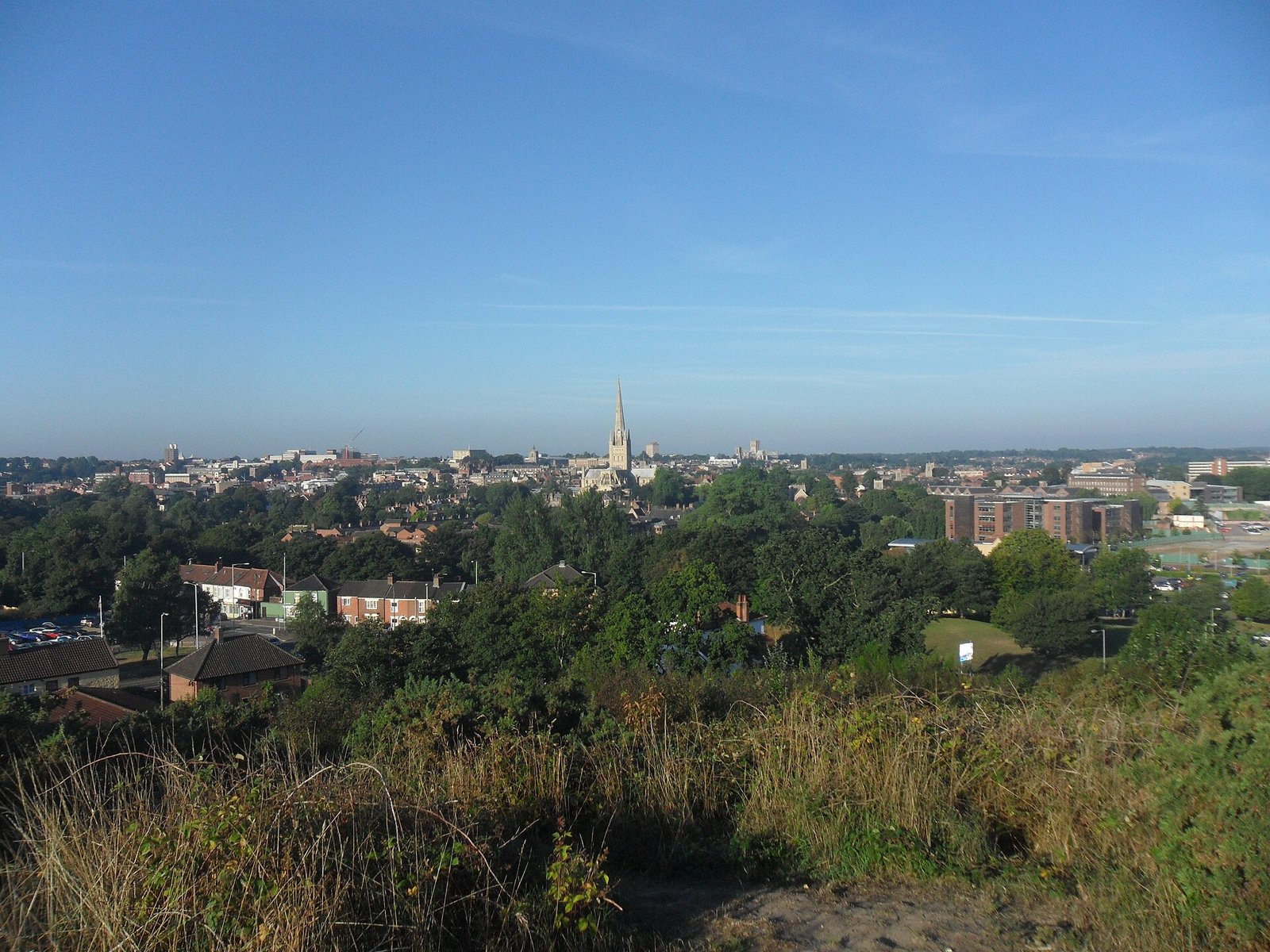
A city, with a cathedral begun in 1096. It is Norfolk’s only settlement of more than 100,000 people; the next largest, King’s Lynn, had 47,615 in its built-up area at the 2021 Census.
Does the Norwich population figure include students?
It includes students who are usually resident in the city. UEA had 16,945 students enrolled in 2024/25 and Norwich University of the Arts 2,765, but those counts include part-time students and are not a count of residents.
What population figure should I use if I am comparing Norwich to another English city?
For council against council, use 145,676 (mid-2025). For the size of the city you would live in, use the built-up area figure of 200,770 (2021 Census).
Where can I find population figures for individual Norwich suburbs?
Parish figures from the 2021 Census are published by ONS on Nomis: Sprowston had 17,126, Costessey 16,679 and Hellesdon 11,126. Norfolk Insight, the county council’s data site, publishes parish estimates too, and our Norfolk towns by population page ranks the county’s 25 built-up areas of more than 5,000 people alongside the seven district totals.
Sources
- Office for National Statistics, “Population estimates for England and Wales: mid-2025” (published 29 July 2026), with tables MYE3 (components of change) and MYE5 (density). Norwich (E07000148) mid-2025: 145,676; revised mid-2024: 147,119.
- Office for National Statistics, “Population estimates for England and Wales: mid-2024” (published 30 July 2025). Norwich mid-2024 as first published: 147,182.
- Office for National Statistics, “How the population changed in Norwich, Census 2021.” Growth since 2011, age groups, ranking and density.
- Office for National Statistics, “Towns and cities, characteristics of built-up areas, England and Wales: Census 2021” (August 2023). Norwich built-up area: 200,770.
- Office for National Statistics via Nomis: Census 2021 usual residents (TS001) for the city and its wards, and parish population profiles.
- Norfolk Office of Data and Analytics, “The Norfolk Story” (August 2025), table 4.4, citing ONS 2022-based subnational population projections.
- Higher Education Statistics Agency (HESA), student enrolments by provider, 2024/25. University of East Anglia 16,945; Norwich University of the Arts 2,765.
James Ward writes about Norwich and its suburbs for the Norfolk Living Guide.
Planning a move to Norfolk?
Our guides to hiring the firms a move needs.
We earn no commission on these links. Paid placements are sold separately and always labelled. See our advertising and disclosure page.