All practical guides
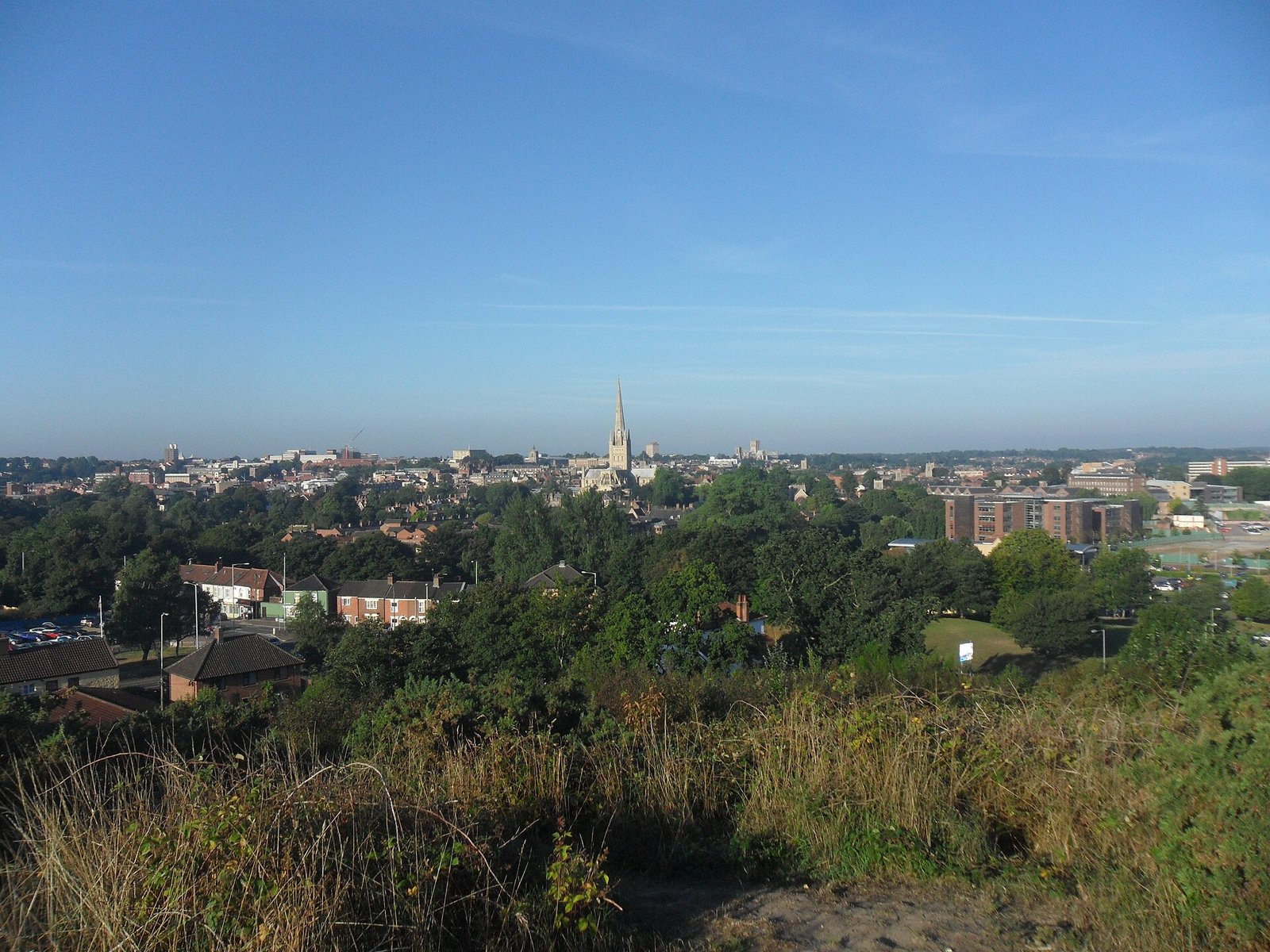
Norfolk towns by population: the 25 largest
Norwich is the only place in Norfolk with more than 100,000 people. Five more towns have over 20,000, and by 25th place on the list the count is down to about 5,000.

Norwich is the only place in Norfolk with more than 100,000 people. Five more towns have over 20,000, and by 25th place on the list the count is down to about 5,000. Most of the market towns people move to, Aylsham, Cromer, Sheringham, Fakenham, are built-up areas of 7,000 to 8,500.
The figures below are the 2021 Census counts for every built-up area in Norfolk with more than 5,000 residents. The county as a whole had 945,427 people at mid-2025, the latest ONS estimate, 29,307 more than the Census counted four years earlier. The district figures are further down the page.
The 25 largest towns in Norfolk by population (2021 Census)
A built-up area is the continuously developed land ONS maps from satellite imagery, drawn without regard to parish or council boundaries. That makes it the fairest way to compare towns, but the number can differ from the parish figure our town guides quote. Watton’s built-up area had 11,545 residents against 8,964 in Watton parish, because the housing runs on past the parish line. Aylsham goes the other way: 7,185 in the built-up area, 7,568 in the parish, which takes in farmland and outlying houses.
| Rank | Town | Population (2021) | District / borough |
|---|---|---|---|
| 1 | Norwich (the city and the suburbs joined to it, including parts of Broadland and South Norfolk) | 200,770 | Norwich / Broadland / South Norfolk |
| 2 | King’s Lynn | 47,615 | King’s Lynn and West Norfolk |
| 3 | Great Yarmouth | 28,985 | Great Yarmouth |
| 4 | Thetford | 25,510 | Breckland |
| 5 | Gorleston-on-Sea | 24,470 | Great Yarmouth |
| 6 | Dereham | 20,785 | Breckland |
| 7 | Wymondham | 16,330 | South Norfolk |
| 8 | Taverham and Drayton | 14,985 | Broadland / South Norfolk |
| 9 | North Walsham | 12,825 | North Norfolk |
| 10 | Bradwell | 11,630 | Great Yarmouth |
| 11 | Watton | 11,545 | Breckland |
| 12 | Downham Market | 11,350 | King’s Lynn and West Norfolk |
| 13 | Attleborough | 11,235 | Breckland |
| 14 | Diss | 9,600 | South Norfolk (crosses into Suffolk) |
| 15 | Caister-on-Sea | 9,095 | Great Yarmouth |
| 16 | Swaffham | 8,430 | Breckland |
| 17 | Fakenham | 8,390 | North Norfolk |
| 18 | Cromer | 7,525 | North Norfolk |
| 19 | Aylsham | 7,185 | Broadland |
| 20 | Poringland | 7,105 | South Norfolk |
| 21 | Sheringham | 7,090 | North Norfolk |
| 22 | Hethersett | 7,020 | South Norfolk |
| 23 | Hemsby | 5,720 | Great Yarmouth |
| 24 | Long Stratton | 5,220 | South Norfolk |
| 25 | Harleston | 5,075 | South Norfolk |
Norwich’s number depends on the boundary you draw. The city council area had 145,676 residents at mid-2025 on the ONS estimate, against 200,770 for the built-up area at the 2021 Census. The four Norwich figures, and which to use when, are in Norwich population 2026.
What the numbers show
Norwich’s built-up area is bigger than the next four towns put together. King’s Lynn, Great Yarmouth, Thetford and Gorleston-on-Sea add up to 126,580. If you want a city with a university, a teaching hospital and a direct train to London, Norfolk has one.
After Dereham, at 20,785, no town reaches 17,000. Wymondham is next at 16,330, and 16 of the 25 have fewer than 12,000 people.
Three places on the list are Norwich suburbs more than towns. Taverham and Drayton, eighth, is about 5 miles north-west of the city on the Wensum. Poringland, 20th, is 5 miles south. Hethersett, 22nd, is about six miles by road from the city centre, on the way to Wymondham. If you are comparing them with Fakenham or Diss, compare what is in the centre, not the headcount.
Great Yarmouth’s borough holds five of the 25. Bradwell, tenth, lies immediately west of Gorleston and Great Yarmouth and is hard to tell apart from them on the ground. Hemsby, 23rd, is different: a separate coastal village about 8 miles from Great Yarmouth.
The largest places just under the cut-off are Dersingham (4,755), Cringleford (4,685), Queen’s Hills (4,465), Horsford (4,395) and Brundall (4,380). Hunstanton’s built-up area had 4,230 people and Holt’s 4,015. Wells-next-the-Sea parish had 2,147 and Reepham 2,656. Loddon, Wroxham, Burnham Market, Blofield and Rackheath are all under 5,000 too.
Four towns from outside the county spill over its border and are left out of the table: Wisbech, whose built-up area had 26,795 people, and Beccles, Brandon and Bungay in Suffolk.
Moving to Norfolk this year?
Get the free Norfolk Relocation Pack: all 46 towns we cover on one table, on price, council tax, population, trains and distance to Norwich, plus a week-by-week move checklist. The download appears here as soon as you enter your email.
Unsubscribe any time.
Norfolk’s population by district (mid-2025)
The town table is from the 2021 Census. The latest yearly figures are the ONS mid-2025 estimates, published on 29 July 2026 at district level. South Norfolk and Broadland, on either side of Norwich, added the most people. Norwich was the only Norfolk district to shrink.
| District | Mid-2025 estimate | Change on mid-2024 |
|---|---|---|
| King’s Lynn and West Norfolk | 156,943 | +751 |
| South Norfolk | 150,396 | +2,012 |
| Breckland | 148,095 | +1,311 |
| Norwich | 145,676 | -1,443 |
| Broadland | 139,652 | +1,760 |
| North Norfolk | 103,708 | +277 |
| Great Yarmouth | 100,957 | +291 |
| Norfolk | 945,427 | +4,959 |
Norfolk grows by people moving in. In the year to mid-2025 there were 10,875 deaths and 6,963 births, so deaths outnumbered births by 3,912. People moving from elsewhere in the UK more than made up for it: 37,302 came, 29,130 left, a net gain of 8,172. Migration from abroad added a net 834.
Over the five years from mid-2020 the county grew 3.9%, slower than the East of England (5.0%) and England (4.5%). ONS’s 2022-based projections put Norfolk at about 996,100 by 2032.
Size and what it tells you
Population tells you how big a place is, not what is in it. Aylsham’s built-up area has 7,185 people, and the town has a Tesco, a Budgens, a Co-op, two GP practices and a market on Mondays and Fridays. Look at the high street, the surgery and the bus timetable before the headcount. The compare-towns tool puts prices, schools, commute and crime side by side for any two Norfolk towns.
Methodology
Town populations are from ONS’s Census 2021 figures for built-up areas, published in August 2023 and rounded by ONS to the nearest five. In this set Great Yarmouth, Gorleston-on-Sea and Bradwell each appear as separate places, while Norwich is one area that includes its joined suburbs. We ranked every built-up area wholly or mainly in Norfolk. Parish figures, where we quote them, are 2021 Census parish counts from ONS’s Nomis service. The yearly ONS estimates cover council areas, which is why the district table uses them and the town table does not.
Norfolk Insight, the county’s data site, publishes parish-level estimates for smaller villages. They are built differently from the built-up area counts and should not be mixed with them.
Frequently asked questions
What is the largest town in Norfolk?
Norwich, with 200,770 people in its built-up area at the 2021 Census; the city council area alone had 143,922. The next largest is King’s Lynn at 47,615, less than a quarter of Norwich’s size.
Is Great Yarmouth bigger than King’s Lynn?
Not as a single town: King’s Lynn had 47,615 and Great Yarmouth 28,985. Add Gorleston-on-Sea (24,470), Bradwell (11,630), Caister-on-Sea (9,095) and Hemsby (5,720), all in Great Yarmouth borough, and the total is 79,900.
How many towns in Norfolk have more than 10,000 people?
Thirteen: Norwich, King’s Lynn, Great Yarmouth, Thetford, Gorleston-on-Sea, Dereham, Wymondham, Taverham and Drayton, North Walsham, Bradwell, Watton, Downham Market and Attleborough.
Which Norfolk town has grown the fastest?
Over the long run, Thetford: about 5,000 people after the Second World War, about 21,000 by the late 1980s after London overspill estates were built, and 25,510 in its built-up area in 2021. Between the 2011 and 2021 Censuses, Poringland parish grew 44% and Costessey 34%, and South Norfolk grew 14.4%, the fastest of the county’s districts.
Why isn’t Sprowston, Costessey or Hellesdon on the list?
ONS counts them inside the Norwich built-up area. As parishes they are large: Sprowston had 17,126 residents at the 2021 Census, Costessey 16,679 and Hellesdon 11,126. Sprowston on its own would rank seventh.
What is the population of Norfolk?
945,427 at mid-2025, on the latest ONS estimate. The 2021 Census counted 916,120. Deaths outnumber births in Norfolk, so the growth comes from people moving in.
Where does Norfolk Insight fit in?
Norfolk Insight is the county’s data site. It publishes parish-level estimates and profiles for villages too small for this list, but its method differs from the Census built-up area counts, so do not mix the two.
Sources
- Office for National Statistics, “Towns and cities, characteristics of built-up areas, England and Wales: Census 2021” (August 2023), table 1c: ons.gov.uk/peoplepopulationandcommunity/housing/datasets/townsandcitiescharacteristicsofbuiltupareasenglandandwalescensus2021
- Wikipedia, “List of largest settlements in Norfolk by population”, which the earlier version of this page used; its figures differ slightly from the ONS table above: en.wikipedia.org/wiki/List_of_largest_settlements_in_Norfolk_by_population
- ONS Census 2021 area profiles, “How the population changed” (per district): ons.gov.uk/visualisations/censuspopulationchange
- Norfolk Insight population estimates for smaller settlements: norfolkinsight.org.uk
- Norfolk Office of Data and Analytics, “The Norfolk Story” (August 2025), table 4.4, ONS 2022-based projections to 2032: norfolkinsight.org.uk/wp-content/uploads/2025/10/Norfolk_Story_August_2025.pdf
- ONS mid-2025 population estimates for England and Wales (29 July 2026), tables MYE3 and MYE5: ons.gov.uk/peoplepopulationandcommunity/populationandmigration/populationestimates
- Norfolk County Council, Census 2021 first results: norfolk.gov.uk/article/44090/Census-2021-first-results-published
By Tom Fletcher, Norfolk Living Guide. Contributors write under editorial pseudonyms; see our about page for how the site is edited.
Last reviewed
Planning a move to Norfolk?
Our guides to hiring the firms a move needs.
We earn no commission on these links. Paid placements are sold separately and always labelled. See our advertising and disclosure page.