All practical guides
Spring in Norfolk: bluebell woods, reserves and walks
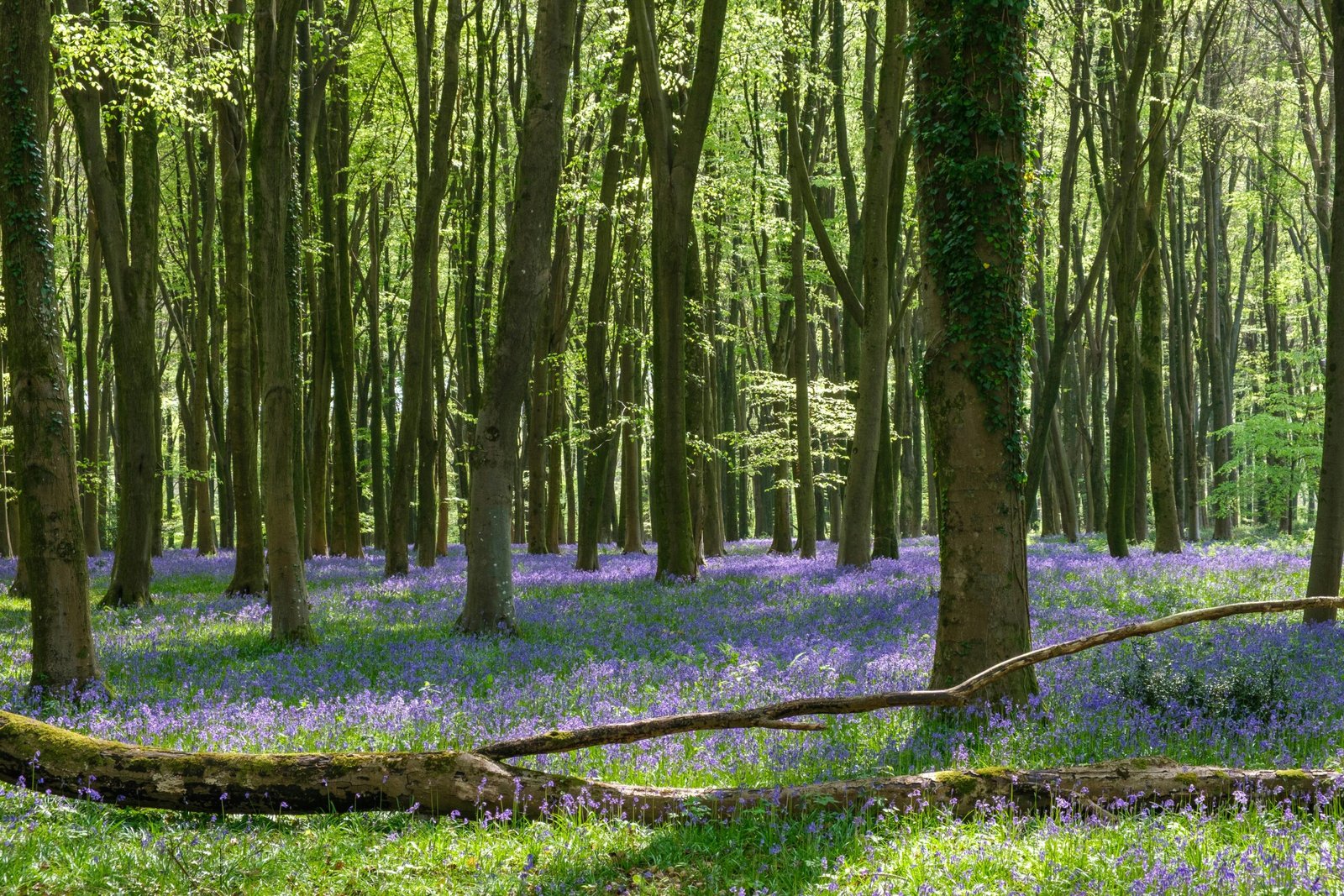
Bluebells are usually at their best in the second half of April. Foxley Wood, Wayland Wood, Barton Broad and Hickling Broad admit assistance dogs only, so check before you take a dog.

Size of the reserves in this guide (hectares)
Reserve areas as published by Norfolk Wildlife Trust, September 2026.
Before you drive anywhere with a dog in spring, check the reserve’s rules: Foxley Wood, Wayland Wood, Barton Broad and Hickling Broad admit assistance dogs only. Bluebells are usually at their best in the second half of April, and from April the nesting season puts parts of the coast off limits to dogs off the lead.
Bluebell woods
The Woodland Trust’s Nature’s Calendar records put the average first flowering date for bluebells in the UK at 9 April. They usually last into early May and come out earlier after a mild spring. Native bluebells are protected under the Wildlife and Countryside Act 1981, and digging up the bulbs without the landowner’s permission is illegal.
Foxley Wood, a Norfolk Wildlife Trust reserve, is 124 hectares of ancient woodland about 25km north-west of Norwich (NR20 4QR). The entrance is 2km past Foxley village on the right, with several small car parks, and entry is free. It opens 10am to 5pm and is closed on Thursdays. The bluebells share the floor with ramsons and early purple orchids.
Wayland Wood, also a Trust reserve, on the A1075 just south of Watton (IP25 6PS), is smaller at 33 hectares and is open dawn to dusk every day. Coppicing there has been recorded back to the 10th century, and the wood is the supposed setting of the Babes in the Wood story. Spring brings bluebells, wood anemones and the rare yellow star-of-Bethlehem. The car park is small and sits on a fast stretch of road with poor visibility, so pull in and out carefully.
Lower Wood at Ashwellthorpe, another Trust reserve, has bluebells under old oaks and wild garlic in spring.
Heath, marsh and fen reserves
Norfolk Wildlife Trust, founded in 1926, looks after more than 60 nature reserves. Of the reserves in this guide, only Cley and Hickling, the two with visitor centres, charge non-members for entry.
| Reserve | Where | In spring | Dogs |
|---|---|---|---|
| Cley and Salthouse Marshes | A149, 6km north of Holt (NR25 7SA) | Migrant birds on passage; avocets and redshank breed into summer | Assistance dogs only on the reserve |
| Barton Broad and Marshes | Between Neatishead and Irstead (NR12 8XP) | Marsh harriers, kingfishers, marsh marigold and yellow flag iris | Assistance dogs only |
| Buxton Heath | About 13km north of Norwich (NR10 4QH) | Woodlarks and green hairstreak butterflies | On a lead |
| East Wretham Heath | A1075, 5km north-east of Thetford (IP24 1RU) | Woodlarks, nightjars and one of the few breeding sites for redstarts in East Anglia | On a lead |
| Foxley Wood | Beyond Foxley village (NR20 4QR) | Bluebells, ramsons, early purple orchids | Assistance dogs only |
At Cley, non-members pay £6 to enter with Gift Aid (£5.40 without) and £6 a day to park; members and children aged 16 and under go in free. East Wretham is a Breckland reserve of heath, Scots pine and meres, small lakes fed from the chalk whose levels rise and fall. The full list is on norfolkwildlifetrust.org.uk.
Moving to Norfolk this year?
Get the free Norfolk Relocation Pack: all 46 towns we cover on one table, on price, council tax, population, trains and distance to Norwich, plus a week-by-week move checklist. The download appears here as soon as you enter your email.
Unsubscribe any time.
Parks, forest and bird reserves
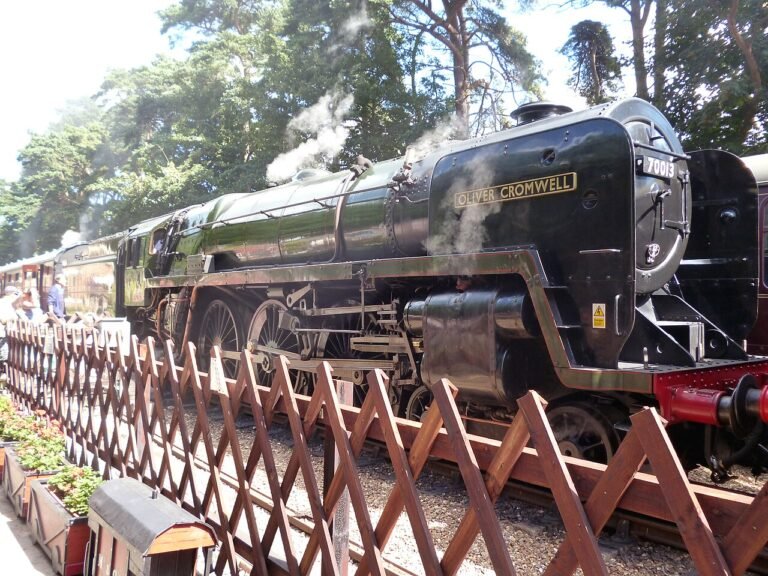
Sheringham Park belongs to the National Trust and was landscaped by Humphry Repton, who called it his “favourite and darling child in Norfolk”. It lies about two miles south-west of Sheringham, with the entrance at the junction of the A148 and B1157. The rhododendrons and azaleas, many grown from seed the owner Henry Morris Upcher obtained from the plant collector Ernest Wilson in the early 20th century, flower in spring. Waymarked paths run down to the coast and to Weybourne station on the North Norfolk Railway.
Thetford Forest covers 18,730 hectares, and Forestry England describes it as the UK’s largest man-made lowland forest. Its main visitor site, High Lodge, is over the border in Suffolk, off the B1107 between Brandon and Thetford (IP27 0AF). It has walking and cycling trails, cycle hire, Go Ape and play areas. Parking costs £6.50 for two hours or £15.50 for the day, free to Forestry England members. From late March to early September the site opens 9am to 6pm.
RSPB Titchwell Marsh (PE31 8BB) is on the north-west coast. Avocets, marsh harriers and bearded tits all nest there, the two Parrinder hides are level and accessible, and a mobility scooter can be booked. Dogs on leads are allowed on the West Bank Path, a public footpath, but not on the reserve’s other trails. Inland, RSPB Strumpshaw Fen sits on the River Yare about six miles east of Norwich.
The coast
The Norfolk Coast Path now runs 112 miles along the whole coastline, from Sutton Bridge on the Lincolnshire border to just past Hopton-on-Sea on the Suffolk border. The original National Trail section ran from Hunstanton to Cromer. The coast from the Wash to Winterton sits inside the Norfolk Coast National Landscape, the former Area of Outstanding Natural Beauty.
Nesting birds change the dog rules on some beaches from April. The Holkham estate asks for dogs on leads in the most sensitive parts of Holkham beach from 1 April to 31 August, which still leaves more than 70% of the beach for dogs off the lead. Parking at Lady Anne’s Drive or the Wells beach car park costs £3.80 for up to two hours and £14 for the day. From the Wells car park, the path west through the pines leads to Holkham; our Wells-next-the-Sea guide covers the town and the beach bus.
Blakeney Point is a shingle spit about four miles long, walked from the Cley beach car park. The shingle is hard going, which is why many people take a seal trip by boat from Morston quay instead. Grey seals pup on the Point from November to January (the Sea Mammal Research Unit estimated almost 9,000 pups there in 2023, making it England’s largest grey seal colony), so in spring you see adults hauled out rather than pups. Harbour seals pup from June to August. Sandwich, common and little terns breed on the Point in summer.
The Broads
The Broads are Britain’s largest protected wetland, with more than 125 miles of navigable rivers and broads. At Hickling Broad and Marshes, Norfolk Wildlife Trust’s 600-hectare reserve on the largest of the broads, the Trust lists bitterns, cuckoos, warblers, marsh harriers and spoonbills among the birds; swallowtail butterflies and Norfolk hawker dragonflies follow in early summer. The reserve is about 4km south of Stalham off the A149 (NR12 0BW), with a car park at the entrance. Non-members pay £5.50 with Gift Aid, children go free, and the Trust runs boat trips out into the reserve; dates are on its events pages.
Barton Broad, the second largest of the broads, is free. A 1km wooden boardwalk goes through wet woodland to a viewing platform over the water, and it is wheelchair-accessible. The Broads Authority car park is between Neatishead and Irstead, about 1km from the start of the boardwalk, with a few disabled spaces at the boardwalk itself. Our guide to living in the Broads covers the villages around both.
Dogs, ticks and charges
At Cley, dogs on leads can use Beach Road, the shingle bank and the East Bank, but not the reserve itself.
Ticks live in woodland and long grass. The NHS advises covering your skin, tucking trousers into socks, using an insect repellent (DEET works best) and staying on clear paths. To remove one, use fine-tipped tweezers or a tick-removal tool, grip it close to the skin and pull slowly upwards without crushing it.
Charges in this guide were checked in September 2026. Norfolk Wildlife Trust, National Trust, RSPB and Forestry England members get free entry or parking at their own sites, which adds up if you use one site regularly.
How we produced this guide
Reserve sizes, opening times, dog rules and charges are taken from each site’s page on the Norfolk Wildlife Trust, Forestry England, RSPB and Holkham estate websites, checked in September 2026. The Norfolk Coast Path length is from National Trails, bluebell timing and protection from the Woodland Trust, seal figures from the National Trust and the Sea Mammal Research Unit, and tick advice from the NHS. Sheringham Park and Blakeney Point history is from published reference sources. See our methodology page for how we source the site.
Frequently asked questions
When is the best time to see bluebells in Norfolk?
Usually the second half of April. The UK average first flowering date is 9 April and the flowers normally last into early May, earlier after a mild spring.
Are Norfolk Wildlife Trust reserves dog-friendly?
Some are. Foxley Wood, Wayland Wood, Barton Broad, Hickling Broad and the Cley reserve admit assistance dogs only, while Buxton Heath and East Wretham Heath allow dogs on a lead. Each reserve page lists its rule.
Is the Norfolk Coast Path accessible for all fitness levels?
Surfaces vary a great deal along its 112 miles, so check the section you plan to walk. The Blakeney Point walk from Cley is over loose shingle and is hard going.
Where can I park for the Broads in spring?
Hickling Broad has a car park at the reserve entrance off the A149 south of Stalham (NR12 0BW). For Barton Broad, use the Broads Authority car park between Neatishead and Irstead, about 1km from the boardwalk.
Are there guided wildlife walks in spring?
Norfolk Wildlife Trust and the RSPB list guided walks and boat trips on their events pages, and the Trust runs boat trips at Hickling. Book early for the popular dates.
Data sources: Norfolk Wildlife Trust, Forestry England, RSPB, Holkham estate, National Trails, Woodland Trust, NHS. Checked September 2026. Author: Sarah Ellis, Coast and Broads Editor.
Planning a move to Norfolk?
Our guides to hiring the firms a move needs.
We earn no commission on these links. Paid placements are sold separately and always labelled. See our advertising and disclosure page.
Keep reading
Similar Posts
Leasehold reforms announced on 15 July 2026: what they mean in Norfolk
The 15 July 2026 announcement changes what landlords must tell leaseholders and who pays legal costs in a dispute. It does not cut service charges, ground rents or lease extension prices.Secondary schools in Norfolk: every state secondary by area, with Ofsted and sixth form
The 53 state-funded secondary schools in Norfolk, grouped by area, with age range, sixth form, pupil numbers and the latest Ofsted outcome. Admission dates, in-year moves and transport rules.Downsizing to Norfolk: stamp duty, equity release and where it actually works
The practical version: SDLT replacement-of-main-residence rules, the honest Equity Release Council trade-off, July 2026 UK HPI prices by district, five Norfolk towns where downsizing actually works and what the removal and GP registration side looks like.Getting a mortgage in Norfolk: rates, brokers and what local pay borrows
Mortgage rates in Norfolk are national; what differs is what local pay borrows, about £166,000 on one median salary. General information, not regulated financial advice.Norwich population: what the ONS figures count
Norwich had 145,676 residents at mid-2025 in the city council area. Count the suburbs joined to it and the 2021 Census found 200,770. Which figure to use depends on the comparison.Norfolk broadband: full fibre coverage by town and village
77.2% of Norfolk premises could order full fibre in September 2026, against 85.8% across England. The gap that matters is between the towns and open countryside.