All practical guides
The case for living in Norfolk
Norfolk homes cost 20% less than the East of England average. The price is distance: there is no motorway, and the average train from Norwich to London takes 1 hour 51 minutes.

Norfolk house prices against the region and the country
Average prices, July 2026. Bar widths scaled to London. Source: HM Land Registry UK House Price Index.
For the case against Norfolk, see Is Norfolk a good place to live?
Norfolk’s average house price was £269,185 in July 2026, about £3,400 below the UK average and 20% below the East of England as a whole (HM Land Registry UK House Price Index). For that money you get 90 miles of coast, the Broads and a city of about 200,000 people. The price is distance. There is no motorway, and the average train from Norwich to London takes 1 hour 51 minutes. Norfolk suits people who need to be in London two or three days a week at most. It does not suit a daily commuter.
Why Norfolk is cheaper
The gap with the rest of the region comes down to distance from London. Hertfordshire, Essex and Cambridgeshire are priced around a commute. Norfolk has never had a fast one, so its house prices have followed what people earn here.
The ONS affordability figures show how closely. In 2025 the median Norfolk home cost 7.65 times the median full-time wage of people working in the county, against 7.63 for England. Houses here are cheaper, but pay is lower too: the Norfolk median was £35,940 a year and England’s £39,298. By district the ratio runs from 6.51 in Norwich and 6.60 in Great Yarmouth up to 9.32 in North Norfolk.
So Norfolk is cheap if your money was made somewhere else, as equity from a house sale further south or a salary paid in London or Cambridge. On a Norfolk wage, buying here is as hard as it is in England on average.
Prices have also stood still. The county average was £265,041 in January 2024 and £269,185 in July 2026, a rise of under 2% in two and a half years. In every month of that period Norfolk sat between 18% and 22% below the East of England average.
House prices by district
The county average covers a wide spread. Great Yarmouth is the cheapest district and Norwich the second cheapest; at the 2021 Census, 54% of homes in the Norwich built-up area were terraces or flats. The two dearest districts are inland: Broadland and South Norfolk, which wrap around Norwich, both average more than North Norfolk.
North Norfolk’s figure is held down by inland towns such as North Walsham and Fakenham. The coast itself is a separate market. HM Land Registry recorded 65 standard sales in Burnham Market in the three years to June 2026, with a median price of £715,000, and 47 in Blakeney with a median of £640,000. Both are more than twice the county average.
In Norwich, the NR1, NR2 and NR3 postcodes hold most of the Victorian terraces within walking distance of the centre, alongside newer flats. Breckland, which takes in Dereham, Thetford and Watton, averages close to the county figure.
| Area | Average price, July 2026 | What is there | Who it suits |
|---|---|---|---|
| Norwich (city council area) | £224,323 | Victorian terraces and flats, most of them walkable to the centre | First-time buyers, people who want to live without a car |
| North Norfolk | £292,563 | The coast, Holt, Cromer and Sheringham; many second homes; limited public transport | Retirees, second-home owners, people who work from home |
| Broadland / South Norfolk | £313,407 / £311,587 | Norwich suburbs and commuter villages | Families working in Norwich |
| Breckland / King’s Lynn and West Norfolk | £268,905 / £265,715 | Market towns, forest and farmland, with longer drives to services | Buyers who want space for the money |
| Great Yarmouth / Gorleston | £209,114 | Seaside town and port | Buyers who want the lowest prices near the sea |
Moving to Norfolk this year?
Get the free Norfolk Relocation Pack: all 46 towns we cover on one table, on price, council tax, population, trains and distance to Norwich, plus a week-by-week move checklist. The download appears here as soon as you enter your email.
Unsubscribe any time.
Norwich
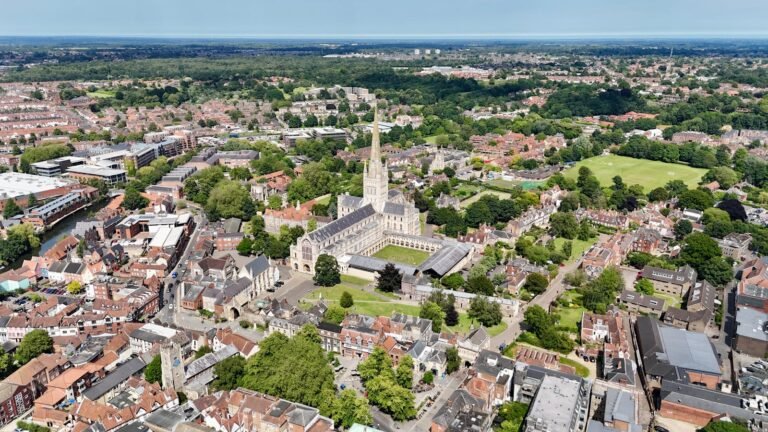
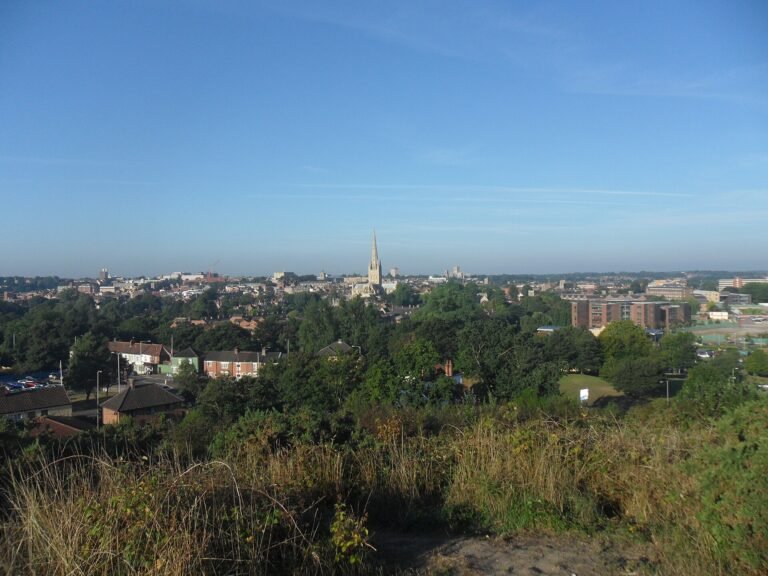
Norwich is the county’s only city. The built-up area had 200,770 residents at the 2021 Census (ONS), and it has the Norfolk and Norwich University Hospital, two universities (the University of East Anglia and Norwich University of the Arts) and the terminus of the main line from Liverpool Street.
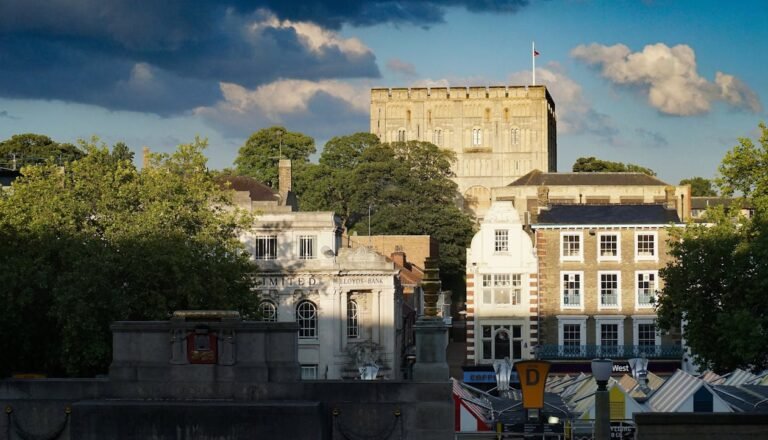
The centre is small enough to walk across. Norwich Market has more than 190 stalls trading Monday to Saturday (Norwich City Council), and the Norwich Lanes behind it are streets of small shops. Our Norwich guide covers the residential areas, including the Golden Triangle’s Victorian terraces off Unthank Road and Eaton on the south-west side.
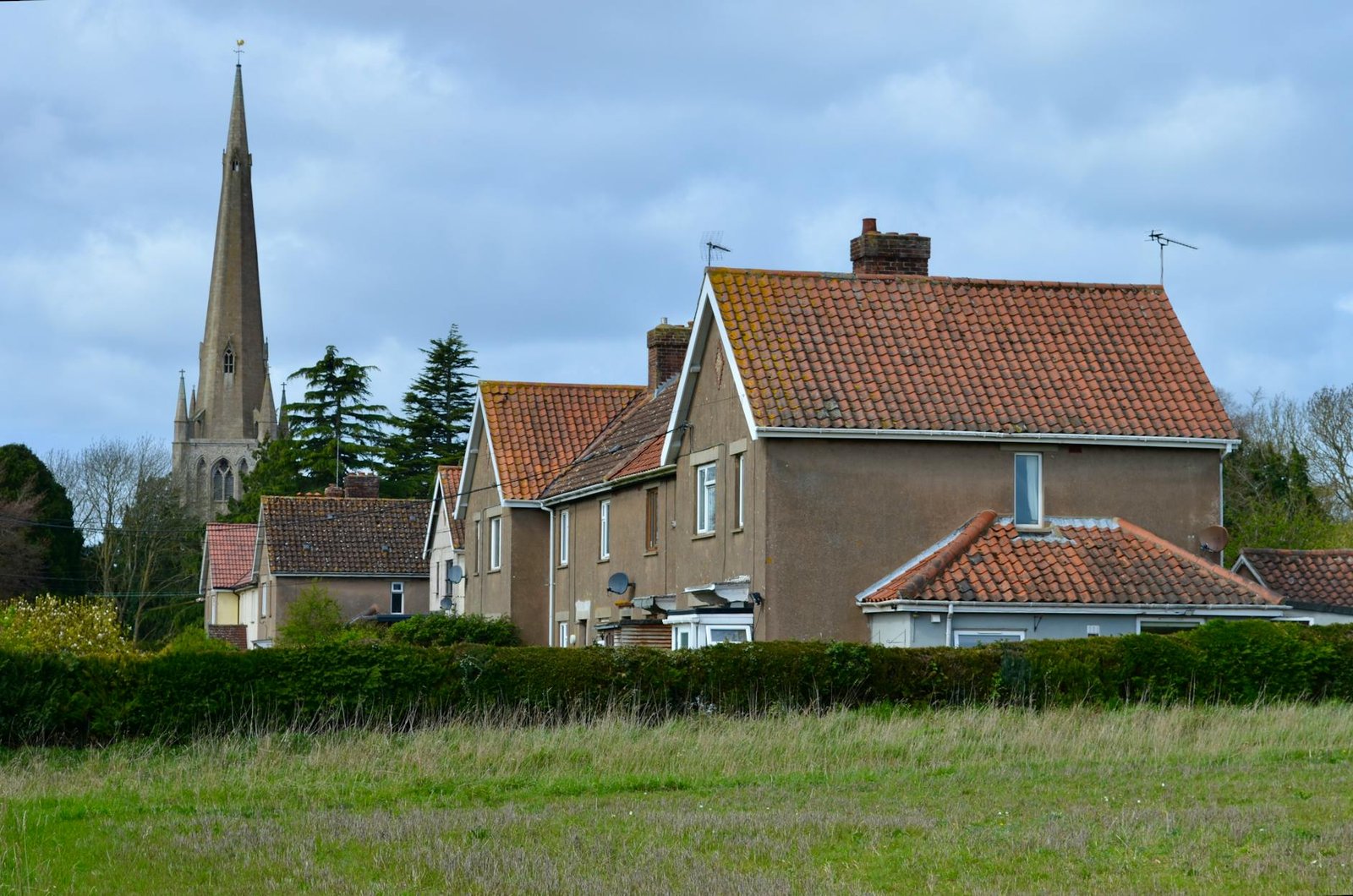
The coast, the Broads and inland Norfolk
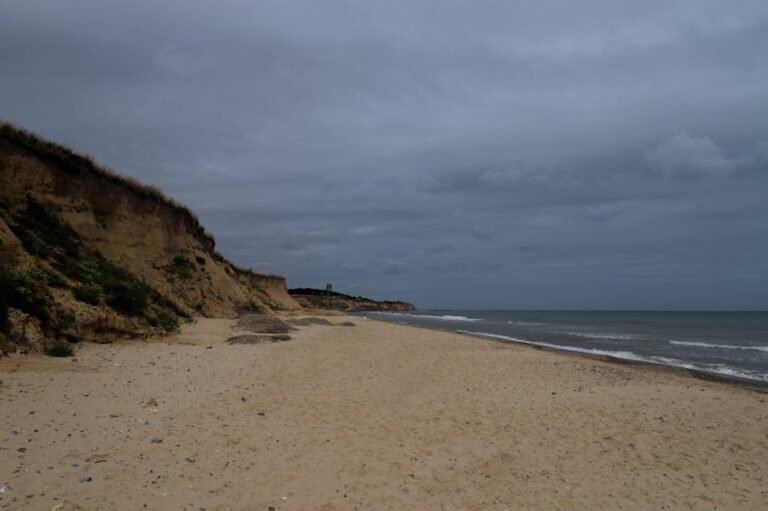
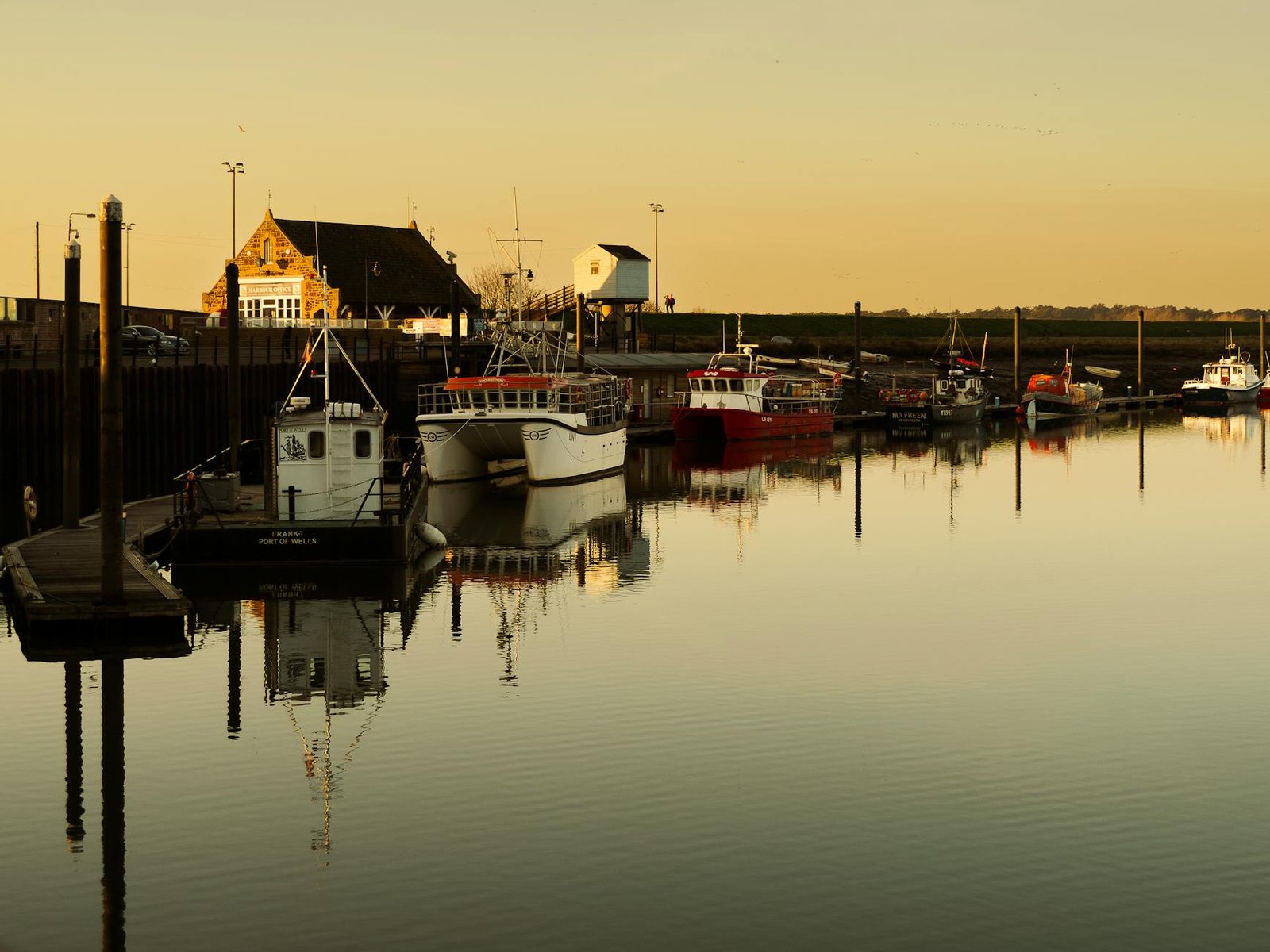
Most of the north coast is inside the Norfolk Coast National Landscape, the former Area of Outstanding Natural Beauty, which covers 453 square kilometres from the Wash to Winterton. It takes in Hunstanton, Wells-next-the-Sea, Holkham, Blakeney, Cley, Sheringham and Cromer.
Blakeney Point has England’s largest grey seal colony. The Sea Mammal Research Unit at the University of St Andrews estimates that almost 9,000 pups were born there in 2023, and the National Trust, which runs the reserve, asks people to watch them from the boat trips out of Morston Quay.
The Broads, in the east of the county and across the border into Suffolk, have more than 125 miles of navigable rivers and broads. They have had the same protection as a national park since the Norfolk and Suffolk Broads Act 1988. Living beside the water is its own decision, and our guide to living near the Broads covers it.
Inland Norfolk is not all flat. The Cromer Ridge behind the coast rises to 102 metres, the Brecks around Thetford are heath and forest, and the Waveney Valley runs along the Suffolk border. The countryside around Holt and Reepham is farmland and woodland crossed by footpaths.
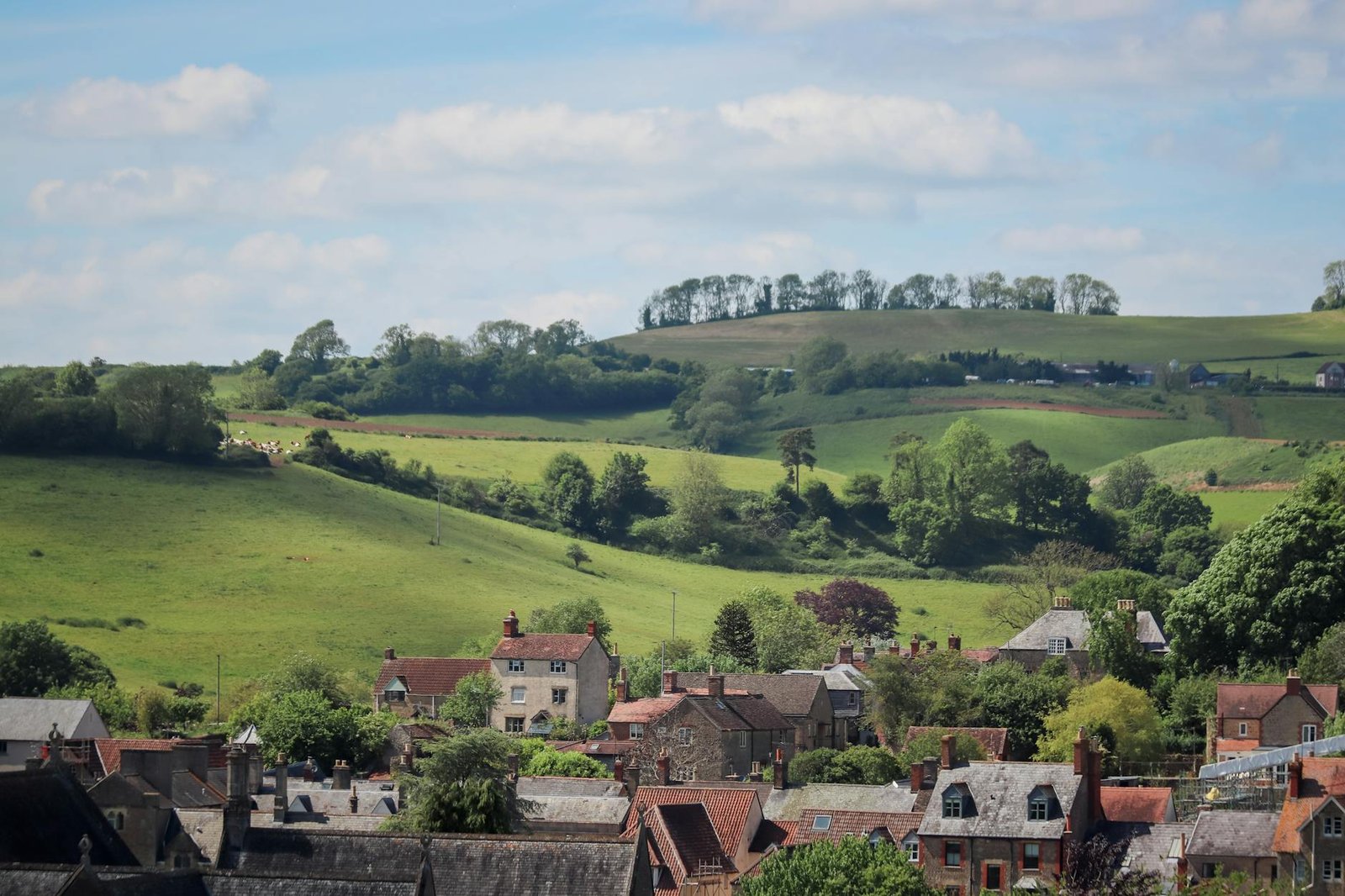
Transport, the weak point
Norfolk has no motorway. The A11 has been dual carriageway all the way from Norwich to the M11 since its last single-carriageway stretch, Fiveways to Thetford, opened in December 2014. The A47, which crosses the county from Peterborough to Great Yarmouth, is still single carriageway for long stretches. National Highways opened 2.6 miles of new dual carriageway on it between Blofield and North Burlingham on 6 May 2026.
Greater Anglia runs 33 trains each weekday from Norwich to London Liverpool Street. The fastest takes 1 hour 39 minutes and most take about 1 hour 50. From King’s Lynn, Great Northern runs direct to King’s Cross; the fastest train takes 1 hour 47 minutes and most 1 hour 51 to 1 hour 58. Five days a week from Norwich means close to four hours a day on the train, plus the journey at each end. Two or three office days a week is workable; five is not.
Away from the railway lines, and on the north coast in particular, public transport is limited and you will need a car. Norwich Airport has KLM flights to Amsterdam Schiphol, and through Schiphol the airport lists more than 150 onward destinations with KLM and its partners.
Schools, hospitals and broadband
State school results vary from town to town, so look up the catchment school for each address you consider. Our Norfolk schools guide covers catchments and admissions. The best-known independent schools are Gresham’s in Holt, a boarding and day school founded in 1555, and Norwich School, a day school in the Cathedral Close.
Norfolk has three acute hospitals: the Norfolk and Norwich University Hospital on the edge of Norwich, the Queen Elizabeth in King’s Lynn and the James Paget in Gorleston. The Queen Elizabeth, built in 1980, and the James Paget were both built with RAAC, a lightweight concrete designed to last about 30 years, and the Queen Elizabeth now relies on thousands of steel and timber props. Both are in the government’s national programme for replacement. GP access varies by practice, so anyone moving to a rural address should check the nearest surgery is taking patients before committing.
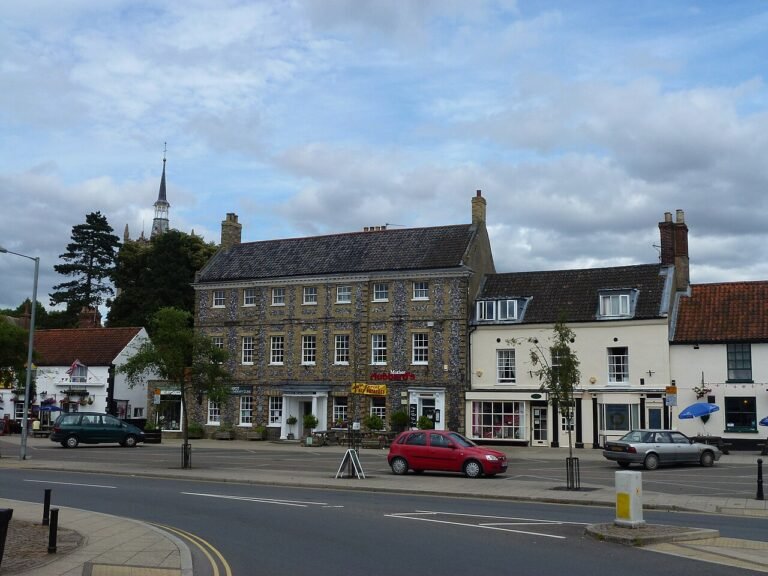
If you do not drive, live in Norwich or a market town such as Dereham, North Walsham or Swaffham. A village more than ten miles from one is a different life without a car.
Full fibre could be ordered at 77.2% of Norfolk premises in September 2026, against 85.8% across England (thinkbroadband). By district it ranged from 87.2% in Great Yarmouth down to 64.1% in North Norfolk, where about a third of premises still cannot get it. If you work from home, check the exact address on Ofcom’s postcode checker before you make an offer; our broadband guide explains what to look for.

If you are planning the move
How we produced this guide
County, district and regional prices are HM Land Registry UK House Price Index averages for July 2026, the latest month published. The index revises recent months, so these figures can move slightly. The Burnham Market and Blakeney figures are medians of standard sales in HM Land Registry Price Paid Data from July 2023 to June 2026. Affordability ratios are the ONS figures for house prices against workplace-based earnings in 2025. Broadband coverage is from thinkbroadband’s district figures for September 2026. Train times are from Greater Anglia and Great Northern. Coastal and landscape figures are from the Norfolk Coast Partnership and the National Landscapes Association, and seal numbers from the National Trust. We review this guide every quarter. See our methodology page.
Common questions
Is Norfolk a good place to retire?
Yes, if you plan around transport and healthcare. Buses are thin on the coast and in the villages, so choose a town with a GP surgery and a bus route over an isolated village.
Is Norfolk good for families with children?
Yes, though it costs more near Norwich. Broadland and South Norfolk, the districts around the city, are the most expensive in the county. Check the catchment school for the exact address before you buy.
Can you live in Norfolk and commute to London?
Two or three days a week, yes; every day, not really. The fastest Norwich to London Liverpool Street trains take 1 hour 39 minutes and most about 1 hour 50, so a daily return is close to four hours.
Which part of Norfolk is best to live in?
Norwich if you want to live without a car, the North Norfolk coast for the sea, Broadland and South Norfolk for families working in Norwich, and Great Yarmouth or Breckland for the lowest prices. The Broads villages suit people who want to live on the water.
Is Norfolk expensive to live in?
Not on average: £269,185 in July 2026, slightly below the UK figure. The exception is the north coast, where the median sale in Burnham Market over the three years to June 2026 was £715,000.
Last reviewed
Planning a move to Norfolk?
Our guides to hiring the firms a move needs.
We earn no commission on these links. Paid placements are sold separately and always labelled. See our advertising and disclosure page.