All practical guides
Moving from Cambridge to Norfolk in 2026
Cambridge City medians against Breckland, South Norfolk and Norwich; the Breckland line and A11; the towns worth looking at and the honest trade-offs.

The average home in Cambridge City cost £470,360 in August 2026, and the average in the Norfolk Breckland district £266,835, a gap of about £203,000 (HM Land Registry UK HPI). The move works best for people who need to be in Cambridge two or three days a week at most, and the Norfolk town you choose should follow the railway line your office is on. This guide is for anyone priced out of Cambridge or South Cambs, running the numbers on their mortgage, and wanting to know what the Norfolk side of the move actually involves.
If the shape sounds familiar, our London-to-Norfolk guide covers the same move from a different origin. If you have already made the move and your question is now the reverse, see commuting from Norfolk.
House prices and council tax
UK HPI figures for August 2026 put Cambridge City at £470,360 average and the three closest Norfolk districts at £266,835 (Breckland), £307,735 (South Norfolk) and £313,806 (Broadland). Norwich averaged £227,535, pulled down by the number of flats. King’s Lynn and West Norfolk was £266,248. Our district property-market page keeps the full breakdown current.
The first-time-buyer averages matter more than the headline. First-time buyers in Cambridge City paid £393,745 on average in August 2026. In South Norfolk the same figure was £253,657; in Breckland £223,317. That is roughly £140,000 of difference on a starter home, and it is the single biggest reason this move happens.
The gap shows up against the Cambridgeshire districts a leaver usually looks at first too. South Cambridgeshire averaged £441,410 in August 2026 and East Cambridgeshire £340,059. Moving to the edge of Cambridgeshire saves roughly £30,000 to £130,000. Crossing into Breckland or South Norfolk saves £130,000 to £200,000.
Council tax
Council tax is where Norfolk is not a big saving. Cambridge City’s Band D for 2026-27 is £2,467.02 (Cambridge City Council). Across the Norfolk districts a Cambridge-leaver would consider, Band D for 2026-27 runs from £2,311.65 in Breckland to £2,503.43 in Norwich, with Broadland at £2,323.08, King’s Lynn and West Norfolk at £2,345.61, and South Norfolk at £2,368.17. Breckland is about £155 cheaper than Cambridge City at Band D. Norwich is a touch dearer. Parish precepts add to the bill in most places outside the Norwich urban area.
The commute
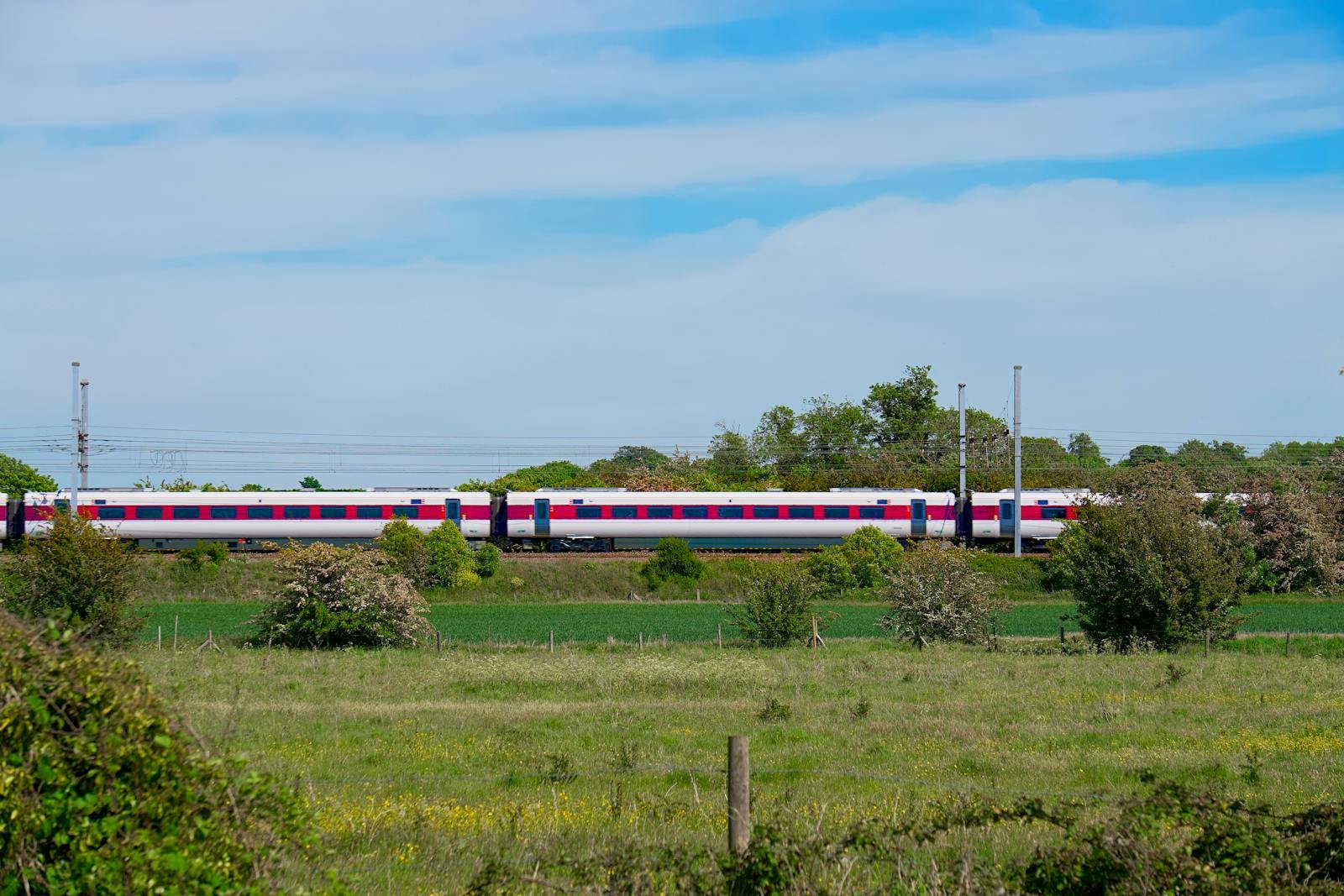
Two lines matter. Greater Anglia runs the Breckland line, which goes Cambridge, Ely, Thetford, Attleborough, Wymondham, Norwich, direct, hourly on weekdays. Great Northern runs the Fen Line, Cambridge to King’s Lynn via Ely and Downham Market, direct, several times an hour at peak. From June 2026 Cambridge South adds a stop at the Biomedical Campus; the Breckland and Fen trains both call there. If you would rather buy new on the Fen Line, our page on new build sites in King’s Lynn and Downham Market lists what the builders are selling in both towns.
Weekday journey times from Cambridge (National Rail Enquiries, verified October 2026):
| From Cambridge to | Line | Typical journey | Direct? |
|---|---|---|---|
| Thetford | Breckland | About 40 minutes | Yes |
| Attleborough | Breckland | About 55 minutes | Yes |
| Wymondham | Breckland | About 1 hour 1 minute | Yes |
| Norwich | Breckland | 1 hour 16 to 1 hour 20 minutes | Yes |
| Downham Market | Fen | About 37 minutes | Yes |
| King’s Lynn | Fen | About 54 minutes | Yes |
Sunday service exists on both lines but is thinner. The Breckland line runs 13 Cambridge to Norwich trains between about 09:26 and 22:26, with no 10:26 departure out of Cambridge. The Fen Line runs hourly from around 08:19 to 23:19. For a Sunday-evening return into Cambridge, both work; for a Sunday-morning start, neither is early.
By car, the A11 is dual carriageway from the M11 near Cambridge past Thetford, Attleborough and Wymondham to the Norwich southern bypass. It is about 65 miles door to door Cambridge to Norwich, roughly an hour and a quarter in no traffic and nearer two hours at peak. The one real bottleneck is the Fiveways junction at Barton Mills on the Suffolk border, which backs up at commute times and whenever there is a crash on the dualled stretch either side.
Moving to Norfolk this year?
Get the free Norfolk Relocation Pack: all 46 towns we cover on one table, on price, council tax, population, trains and distance to Norwich, plus a week-by-week move checklist. The download appears here as soon as you enter your email.
Unsubscribe any time.
What you gain
Space. The average Cambridge City semi sold for £597,397 in August 2026. The average Breckland detached house sold for £363,192. The sum does not need a calculator.
The coast is close in a way it is not from Cambridge. From Attleborough, Cromer is about an hour and a quarter by car, Wells-next-the-Sea an hour and a half, Holkham a little further. The Broads start about 45 minutes from Wymondham.
Reception onwards, schools in Norfolk are not the problem they are sometimes said to be. The county has no grammar schools, so state secondary places go by each school’s own criteria, usually ending in distance. Wymondham College at Morley, the state boarding school, was rated Outstanding by Ofsted in December 2023 under the old grading scheme. Boarding at Wymondham costs £5,650 a term and day teaching is free. Our boarding and state schools guide covers the options; Ofsted introduced its current five-point report-card scale on 10 November 2025, so any grade older than that still reads on the old scheme.
What you lose
Nursery and funded-childcare provision is thinner than in Cambridge, particularly in rural pockets, and childminders have fallen nationally since 2015. If both parents work full-time and the youngest is under three, test the local provider list before you commit; our nursery and funded childcare guide explains how Norfolk’s claim works and where the gaps are.
Specialist medical and research links tilt back toward Cambridge. If a chronic condition is managed at Addenbrooke’s, or if either of you works at the Biomedical Campus, keep that fact at the centre of your rail-time maths rather than at the edge. The Cambridge South stop makes the sum easier, not irrelevant.
The job market is narrower than Cambridge’s. Norwich’s main employers are Aviva, the University of East Anglia and the Norfolk and Norwich University Hospital. Outside Norwich the choice narrows quickly. If both of you need professional jobs locally, that is the constraint most likely to decide against the move. Buses between Norfolk towns and villages are infrequent, so outside Norwich most journeys start in a car.
The best towns for Cambridge-leavers
Attleborough
Breckland line, about 55 minutes direct to Cambridge, 20 minutes to Norwich. The 12-month median sale price to June 2026 was £255,000. A smaller centre than Wymondham, with Wymondham College in reach by school bus. The cheapest option that still gives you a direct Cambridge train in under an hour. For the direct comparison with its neighbour, see Wymondham vs Attleborough.
Wymondham
One stop closer to Norwich. Direct train to Cambridge in about 1 hour 1 minute, trains to Norwich in 13 to 14 minutes. Twelve-month median £275,750 to June 2026. A market town with an abbey, independent shops on Market Street, and the state boarding school on the edge.
Thetford
Breckland line, about 40 minutes direct to Cambridge. Twelve-month median £218,750 to June 2026, which is the lowest of any town with a direct Cambridge train. More deprived than Wymondham or Attleborough, with the Breckland forest on its western edge. Suits buyers whose first priority is the shortest Cambridge rail time at the lowest Norfolk price.
Downham Market
Fen Line, 37 minutes direct to Cambridge, and direct trains south to King’s Cross on the same line. Twelve-month median £260,000 to June 2026. A smaller town than Thetford, close to the Fens and the north-west Norfolk edge.
King’s Lynn
Fen Line terminus, about 54 minutes direct to Cambridge. Twelve-month median £190,000 to June 2026. A port town rather than a commuter settlement, which is reflected in the price; it also puts the north-west Norfolk coast within easy reach.
Norwich
City to city, 1 hour 16 to 1 hour 20 minutes direct, hourly all day. Norwich’s August 2026 average was £227,535 (HPI), pulled down by flats; terraces in NR2 and NR3 trade at around £270,000. The one place in Norfolk where you can live without a car. See the Norwich commuter corridor for the villages on the city’s southern edge if you want city access without the city.
A worked example
A family of four leaving Cherry Hinton. The Cherry Hinton three-bed semi sells at roughly the Cambridge City semi average of £597,397 (HPI, August 2026). The Attleborough three-bed semi they buy sits around the Breckland semi average of £238,211. On paper that is about £360,000 before costs: standard SDLT on the new house (the Cambridge house is sold, so no second-home surcharge applies), estate agent, legal fees and the removals van. In practice, closer to £320,000 to £340,000 after everything.
One parent is Cambridge-based and goes in two days a week. The two early Attleborough trains get into Cambridge in time for an 08:00 or 09:00 start, with Cambridge South one stop short if the office is at the Biomedical Campus. The other parent works remotely. The children would start at a local state primary; Attleborough and nearby Breckland village primaries have been inspected under the five-point Ofsted scale introduced on 10 November 2025, and any specific school should be checked at reports.ofsted.gov.uk before an offer. The trade-off that matters is not the maths but the two commuting days: an hour each way plus walk and wait, in practice closer to three hours door to door.
How to decide
Start with the office. If you will need to be in Cambridge four or five days a week over the next two years, do not move to Norfolk. At two or three days, the Breckland line towns and the Fen Line towns work. At one day or fewer, the whole county opens up.
Then the research or clinical angle. If you or a partner is at Addenbrooke’s, the Biomedical Campus or a Cambridge college, the Cambridge South stop is the number to run. The Fen Line and Breckland line both call there.
Then the second income. If one of you needs a local professional job, that points to Norwich and the villages around it rather than mid-Breckland.
Then weekends. If yours are King’s College chapel evensong and the Fitzwilliam, a Norwich base and the direct train back give you the easiest answer. If they are the coast, walking and the Broads, almost any Norfolk town works. Before you commit, check broadband at the exact address on Ofcom’s checker and get your employer’s hybrid policy for the next two years in writing.
Frequently asked questions
How long is the Cambridge to Norwich train, really?
Greater Anglia runs the Breckland line Cambridge to Norwich hourly on weekdays, direct, 1 hour 16 to 1 hour 20 minutes station to station. Add walk and wait at both ends and the door-to-door figure is closer to two hours.
Can I still work in Cambridge most days from Norfolk?
Only on a hybrid pattern. A daily commute from Attleborough is close to three hours door to door with walking and waiting, five days a week. Most Cambridge-to-Norfolk movers go in two or three days.
Does the Breckland line run on Sundays?
Yes, but thinly. Thirteen trains each way between about 09:26 and 22:26 out of Cambridge, with no 10:26 departure. A Sunday-morning Cambridge start by rail is not realistic from a Breckland line town; the Fen Line is hourly from around 08:19 and is a better bet.
Is there a direct train from Cambridge to King’s Lynn?
Yes. Great Northern runs the Fen Line Cambridge to King’s Lynn direct via Ely, Downham Market and Watlington, about 54 minutes, 31 weekday trains plus hourly on Sundays.
What about EV charging on the A11?
Rapid chargers sit at Birchanger Green services on the M11, around Red Lodge near the Suffolk border, and at the Thickthorn interchange on the Norwich side. If you plan to drive the route daily on an EV lease, check Zap-Map coverage along your actual working-week pattern before committing.
How we produced this guide. House prices are HM Land Registry UK HPI figures for August 2026, pulled from the Land Registry SPARQL endpoint on 28 October 2026. Twelve-month town medians to June 2026 come from HM Land Registry Price Paid Data. Council tax figures are 2026-27 Band D amounts from the relevant councils’ own tables. Rail journey times are from Greater Anglia and National Rail Enquiries, checked October 2026. Ofsted inspection details reference the current five-point report-card scale introduced on 10 November 2025; any specific grade should be verified at reports.ofsted.gov.uk before an offer. Broadband and mobile signal should be checked on Ofcom’s checker at the exact address.
Planning a move to Norfolk?
Our guides to hiring the firms a move needs.
We earn no commission on these links. Paid placements are sold separately and always labelled. See our advertising and disclosure page.