North Norfolk Coast vs Norwich Suburbs: The Big Lifestyle Decision
Sea or city: the coast averages £180,000 more than the Norwich suburbs and costs 400 commuting hours a year. What the premium buys, who it suits, and the inland middle route.

The north Norfolk coast averages £475,000 against £295,000 in the Norwich suburbs (HM Land Registry, 12 months to March 2026), and the commute gap is wider still.
- £475,000 vs £295,000 averages: the coast premium is roughly £180,000
- 45-60 min vs 8-15 min Norwich commute: the practical decider
- Good-rated secondaries both sides; none of the named catchments currently holds an Outstanding grade
- SMP zone matters on the coast: Hold the Line vs NAI is a £200k+ insurance/mortgage decision
- Cultural mass: Norwich gives full city amenities; coast gives one or two towns + sea
Composite scores: North Norfolk coast vs Norwich suburbs
Composite weighted score across transport, schools, value, amenities, character and growth potential. The closer the scores, the more the decision rests on personal preference.
The commute
Be honest about the drive before you fall for a flint cottage. From the coast, Norwich is 45 minutes to an hour each way, every working day, on A-roads that carry caravans in summer and sugar-beet lorries in winter. Only Cromer and Sheringham have a rail alternative, the Bittern Line, at around an hour into Norwich. From the suburbs, the same desk is 8 to 15 minutes away and there’s a bus when the car fails. Done daily, the difference is roughly 400 hours a year. That is the real cost, more than the £180,000.
Hybrid work changes the sums, which is why the coast keeps absorbing London equity. Two office days a week makes a Sheringham-to-Norwich run tolerable in a way five never will be. If your week is fully remote, the commute column disappears and the decision becomes purely about money and temperament.
Side by side
| Factor | North Norfolk coast | Norwich suburbs |
|---|---|---|
| Average sale price | £475,000 | £295,000 |
| 3-bed entry-level | £380,000 | £235,000 |
| Population | ~30,000 across coastal towns and villages | ~80,000 across NR3-NR8 suburbs |
| Norwich/regional commute | 45-60 min | 8-15 min |
| Station | Bittern Line (Cromer/Sheringham only) | Norwich (most via bus/drive) |
| Catchment secondary | Cromer Academy, Sheringham High, Aylsham High (all Good) | Sprowston, Costessey, Thorpe (current framework, no overall grade); Hellesdon (Requires Improvement) |
Still deciding where in Norfolk?
Subscribe and the printable Norfolk moving checklist arrives straight away: two A4 pages covering the twelve weeks before a move, moving day itself, and the first month after.
Unsubscribe any time.
What the £180,000 premium actually is
Property prices by type: North Norfolk coast vs Norwich suburbs
Bar widths scaled to the highest figure in this comparison. Source: HM Land Registry sold-price 12-month means to March 2026.
Two cautions on that £475,000 coast average. First, it’s dragged upward by the honeypot villages: Blakeney, the Burnhams and Wells trade on second-home and holiday money, while Cromer (£330,000 average) and Sheringham (£345,000) sit far below the regional headline. The working towns are the value end of the coast, and they’re also the ones with trains. Second, the coast number buys you an asset with a seasonal economy attached: holiday-let competition in the rental market, summer congestion, and insurers who ask which side of the Shoreline Management Plan line you’re on.
The suburb money is more boring and more liquid. A £250,000 Sprowston semi has a deep pool of future buyers because the commute works for everyone; a £450,000 coastal detached has a narrower pool that expands and contracts with the London market. They’re different assets wearing the same word, “house”.
Daily life
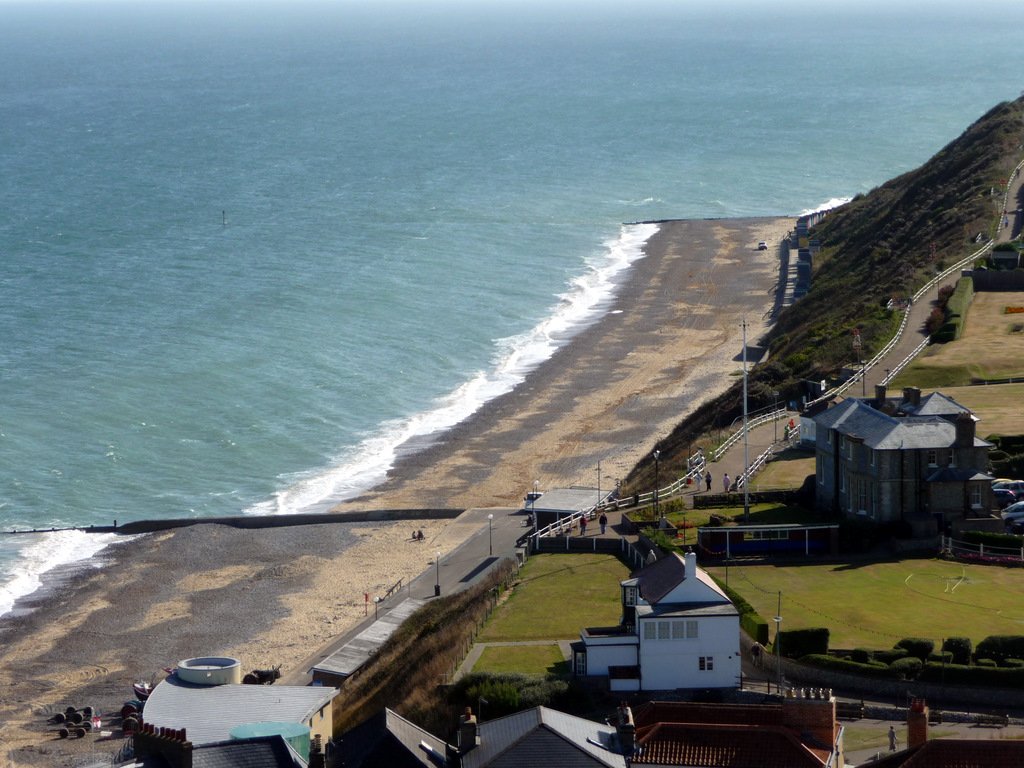
Suburb life runs on convenience: big supermarkets, retail parks, the NNUH within a 10 to 25 minute cross-town drive depending on which suburb, forty takeaway options, a city centre 15 minutes away with a proper arts scene. What it lacks is any particular sense of place; much of NR7 could be the outskirts of Reading. Coast life inverts that completely. Sheringham’s high street, Cromer’s pier, the market mornings and the sea at the end of the road give you somewhere that’s emphatically a place, at the cost of choice. The working towns, Cromer, Sheringham and North Walsham, still carry more than one GP practice apiece, a supermarket, and at Cromer a community hospital with a minor injuries unit. Step off them into the villages and it is one surgery per catchment, one primary, a 45-minute round trip for anything specialist.
Winter is the test. The suburbs in February are exactly like the suburbs in July. The coast in February is either bleakly beautiful or just bleak, depending entirely on your temperament, and you won’t know which until you’ve done one. Rent first if you’re not sure. It’s cheaper than discovering the answer with stamp duty attached.
Schools on both sides
The suburbs have the breadth: Sprowston, Costessey and Thorpe St Andrew all sit within reach, and if one doesn’t suit, another is a bus ride away. Each of those three was inspected under the current Ofsted framework, which since September 2024 no longer issues a single overall grade. Hellesdon High is the outlier, currently Requires Improvement after its October 2023 inspection. The coast has fewer, smaller schools: Cromer Academy and Sheringham High are both Good, as is Aylsham High, ten miles inland. Sixth form usually means Paston College in North Walsham or a Norwich commute. For most families this column tips suburb, not because coast schools are weak but because having options is itself the asset.
The inland market towns
There’s a third answer, and it’s the one I give friends who ask. The inland market towns give you the same trade at different points of the compass. Aylsham and North Walsham sit roughly 30 minutes from both the sea and the city at prices much nearer suburb level than coast level; Reepham is 25 minutes from Norwich but nearer 40 from the coast. Aylsham adds a well-regarded Good secondary; North Walsham adds a Bittern Line station. You lose the sea view and gain the ability to reach it whenever you like without paying £180,000 for the privilege. A large share of the people who start this comparison end up there.
Picks by buyer profile
| Buyer priority | Pick | Why |
|---|---|---|
| School-age family + Norwich job | Suburb | Catchment + commute + price all favour suburbs |
| Retiree downsizer with equity | Coast | Quality-of-life dividend on the coast premium |
| Hybrid 2-day commuter | Coast | Reduced commute frequency makes coast viable |
| First-time buyer | Suburb | Coast entry-level above £300k; suburbs from £180k |
| Wants both, on a budget | Inland market town | Aylsham or North Walsham: 30 minutes to each |
Plan the move
What to watch in 2026
- Norwich suburb expansion. Continued SUE supply at Costessey and Hethersett; Sprowston Tesco area expansion
- Coast SMP review. Continued review affects insurability outside Hold the Line zones
- London equity inflow. Continued post-2020 trend; coastal premium sustained while London moves continue
- Hybrid working norm. Persistence of hybrid working keeps coast viable for partial-commute households
How we produced this guide
Property prices come from HM Land Registry sold-price data 12 months to March 2026. Population data from ONS Census 2021. School ratings from Ofsted Reports. Train times via Greater Anglia published timetables; drive times from Google Maps weekday-peak. Crime data from Police.uk for the Norfolk Constabulary force area. We update this guide quarterly. See our methodology page for source links.
Frequently asked questions
How big is the coast-vs-suburbs price gap really?
Around £180,000 on averages (£475,000 vs £295,000), but the coast figure is inflated by the honeypot villages. Cromer and Sheringham average £330,000 to £345,000, so the working end of the coast is nearer £40,000-£50,000 above a comparable suburb home than £180,000.
Can you commute to Norwich from the north Norfolk coast?
Two or three days a week, yes; five days wears people down. Cromer and Sheringham have the Bittern Line (roughly an hour), everywhere else drives 45-60 minutes on the A140 from Cromer and North Walsham or the A1067 from the Holt and Wells side, longer in the holiday season.
Where are the strongest schools in this comparison?
The suburbs win on choice across Sprowston, Costessey, Thorpe St Andrew and Hellesdon, though Hellesdon High is currently Requires Improvement and the other three were inspected under the current framework that no longer gives a single overall grade. Inland, Aylsham High is Good, as are the coast catchments Cromer Academy and Sheringham High. No secondary in this comparison currently holds an Outstanding grade.
Is there a compromise between coast and city?
The inland market towns. Aylsham and North Walsham sit about 30 minutes from both the beach and Norwich at prices closer to suburb level, and North Walsham has its own Bittern Line station. Reepham is a shorter run to Norwich but a longer one to the coast, nearer 40 minutes. That’s where many buyers in this dilemma actually end up.
Which coast towns are cheapest to get into?
Cromer and Sheringham, the two towns with railways, which is not a coincidence you should ignore. Both sit well under the coast-wide average, with entry-level three-beds from around £250,000 to £275,000, against £380,000+ in the villages further west.
Data sources: HM Land Registry, ONS Census 2021, Ofsted Reports, Greater Anglia timetables, Police.uk, Norfolk County Council. Period covered: 12-month rolling means to March 2026. Last updated: 4 July 2026. Author: Sarah Ellis, Coast and Broads Editor.
Last reviewed · reviewed monthly
Planning a move to Norfolk?
Get shortlists of trusted Norfolk estate agents, removers, mortgage brokers and conveyancers. We only feature firms with verified local reviews.
We earn no commission on these links. Paid placements are sold separately and always labelled. See our advertising and disclosure page.