All practical guides
Buying a Norfolk house with an annexe: council tax, stamp duty and planning
An annexe for a parent can halve or cancel its council tax, add £30,000 to the stamp duty on a £600,000 house, or come with a condition that stops you letting it. What to check before you offer.

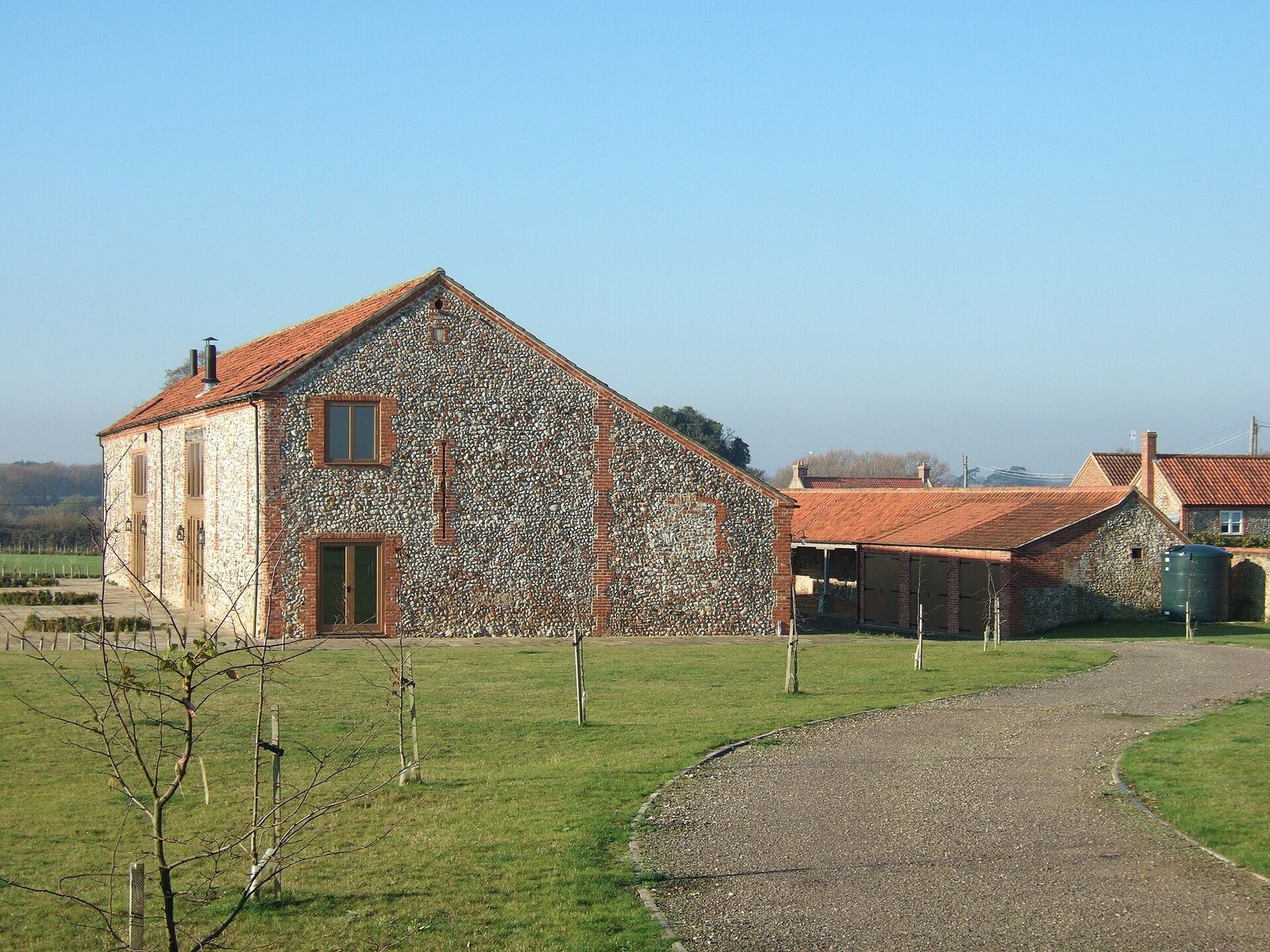
A house with an annexe is one of the commonest reasons people give for widening a Norfolk search beyond the towns. A converted barn or a wing with its own door lets a parent live close by without living in your kitchen, and plenty of rural listings have one. What the listing rarely says is that the annexe carries its own rules on council tax, stamp duty, planning and lending, and that two of them can cost or save several thousand pounds depending on facts you can check before you offer.
This guide is about England, so it covers all of Norfolk. It is general information from the legislation, HM Revenue and Customs and the Norfolk councils’ own pages, not tax or legal advice, and your conveyancer should confirm how it applies to a particular house.
Council tax: the annexe usually has its own band
The Valuation Office Agency bands any part of a property that has been built or adapted to be lived in separately, and it looks only at physical features. An annexe with its own kitchen, bathroom and front door will normally have its own band, whoever lives in it. GOV.UK’s guidance, updated in June 2026, says the band is removed only if the annexe is altered enough that it could no longer be lived in separately, so it does not disappear when the relative moves out.
What you pay on that band depends on who is in it:
- A dependent relative: the annexe is exempt. The law counts a relative as dependent if they are aged 65 or over, severely mentally impaired, or substantially and permanently disabled. Age alone is enough; there is no means test.
- Any other relative of the person who pays for the main house, or the main household using it as part of their home: a 50% reduction, in force since April 2014. “Relative” is drawn widely, from parents and grandchildren to aunts, nephews and in-laws.
- A tenant who is not family: neither applies, so the annexe normally pays its full band, and the bill normally falls to the tenant.
- Empty: exempt only if it cannot be let separately without breaching planning control.
An annexe that forms part of the main home, or is used as part of it, is also excepted from the second-homes and empty-homes premiums. An empty annexe the household doesn’t use, which could be let on its own, is treated like any other empty home and can attract the empty-homes premium after a year. The district pages paraphrase all this in slightly different ways, and three of them differ from the law:
| Council | What its page adds |
|---|---|
| King’s Lynn and West Norfolk | A self-contained unit on a separate title deed from the main house is not treated as an annexe at all |
| North Norfolk | Says the exemption is for a relative over 65 or “registered disabled”, which is narrower than the law: it does not require registration |
| Broadland and South Norfolk (one shared site) | Gives no percentage for the discount; also exempts an annexe lived in only by full-time students or under-18s |
| Norwich | Its 2026-27 leaflet describes the exemption as for an “elderly or disabled” relative, which is looser than the law’s age of 65 |
None of the reductions is automatic. The councils’ pages ask you to apply, so do it when you move in rather than waiting for the first bill. Our council tax guide has the 2026-27 charges by district.
Stamp duty: the one-third line
This is where an annexe can cost the most, and where the valuation matters as much as the price. Buying two dwellings in one purchase can bring in the higher rates, which have been five percentage points above the standard rates since 31 October 2024, even if you own nothing else. The exception is an annexe that counts as subsidiary: it has to be in the grounds of the main house or in the same building, and the main house has to account for at least two thirds of the price. None of this helps if you will still own another home after the purchase and aren’t replacing your main residence: the higher rates apply then whatever the annexe is worth.
HMRC’s own worked example is close to the case most readers have in mind. A buyer pays £1 million for a house with a coach house in the grounds for her mother. £350,000 of the price is fairly attributed to the coach house, so the main house is 65% of the total, just under two thirds, and the higher rates apply. A town house with a basement flat worth £250,000 of the same £1 million passes the test and pays the standard rates.
At Norfolk prices the gap is still large. On a £600,000 purchase the standard rates come to £20,000. If the annexe is worth more than a third of the price and the higher rates apply, the bill is £50,000. The split has to be just and reasonable, so it rests on a valuation, not on a figure the buyer would like. If the annexe is anywhere near a third of the price, ask your conveyancer to look at the apportionment before you exchange.
Two older ideas still turn up in agents’ particulars and forums. Multiple Dwellings Relief, which used to soften the bill on a purchase of more than one dwelling, was abolished for purchases completing from 1 June 2024. And a house with an annexe is not “mixed use” for stamp duty just because it has two dwellings: both are residential. Our cost of buying guide has the standard rates.
Moving to Norfolk this year?
Get the free Norfolk Relocation Pack: all 46 towns we cover on one table, on price, council tax, population, trains and distance to Norwich, plus a week-by-week move checklist. The download appears here as soon as you enter your email.
Unsubscribe any time.
Planning: what the annexe is allowed to be
In planning law, using one house as two separate homes is a material change of use, which needs permission. Most annexes were approved as ancillary to the main house, meaning they are part of the same home rather than a second one, and many carry a condition limiting who can live there. Garden buildings put up under permitted development rights cannot be used as self-contained living space, or even for bedrooms, kitchens or bathrooms.
North Norfolk District Council set out its approach in guidance published in May 2026, under policy HOU6 of its local plan. It supports annexes made by extending the house or converting an existing outbuilding, and treats a new detached annexe as a departure from policy, because a separate building is more likely to end up as a separate dwelling. The council’s model condition limits occupation to a dependant relative or other member of the household. A condition worded like that rules out letting the annexe to a stranger and almost certainly rules out holiday letting.
So before you offer, ask the seller or your conveyancer for the planning history: the original permission for the annexe and any conditions attached to it. Three situations need care:
- The annexe has been let separately. If that broke a condition, the council can still act on it. The time limit for enforcement in England became ten years on 25 April 2024, where for a change of use to a single dwelling it used to be four. A change of use that began before that date keeps the four-year limit, so an annexe let as a separate home since before then may already be beyond enforcement, while one first let since is exposed for ten years. A seller’s word that it has been let for years is not the same as a lawful development certificate, which the council issues to confirm an existing use is lawful.
- There is no permission on record. A certificate can settle it, and it is better applied for by the seller before completion than discovered by you afterwards.
- It was built in the last few years. Where a council charges the community infrastructure levy, as Broadland, South Norfolk, Norwich and King’s Lynn and West Norfolk do, people who build an annexe in the grounds of their own home can claim an exemption from it. If a disqualifying event, such as letting the annexe separately, happens within three years of the council’s compliance certificate, the levy can be clawed back, and the amount sits on the local land charges register for that period, so it will show up in your local search. Buying the house and annexe together does not trigger it, but letting the annexe in that window would. Ask the seller for the certificate’s date.
If you are thinking of building an annexe rather than buying one, our self-build guide covers the councils’ registers and the levy in more detail.
Mortgages
Lenders set their own terms on annexes, and the valuer’s view of the annexe feeds into them. In November 2026 Nationwide’s published criteria for brokers list annexes under part-commercial properties: a single annexe used for non-commercial purposes is accepted on normal residential terms, subject to a satisfactory valuation, and separate terms apply if it is let. Newbury Building Society lists a house with an annexe among the unusual property types it considers case by case. Expect questions if the annexe is large compared with the house or could easily be lived in as a home of its own, which is the same thing the planners worry about. A broker who knows rural Norfolk property is worth paying for here; our mortgage guide covers the rest.
If you want the annexe to earn its keep
Many buyers plan to let the annexe once family no longer need it, often as a holiday let on the coast. Check the planning condition first, because that decides whether you can. If letting is allowed, the tax picture changed in April 2025, when the special tax treatment for furnished holiday lettings ended and holiday lets began to be taxed like other rental property, with mortgage interest relief limited to the basic rate. An annexe available to let for at least 140 nights a year and actually let for at least 70 is assessed for business rates instead of council tax.
The rent-a-room scheme, which lets you take up to £7,500 a year tax-free from a lodger, is unlikely to help. HMRC’s manual says a self-contained part of your home qualifies only if the division is temporary, and most annexes are built to be permanent.
Before you offer
- Check whether the annexe has its own council tax band, and who will live in it, so you know which reduction to claim.
- Ask for the planning permission and any occupancy condition.
- If the annexe could be worth a third or more of the price, get the stamp duty apportionment looked at before exchange.
- Check the title: in West Norfolk, a separate title means the council will not treat it as an annexe at all.
- Tell your lender and valuer about the annexe at the start, and say how it will be used.
For a parent moving with you, our guide to retiring to Norfolk covers the towns, buses, GP access and hospitals that will matter to them as much as the annexe does.
Planning a move to Norfolk?
Our guides to hiring the firms a move needs.
We earn no commission on these links. Paid placements are sold separately and always labelled. See our advertising and disclosure page.