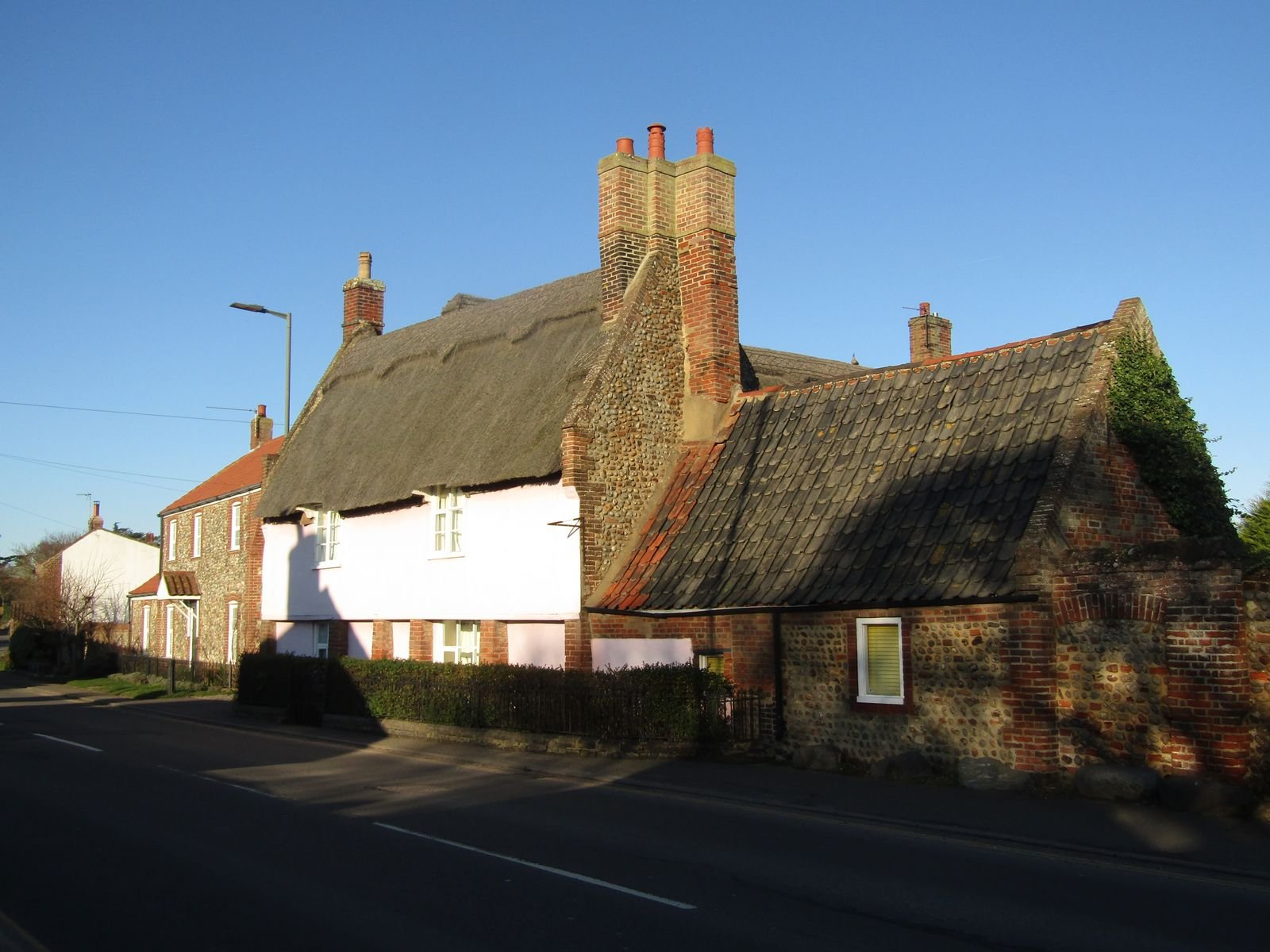
Why old Norfolk walls need lime, not cement
Solid walls in older Norfolk houses stay sound by letting rain soak in and dry out. Lime mortar, lime render and limewash allow that; cement render and cement pointing do not.

An old Norfolk house with solid walls stays sound by letting rain soak into the wall and then dry out through its face. Whatever goes on the outside has to let that happen. Lime mortar, lime render and limewash do. The cement render and cement pointing used on so many cottages through the twentieth century do not, and the damage they cause usually shows years after the builder has been paid. On almost every Norfolk building put up before about 1919, the right material for the outside of the wall is lime.
How a solid wall stays dry
Flint, handmade brick, clay lump and carrstone walls have no cavity and no membrane. The Society for the Protection of Ancient Buildings (SPAB) says in its note on lime and cement renders that old buildings rely on their “permeable nature (‘breathability’)” to let absorbed water evaporate back out. The mortars, renders, plasters and washes that were traditionally used on them let moisture through as well, so the whole wall works as one damp-tolerant system. Stop the water leaving and it stays in the wall.
What cement does to it
SPAB names two faults with cement render on an old wall. It “restricts evaporation”, so moisture already in the wall cannot get out. And because it is more rigid than the wall behind it, hairline cracks open, which then “draw in water that becomes trapped in the fabric”. The render holds old water in and lets new water in at the same time.
On earth walls that can be structural. SPAB warns that timber-framed and earth-built houses can suffer major structural damage when moisture builds up behind cement render, and Dirk Bouwens, writing on East Anglian earth buildings in the Building Conservation Directory in 1997, recorded failures “involving the collapse of large sections of walls”. In Norfolk, earth walling means clay lump.
Pointing fails the other way round. When the mortar in the joints is harder and less permeable than the brick or stone around it, SPAB’s advice on inappropriate cement pointing is that “erosion of the bricks and stones themselves occurs in preference”. On a cottage that shows as grey joints still standing firm while the brick faces between them crumble back.
Modern masonry paint belongs in the same family of problems. SPAB describes limewash as considerably more breathable than most modern paints, which is the reason to use it on an old rendered wall.
Moving to Norfolk this year?
Get the free Norfolk Relocation Pack: all 46 towns we cover on one table, on price, council tax, population, trains and distance to Norwich, plus a week-by-week move checklist. The download appears here as soon as you enter your email.
Unsubscribe any time.
Two kinds of lime
Non-hydraulic lime, sold as lime putty or bagged hydrated lime, is made from relatively pure limestone. It hardens only by carbonation, slowly taking carbon dioxide back from the air over weeks and months, and SPAB recommends it for internal plasterwork because it sets slowly and stays workable.
Natural hydraulic lime (NHL) comes from limestone with silica and aluminium impurities in it, which let it set partly by reacting with water. It is sold in three grades, NHL 2, NHL 3.5 and NHL 5, and the number rises with strength: under BS EN 459-1, NHL 2 falls between 2 and 7 MPa and NHL 5 between 5 and 15 MPa. For a moderately exposed external wall, SPAB suggests a weak hydraulic lime, or a non-hydraulic lime with a pozzolan such as tile dust where a weak hydraulic one cannot be had.
The rule behind all of it is that the joint should be weaker and more permeable than the masonry. The mortar weathers first and can be raked out and renewed; the brick or stone stays whole.
That is why “lime” on a quote is not enough on its own. A 2018 review in the Building Conservation Directory, written by authors from Historic England, the Building Limes Forum and the University of Bath, found that even the weakest modern grade, NHL 2, is significantly stronger than the feebly hydraulic limes used historically. It described walls where hydraulic lime pointing had stayed intact while the stone around it went on decaying, because the mortar was “not acting sacrificially”. A builder who proposes NHL 5 for a soft old cottage wall should be able to explain why.
What each Norfolk wall needs
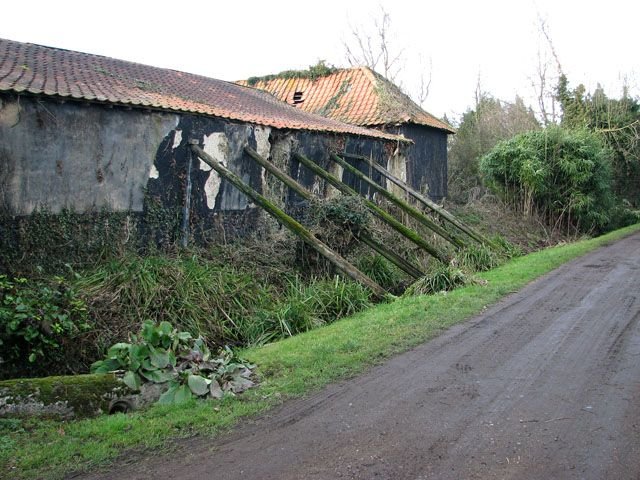
Clay lump, the East Anglian mud block, was traditionally finished outside with lime or earth render, and Bouwens recommends limewash over it. It is the material most at risk from cement.
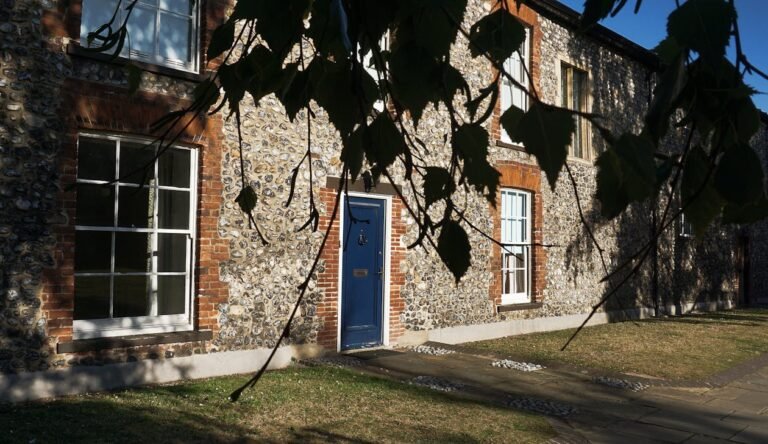
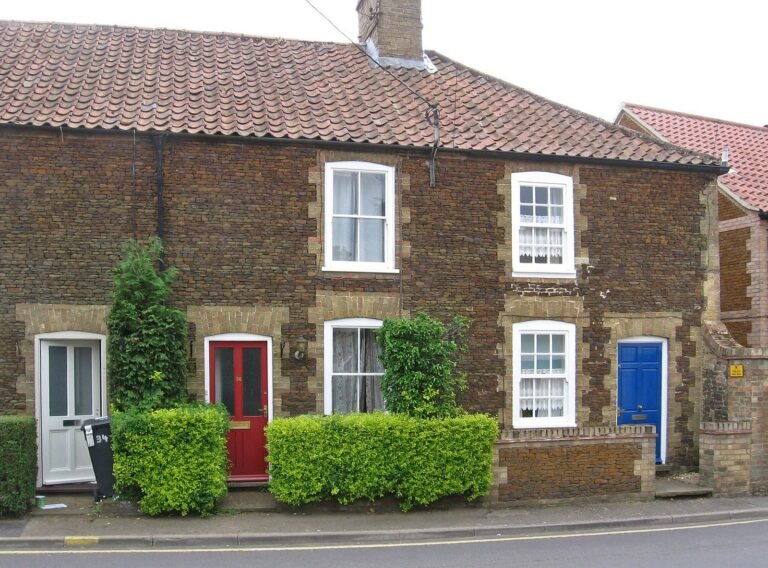
Flint is, in SPAB’s words, “very hard, impervious”. Water cannot pass through the nodules, so every bit of drying a flint wall does happens through its mortar joints, and those joints have to be lime.
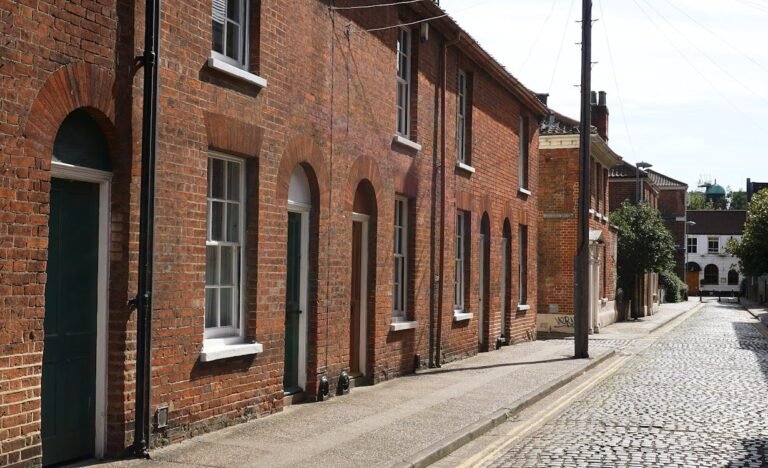
Carrstone, the ginger sandstone of west Norfolk, and the handmade red brick of the county’s older streets follow the same rule as any old masonry: bed and point them in a lime mortar weaker and more permeable than the stone or brick, matched to any old pointing that survives.
Limewash, and where it does not go
Limewash is lime and water, sometimes with additives, brushed on as a thin matt coat. SPAB’s limewash note lists what it suits: lime plaster or render, earth walls, limestone, timber and most old limewash. It also says limewash is unsuitable for impervious materials, naming flint and hard brick. It goes on the lime-rendered clay-lump cottage and on lime plaster indoors. It does not go on the face of a flint wall.
SPAB says limewash typically needs renewing every five years, and that at least three or four coats are usually needed, each left to dry and the surface dampened before the next.
Rising damp, or something else
Be wary if a survey or a damp-proofing salesman with a moisture meter finds rising damp in the ground floor of an old cottage and recommends an injected chemical damp-proof course. SPAB says rising damp is “widely misdiagnosed on the basis of high electrical moisture meter readings alone” and is rarer than often supposed. High readings can come from salts left in a wall that is virtually dry, or from rain splashing back off the ground.
SPAB argues for a presumption against retrofitted damp-proof courses in pre-1919 buildings, and says physical and chemical ones should be avoided altogether in earth buildings, where major structural damage can result. On a clay-lump cottage that rules injection out. The remedies it does suggest are the ones that let the wall dry: better drainage outside, and replacing hard cement render or pointing with a lime mortar.
When to do the work, and who should do it
Lime needs warmth and time before it can stand frost. The Building Limes Forum’s published answers cite tests in which moderately hydraulic lime mortars kept moist at 15°C took 14 days to develop reasonable frost resistance, while those cured at 5 to 10°C took 56 days. External lime work belongs in spring and summer. A builder happy to repoint or render outside in November, with no talk of covering and heating the work, has told you something.
The Building Limes Forum states that it cannot recommend craftsmen, so the checking is yours. Ask which lime the builder will use on your wall and why, given the brick or stone and how exposed the elevation is, and whether a weaker mix with a pozzolan would do. Our directory of Norfolk heritage builders lists firms that work in lime, and SPAB’s advice notes, linked above, are short enough to read before anyone quotes.
Common questions
How do I tell if my cottage has been wrongly repointed?
Look at the most weathered side of the house. Grey, hard joints that stand firm while the brick or stone faces around them crumble or wear back are the sign of cement pointing. The fix is to rake the cement out by hand and repoint in a weaker, more permeable lime mortar matched to any old pointing that survives.
What if the cement render is already on the house?
It depends on what the wall is doing. If the render is sound and the rooms inside are dry, you can plan its removal for when it starts to fail. If there is damp inside, blown plaster, salts on the wall or cracking in the render, taking it off, letting the wall dry and re-rendering in lime is usually the right course; get a lime-competent builder to look at that wall first.
Can I limewash the outside of a flint garden wall to smarten it up?
No. SPAB lists flint and hard brick as impervious materials that limewash is unsuitable for. Point the wall in lime mortar and leave the flint showing.
Is it worth learning to do small lime jobs myself?
Limewashing and small internal repairs can be learned from SPAB’s advice notes and a short course; the Building Limes Forum lists courses. External repointing, rendering and any work on clay lump are better left to a lime-competent builder, because mistakes in the grade of lime or the season show up years later.
Planning a move to Norfolk?
Our guides to hiring the firms a move needs.
We earn no commission on these links. Paid placements are sold separately and always labelled. See our advertising and disclosure page.