All practical guides
Norfolk property auctions in 2026: what the data actually says
Norfolk auctions sold 848 of 1,474 lots in the past twelve months at an average £169,637 for a house. Here is what the data says against the retail market, and where the real discounts sit.

Norfolk’s auction market sold 848 lots in the twelve months to October 2026, out of 1,474 offered. The success rate is 57.5%. The average house sold for £169,637 and the average flat for £173,780. The county’s retail market, as recorded by HM Land Registry, averaged £267,745 for all property types in August 2026. The gap between the two is the point of the piece.
What follows is what the data actually says about buying a Norfolk home at auction in 2026, where the discount is real, and where the headline number flatters a trickier reality.
The scale of the Norfolk auction market
Essential Information Group’s Norfolk sales page, which collects results from the auctioneers it tracks, reported 473 auctions in the twelve months to 19 October offering 1,474 lots, from 41 auctioneers. Its figures roll forward, so the page will show different numbers by the time you read this. At the published auction averages, the 848 sold lots represent roughly £140m of transaction value, which is a useful order-of-magnitude figure for the Norfolk auction market rather than a precise total.
For context, the July release of the UK House Price Index recorded 729 to 978 Norfolk property sales a month across March to May 2026, and the August release, read on 5 November, has those months at 785 to 1,007 as late sales get registered. At about 71 a month, the 848 lots sold at auction come to roughly 7% to 10% of either range, though auction results and the index count sales differently, so treat it as an order of magnitude.
Where the price gap comes from
The nearly £100,000 gap between the average auction house price and the retail HPI reading is not a straight discount. It reflects what gets sent to auction, not a parallel market selling the same homes cheaper. In broad terms, four categories dominate Norfolk’s auction stock in 2026.
First, probate sales. These are inherited homes that need to be sold within a settlement period, without a chain, with modest condition issues the executor is not minded to fix. Probate stock is the largest single source of Norfolk auction lots in the Breckland, South Norfolk and Broadland districts.
Second, repossession and distressed sales. These make up a smaller share than they did in 2008 or 2011, but they are present, concentrated in the Great Yarmouth and parts of King’s Lynn stock. The 2026 count is lower than the auction average of the past decade; mortgage arrears are falling nationally and the lender route to auction is slower than the direct marketing route.
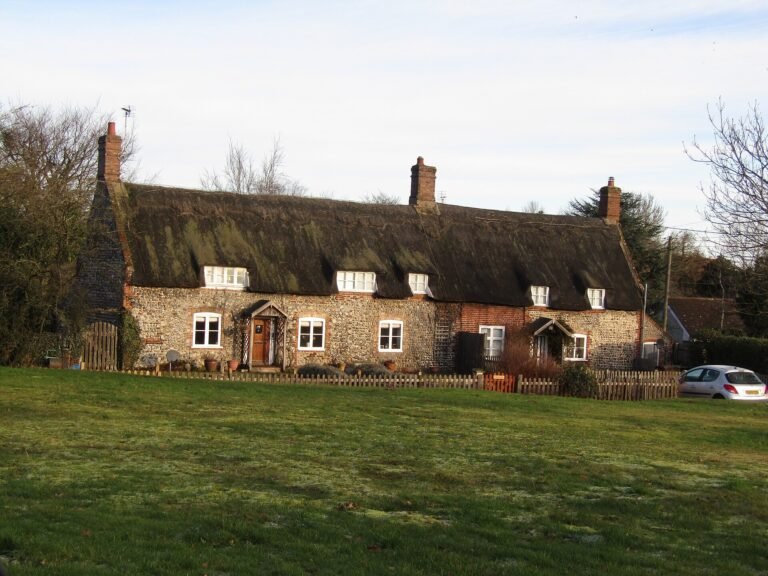
Third, non-mortgageable property. Short-lease flats, properties with structural defects, lots with incomplete title, and clay lump cottages, which many lenders treat as non-standard construction and may not lend on without a specialist survey. North Norfolk and the coastal stretch between Hunstanton and Cromer contribute disproportionate volume here. These lots are the clearest example of the auction discount being a condition discount rather than a free lunch.
Fourth, land and commercial lots. Not strictly homes, but they drive down the mean auction price because they often sell at a few tens of thousands. A paddock lot going for £35,000 is a legitimate auction sale and lowers the aggregate.
Moving to Norfolk this year?
Get the free Norfolk Relocation Pack: all 46 towns we cover on one table, on price, council tax, population, trains and distance to Norwich, plus a week-by-week move checklist. The download appears here as soon as you enter your email.
Unsubscribe any time.
What Q3 2026 actually looked like at the sale room
Auction House East Anglia, which describes itself as the largest property auctioneer in the region, now lists each lot as its own online auction. The firm’s past-auctions page lists 30 regional lots across seven sale dates between 2 September and 13 October 2026. Seven of the thirty lots were Norfolk-located, split across King’s Lynn, Hemsby, Great Yarmouth, Thetford, Thurlton and Norwich; the other twenty-three were in Suffolk, Essex, Cambridgeshire, Lincolnshire or Hertfordshire. Three of the thirty lots are recorded as “Sold” at hammer for a combined £466,000. Seven are marked “Sold After” and two as “Sold Prior”.
Those are the labels auctioneers use to report results. A “Sold Prior” lot was agreed before the advertised auction date, on auction contract terms, usually because the vendor accepted a pre-auction offer at or above the reserve. A “Sold After” lot failed to reach reserve in the room but sold within an agreed window afterwards, on the same auction terms. Count them with the hammer sales and the regional sale rate comes to twelve in thirty, or 40%, across that specific Sep-Oct window. The Norfolk sub-sample is too thin to pull a Norfolk-specific sale rate from, which is why the EIG rolling-twelve-month figure above is the more useful county-level number.
A “Postponed” label, which appears on at least one lot in the regional batch, means the lot was not offered on its advertised date and may come back in a later sale. It does not count as a sale and does not count as a failure.
Norfolk by district: where the retail market sits
HM Land Registry’s August 2026 figures, published on 21 October 2026, give the full retail-market baseline that any auction discount sits against. The county-wide figure is £267,745. The district picture is more useful.
| District | August 2026 average | Annual change |
|---|---|---|
| Broadland | £313,806 | up 2.8% |
| South Norfolk | £307,735 | down 0.2% |
| North Norfolk | £286,315 | down 4.4% |
| Norfolk (county) | £267,745 | down 0.2% |
| Breckland | £266,835 | down 0.3% |
| King’s Lynn and West Norfolk | £266,248 | up 2.6% |
| Norwich | £227,535 | down 2.0% |
| Great Yarmouth | £204,630 | down 1.6% |
Two patterns are worth naming. Five of the seven districts were lower than a year earlier in August, and the county as a whole was down 0.2%; only Broadland and King’s Lynn and West Norfolk were up. North Norfolk’s 4.4% fall is the sharpest in the county, in a district with a high second-home share. Norwich, the cheapest district after Great Yarmouth, was down 2.0%.
If you compare the auction averages (£169,637 for a house, £173,780 for a flat) against the lowest district figure (Great Yarmouth at £204,630) the discount narrows to 17%. Against the highest district (Broadland at £313,806), the auction average sits 46% below. Picking the right district comparison is the honest way to size the discount.
What auction prices do not tell you
Three things the aggregate numbers hide.
Condition. The buyer’s survey, legal pack review and funding stack all sit with the buyer, not the vendor. A £170,000 auction house that needs £40,000 of works to be mortgageable is a £210,000 house, before any resale friction. Norfolk’s older stock, particularly the inter-war estates in Great Yarmouth and the Victorian terraces around Thorpe Hamlet, often lands at auction because it needs this kind of work.
Timing. The exchange is on the fall of the hammer or on signature of the memorandum; completion is usually 28 days later. For a cash buyer with a solicitor on retainer, that is manageable. For a mortgage buyer, it is tight. Specialist auction finance exists to fill that gap, usually as a bridging loan priced by the month, and it costs more than a standard mortgage. Get a quote before the sale, not after the hammer.
Fees. Buyer’s premium, administration charges and reservation fees vary by auctioneer. A modern-method auction (online, 56-day completion) charges the buyer a non-refundable reservation fee on top of the price: iamsold puts its fee at typically 4.5% including VAT, with a minimum of £6,600, which on a £100,000 lot is 6.6%. In a traditional-method auction (28-day completion) the buyer pays the deposit on exchange, and Auction House East Anglia warns that administration charges and buyer’s premium are payable then too; the amounts are in each lot’s information page and legal pack. There is no cooling-off period in either.
Where the real opportunities are in 2026
Three honest places to look if you are buying at auction in Norfolk this year.
Carrstone and clay-lump cottages in the North Norfolk and King’s Lynn and West Norfolk belts. Mainstream lenders will not underwrite these without a specialist survey, which depresses demand. If you can fund in cash or through a specialist product and are prepared to maintain the fabric correctly, you buy a house most retail buyers cannot touch.
Victorian terraces in central Great Yarmouth. The borough’s selective licensing scheme, which came into force on 1 April 2026 across the Nelson, Central-and-Northgate and Southtown-and-Cobholm wards and parts of eight streets in Yarmouth North, has pushed a modest amount of accidental landlord stock into the auction market. The £694 five-year licence is not large, but the compliance workload is, and some landlords are selling rather than engage.
Short-lease flats in Norwich. The city’s August 2026 flat average is £143,295, against £144,554 in June. A short-lease auction flat with 70 or fewer years left sells at a steeper discount, with a lease extension cost that is calculable and bank-fundable. The maths usually works if the extension is done early.
Frequently asked questions
Are Norfolk auction prices really 37% below retail?
The county-wide HPI reads £267,745 for August 2026; the auction averages are £169,637 for a house and £173,780 for a flat. The percentage gap is accurate but misleading if read as a straight discount on comparable stock. Auction lots are a different stock pool, concentrated in condition-impaired, inherited and non-mortgageable property.
Where are the Norfolk auctions actually held?
Most lots are now sold online. Auction House East Anglia, which calls itself the region’s largest, lists each lot as its own online auction. Clive Emson Auctioneers covers East Anglia from a Kent base. BTG Eddisons (which took over SDL Property Auctions), iamsold and Allsop also list Norfolk stock. Essential Information Group’s Norfolk page collects results from the auctioneers it tracks.
Can you get a mortgage on an auction property?
Yes if the property is mortgageable and your lender can hit the 28-day completion window, which is tight for most mainstream lenders. Specialist auction finance exists, usually a bridging loan, and it costs more than a standard mortgage. The modern method of auction extends completion to 56 days, which gives mortgage buyers a workable window but adds a reservation fee: at iamsold, typically 4.5% of the price including VAT, with a £6,600 minimum.
What does “Sold Prior” mean on an auction results page?
The lot was sold before the advertised auction date, on auction contract terms, usually because the vendor accepted a pre-auction offer at or above the reserve. Auctioneers report it as a sale.
What’s the best time of year to buy at a Norfolk auction?
The late summer and early autumn calendars carry higher Norfolk coastal volume, as second-home vendors list before winter. The late winter calendar carries more probate stock. Volume does not reliably predict a lower sale price; successful auction buyers track specific stock types, not seasons.
Where can I verify the Norfolk auction figures in this piece?
EIG’s live Norfolk sales page at eigpropertyauctions.co.uk/information/property-auctions/norfolk publishes the rolling twelve-month figures. HM Land Registry’s UK House Price Index for August 2026 is at gov.uk and the full dataset is downloadable through the Land Registry’s HPI tool. Auction House East Anglia’s past-auctions page at auctionhouse.co.uk/eastanglia/auction/past-auctions carries the per-lot results for the Sep-Oct 2026 batch quoted in this piece.
Sources: EIG Norfolk live sales data (read 2026-10-19); HM Land Registry UK HPI August 2026, published 21 October 2026, with sales counts for March to May 2026 re-read on 5 November 2026; Auction House East Anglia past-auctions page (read 2026-10-19) and home page (read 2026-11-11); iamsold’s fees page (read 2026-11-11); Great Yarmouth Borough Council selective licensing designation; our methodology page for how we handle auction and retail market data.
Related guides on this site: Buy-to-let in Norfolk, The cost of buying a Norfolk home in 2026, Norfolk second-home rules.
Planning a move to Norfolk?
Our guides to hiring the firms a move needs.
We earn no commission on these links. Paid placements are sold separately and always labelled. See our advertising and disclosure page.