All practical guides

Getting a mortgage in Norfolk: rates, brokers and what local pay borrows
Mortgage rates in Norfolk are national; what differs is what local pay borrows, about £166,000 on one median salary. General information, not regulated financial advice.

A Norfolk mortgage costs the same as one anywhere else in the country. The difference is what local pay will borrow. The average Norfolk home cost £269,185 in July 2026 (HM Land Registry UK House Price Index), and the median Norfolk resident in full-time work earned £36,886 in 2025 (ONS). At the usual limit of 4.5 times income, one median salary borrows about £166,000.
Rates in September 2026
Bank Rate is 3.75%. The Bank of England cut it to that level on 18 December 2025 and has held it since. At the 17 September 2026 meeting the vote was six to three: Megan Greene, Catherine Mann and Huw Pill wanted a rise to 4%. The next two decisions are on 5 November and 17 December.
Fixed rates rose anyway. Energy prices rose after the conflict in the Middle East, and lenders repriced. The Bank’s own figures show the average quoted two-year fix at 75% loan to value was 3.97% in February 2026 and 4.92% in August. In its September statement the Bank put two-year fixed rates about 0.95 percentage points above their level before the conflict. Moneyfacts, which averages every product on the market, had the average two-year fix at 5.73% and the five-year at 5.78% on 15 September 2026.
None of this varies by county. Lenders price their products nationally, so a two-year fix costs the same in Norwich as in Manchester. What differs in Norfolk is the borrower: pay is lower, and 14.1% of working Norfolk residents aged 16 to 64 are self-employed, against 12.3% across the UK (ONS Annual Population Survey, April 2025 to March 2026).
Two-year fixed rates by loan to value, August 2026
Average quoted rates on two-year fixed mortgages, August 2026. Source: Bank of England Bankstats, quoted household interest rates. Your own rate will depend on your income, credit record, the property and the day you apply.
The spread between deposit bands is narrower than it looks. In August the gap between a 90% and a 75% mortgage was 0.24 percentage points. On a £180,000 loan over 30 years that is about £26 a month. A bigger deposit still matters, but in 2026 it matters more for the size of the loan you need than for the rate.
What the payments look like in three towns
The table uses the median sale price in each town over the 12 months to June 2026, the figure used in our town guides, the Bank of England’s August 2026 average rate for the deposit band, and a 30-year repayment term.
| Great Yarmouth | Dereham | Holt | |
|---|---|---|---|
| Median price | £140,000 | £240,000 | £335,000 |
| Deposit | 10%, £14,000 | 25%, £60,000 | 40%, £134,000 |
| Loan | £126,000 | £180,000 | £201,000 |
| Average two-year fix | 5.16% | 4.92% | 4.79% |
| Monthly payment | £689 | £958 | £1,053 |
| Income needed at 4.5 times | £28,000 | £40,000 | £44,667 |
| Stamp duty | £0 for a first-time buyer | £0 for a first-time buyer | £6,750 at standard rates |
A single median Norfolk salary covers the Great Yarmouth example with room to spare. It does not cover Dereham or Holt; those need two incomes, a larger deposit or a lender willing to go above 4.5 times. The rate follows the deposit, not the postcode, so a 25% deposit in Dereham gets the same rate as a 25% deposit in Burnham Market.
The 4.5 times figure comes from the Bank of England. Its Financial Policy Committee limits loans at 4.5 times income or more to 15% of new mortgages across the market. In July 2025 it agreed that individual lenders could go above 15% as long as the market as a whole stays within it, and some lenders will go to 4.75 or 5 times income for higher earners or bigger deposits. A broker will know which.
Local broker, national broker or direct
| Factor | Local Norfolk broker | National broker | Direct to lender |
|---|---|---|---|
| Fee to you | Fee, lender commission or both; they must tell you which before advising | Same rules; some charge nothing | None for advice |
| Lenders searched | Whole of market or a restricted panel; ask which | Same question to ask | One lender |
| Thatch, flint, listed and tied houses | Ask how many they placed last year | Same question to ask | That lender’s criteria only |
| First meeting | Usually free, often in person | Usually free, by phone or online | Online or in branch |
| Suits | Self-employed, unusual property, complicated income | A standard case you want handled online | A salaried buyer and a standard house |
A national broker does not have to mean a fee. L&C advertises fee-free advice, and Habito‘s standard service is free, with both paid by commission from the lender. If you want to read up before talking to anyone who is paid on completion, the government-backed MoneyHelper service publishes impartial guides and calculators.
Buying in Norfolk this year?
The newsletter brings occasional updates: area guides, market notes and practical reads for anyone buying here.
Occasional emails. Unsubscribe any time.
First-time buyer schemes in 2026
| Scheme | How it works | Limits |
|---|---|---|
| Lifetime ISA | Government adds 25% to savings of up to £4,000 a year | Home up to £450,000. The government plans to replace it with a first-time buyer ISA; existing accounts can keep being paid into |
| Mortgage guarantee scheme | Government guarantee lets lenders offer 91% to 95% mortgages; open to movers as well as first-time buyers, and permanent since July 2025 | Home up to £600,000 |
| Shared ownership | Buy a share of a housing association home, usually 25% to 75% (10% on some), and pay rent on the rest | Household income £80,000 or less outside London |
| First Homes | New homes sold at 30% to 50% below market value to first-time buyers; councils can add local-connection or key-worker rules | Household income £80,000 or less outside London. Councils no longer have to require them, so check each development |
| Stamp duty relief | No stamp duty on the first £300,000, then 5% up to £500,000 | No relief on a purchase over £500,000 |
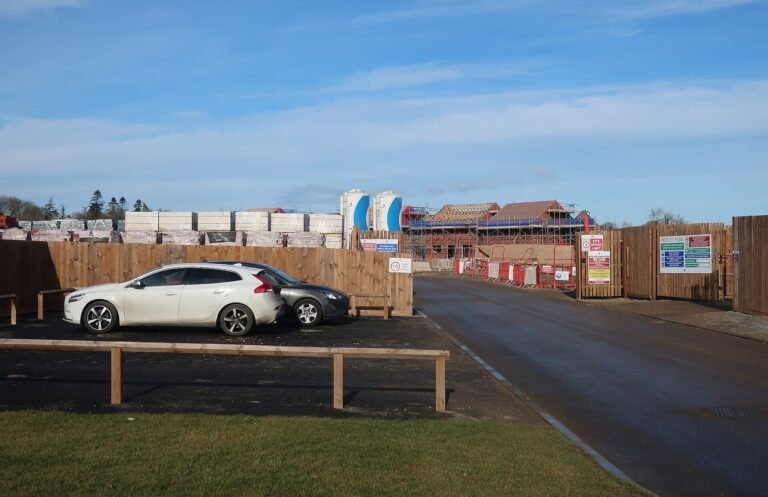
Shared ownership homes are on new-build sites in and around Norwich, Wymondham and King’s Lynn. The national income limit applies to all of them.
Self-employed buyers
Most lenders want two years of figures from the self-employed. What counts as income depends on how the business is set up.
- Sole traders need two SA302 tax calculations and tax year overviews. Lenders usually take the lower of the latest year or the two-year average; a few will work from one year if the trend is up and the deposit is large.
- Limited company directors need two years of accounts. Some lenders count salary plus dividends drawn. Others count salary plus your share of the profit left in the company, which can mean a much larger loan for a director who pays themselves little. A whole-of-market broker will know which lender does which.
- Partners need two years of partnership returns and their own SA302. Your income is your share of the profit.
- Mixed income, such as a salary plus self-employment or a director’s salary plus rent, is treated strand by strand. Take all of it to a broker in one go.
Norfolk houses that narrow the lender list
| Property type | Mainstream lender stance | What helps |
|---|---|---|
| Thatched roof | Most accept; some restrict | A survey of the roof and specialist buildings insurance in place at offer |
| Listed building | Most accept | Full building survey; no unresolved listed-building consent issues |
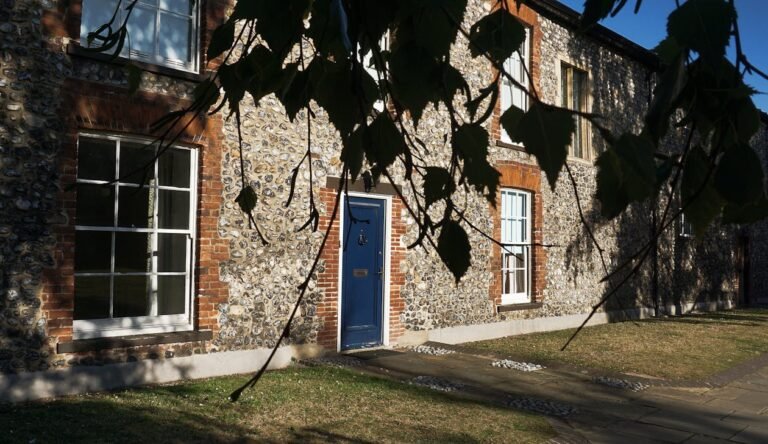
| Flint cottage | Most accept | A surveyor who knows flint and lime construction |
| Barn conversion (finished) | Most accept | Building control completion certificate; a structural warranty if the work is recent |
| Barn conversion (unfinished) | Specialist self-build products only | Architect’s plans, a costed build schedule and a contingency |
| Coastal erosion zone | Several decline outright | Property outside Shoreline Management Plan “no active intervention” zones; a flood-risk report |
| Japanese knotweed | Varies; some decline | An insurance-backed treatment plan with a valid guarantee |
| Agricultural occupancy condition | Few lenders | A whole-of-market broker. Suffolk Building Society (formerly Ipswich Building Society) said in 2023 it would lend on tied homes up to 50% loan to value |
| Flat above a shop | Most decline; some accept | The type of business below matters: many lenders accept a cafe and refuse a takeaway |
Documents to gather before you apply
- Three months of bank statements for every account you use.
- Three months of payslips if employed, or two years of SA302s and tax year overviews if self-employed.
- Your latest P60.
- Proof of where the deposit came from: savings statements, a gift letter from family, probate papers or the completion statement from a sale.
- Photo ID: passport or driving licence.
- Proof of address dated within three months, such as a utility or council tax bill.
- Details of loans, credit cards and balances.
- For an unusual property, any plans, survey reports or flood and erosion documents you already hold.
How long it takes
Get an agreement in principle before you make an offer; it tells you and the agent what you can borrow. After that, the wait is mostly legal work and the chain. Rightmove’s September 2026 figures put the average time from sale agreed to completion at 171 days in the East of England, against 154 days across Great Britain. Our Norfolk conveyancing guide covers what slows coastal and listed purchases.
The rest of the move
Dates to watch
The Bank of England announces its next two rate decisions on 5 November and 17 December 2026. With three of the nine members voting for a rise in September, a cut this year looks less likely than it did in the spring.
The consultation on the first-time buyer ISA that will replace the Lifetime ISA closed on 17 August 2026. The contribution limit, bonus and price cap for the new account have not been set. If you are saving in a Lifetime ISA now, you can keep paying in.
How we produced this guide
Bank Rate and the September 2026 vote are from the Bank of England’s Monetary Policy Summary of 17 September 2026. Rates by loan to value are the Bank of England’s quoted household interest rates for August 2026, from Bankstats. Market-wide average rates are Moneyfacts figures for 15 September 2026. The Norfolk, East of England and UK average prices are from the HM Land Registry UK House Price Index for July 2026. Town medians are from HM Land Registry Price Paid Data for the 12 months to June 2026, the figures used in our town guides. Pay is from the ONS Annual Survey of Hours and Earnings 2025 (residents in full-time work), and self-employment from the ONS Annual Population Survey. Scheme limits are from GOV.UK and stamp duty from HMRC. Monthly payments use the standard repayment formula over 30 years. Lender positions on unusual properties are general and change often. See our methodology page for source links.
Frequently asked questions
Should I use a Norfolk mortgage broker or go direct?
Use a broker if you are self-employed, buying a thatched, listed, tied or coastal property, or have marks on your credit file. A salaried buyer purchasing a standard house can go direct. The rate on a given product is usually the same either way; the broker’s value is finding the lender that will say yes.
What deposit do I need for a Norfolk house?
5% is possible on homes up to £600,000 through the government’s mortgage guarantee scheme. On the July 2026 Norfolk average of £269,185, 5% is about £13,500 and 25% about £67,300. In August 2026 the average two-year fix was 5.52% at 95% loan to value and 4.92% at 75%.
Can I get a mortgage on a thatched cottage in Norfolk?
Yes. Most mainstream lenders will lend on thatch, usually subject to a satisfactory valuation and specialist buildings insurance in place by the time of the offer. A broker can tell you which lenders are comfortable with your particular roof.
Are mortgage rates in Norfolk different from the rest of the UK?
No. Lenders price products nationally, so a Halifax or Nationwide fix costs the same in Norwich as in Manchester. What differs is income: the median Norfolk resident in full-time work earned £36,886 in 2025, against £39,039 across the UK.
What is the Bank of England base rate in 2026 and why does it matter?
It is 3.75%, where it has been since 18 December 2025. The Bank held it on 17 September 2026 by six votes to three, with three members voting for 4%, and the next decision is on 5 November. It sets tracker rates directly and feeds into fixed rates through swap rates.
Can I get a mortgage in a coastal erosion zone in Norfolk?
It depends on the Shoreline Management Plan policy for that stretch. Several mainstream lenders decline properties in “no active intervention” zones; where the coast is defended, homes are usually mortgageable but fewer lenders quote. For any purchase near the coast, use a whole-of-market broker and check the policy for that exact frontage.
How long does a Norfolk mortgage application take in 2026?
Get an agreement in principle before you offer. From sale agreed to completion, the average in the East of England was 171 days in Rightmove’s September 2026 figures, against 154 days across Great Britain.
Are there special schemes for first-time buyers in Norfolk?
The national schemes all apply: the Lifetime ISA, the mortgage guarantee scheme for 95% loans, shared ownership, First Homes where a development offers them, and stamp duty relief on the first £300,000. There is no Norfolk-only scheme; ask developers directly about shared ownership and First Homes.
What income do I need to buy an average Norfolk house?
At the July 2026 average of £269,185 with a 25% deposit, the loan is about £201,900, which at 4.5 times income needs a household income of about £44,900. The median Norfolk resident in full-time work earned £36,886 in 2025, so most buyers at that price need two incomes or a bigger deposit.
A Norfolk mortgage broker? See how to be featured on this guide.
Data sources: Bank of England, Moneyfacts, HM Land Registry, ONS, GOV.UK, HMRC, Rightmove. Rates to September 2026; prices to July 2026. Last updated: 24 September 2026. Author: James Ward, Property and Money Editor.
Last reviewed
Planning a move to Norfolk?
Our guides to hiring the firms a move needs.
We earn no commission on these links. Paid placements are sold separately and always labelled. See our advertising and disclosure page.