All practical guides
Property surveys in Norfolk: which level for flint, thatch and clay lump
Most older Norfolk houses need a Level 3 survey, not a Level 2. RICS recommends Level 3 for older, unusual or altered property, which covers flint, reed thatch and clay lump.

Most older Norfolk houses need a Level 3 survey, not a Level 2. RICS recommends Level 3 for older, unusual, altered or run-down property, and that describes a large share of what is for sale here: flint walls in lime, reed thatch, clay lump in the south of the county. Budget for it from the start, along with any specialist reports the surveyor asks for.
The three RICS survey levels
RICS sets three levels of home survey. They differ in how far the surveyor looks and how much they tell you.
- Level 1 is for conventional houses in reasonable condition. It gives a traffic-light rating for each part of the building and a summary of risks, with no valuation.
- Level 2 is a more thorough visual inspection, including roof spaces and cellars where they can be reached, but no tests. You can have it with or without a valuation; with one, you also get a market value and an insurance rebuild figure.
- Level 3, often called a building survey, is RICS’s choice for a large, older, unusual or altered house, or one where you plan major works. It describes how the house is built, explains the cause of each defect, and recommends repairs with timescales and possible costs. It does not include a valuation.
Levels 1 and 2 grade each element 1 to 3. A 1 means no repair is needed now. A 2 means a defect that needs repair but is not serious or urgent. A 3 means a defect that is serious or needs repair or investigation urgently.
For a house built before the 1950s, anything thatched, flint-built or clay lump, or anything near the coast, take a Level 3. On a £250,000 to £349,000 house the HomeOwners Alliance puts a Level 2 at £600 to £700 and a Level 3 at £800 to £900. The extra £100 to £200 buys an explanation of each defect and what to do about it, which a Level 2 does not give.
What changes the brief in Norfolk
Thatch
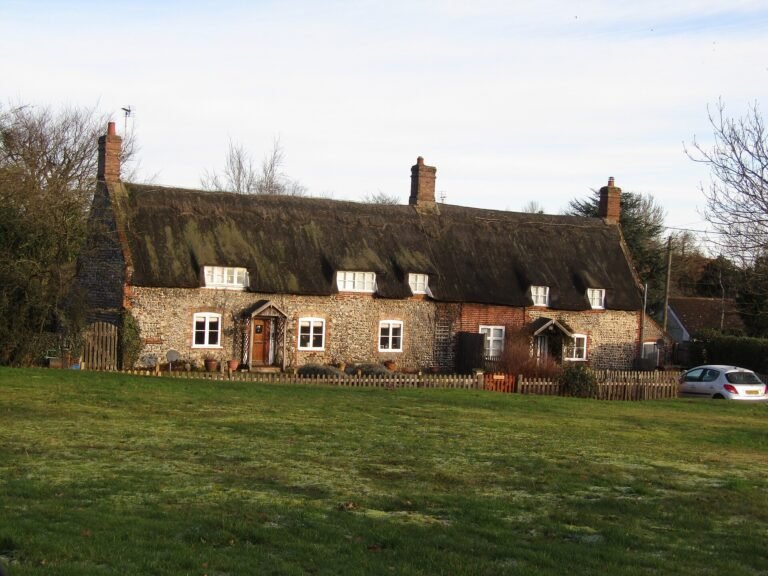
A building surveyor will report what they can see of a thatched roof, but the condition and remaining life of the coat are a thatcher’s judgement. Commission a separate inspection from a thatcher before exchange. The East Anglia Master Thatchers Association vets its members and lists them on its website. Specialist insurers want the same thing: Everywhen, a thatch broker, makes a thatcher’s inspection within the last 10 years one of its conditions.
Ask the thatcher two questions. How long is left on the ridge, which on a reed roof is redone every 10 to 15 years? And how long is left on the main coat? Water reed cannot be patched with a new layer over the old one; at the end of its life the whole coat comes off. Our guide to Norfolk reed thatch covers lifespans and fire risk.
Flint walls
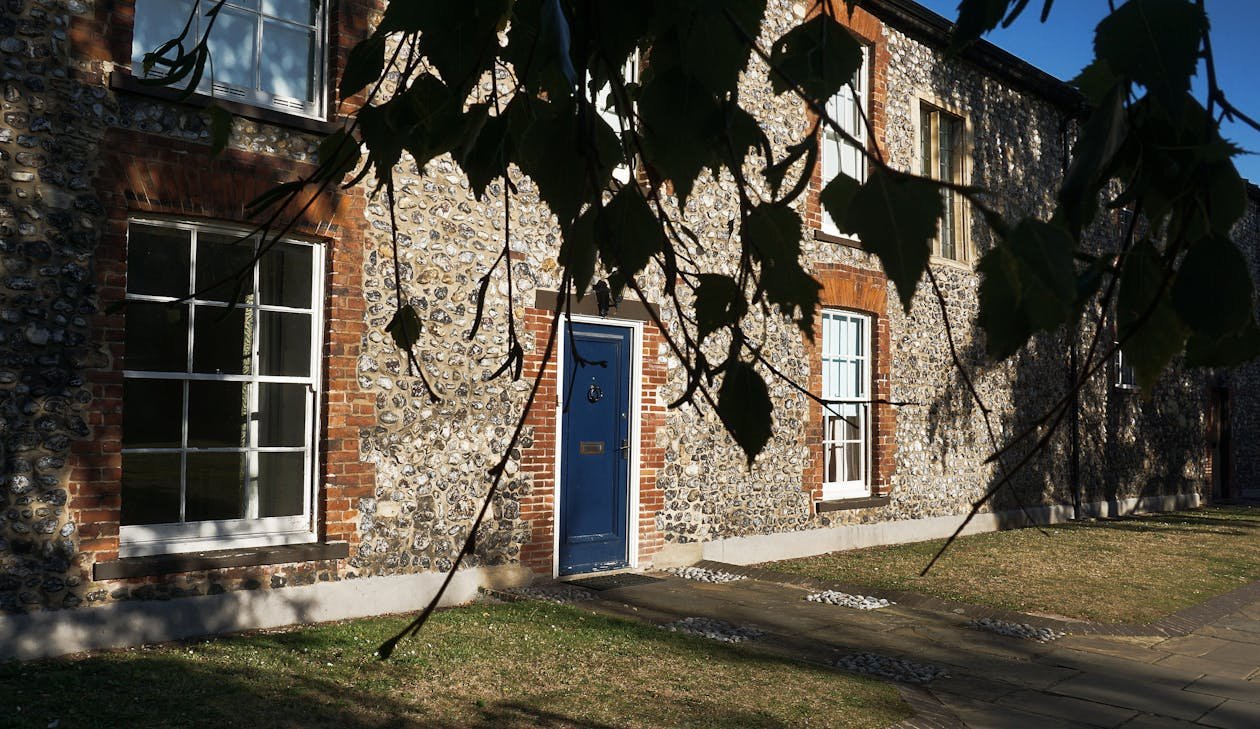
Traditional flint walls are laid in lime mortar, which lets moisture out of the wall. The Society for the Protection of Ancient Buildings (SPAB) warns that dense cement mortar shrinks as it dries, and fine cracks then let water in and cause damp inside. Ask the surveyor to report on any cement repointing or render on a lime-built wall, on mortar that has washed out, and on loose flints. SPAB says loose facing flints can often be tied and grouted rather than rebuilt. More in our guide to flint.
Timber frame
RICS says a surveyor should have experience of the type, age and construction of the house and should work within their competence. Ask before you book whether they have surveyed timber-framed houses of that age, and choose someone else if they have not.
Clay soils and clay lump
The British Geological Survey says the rock formations most prone to clay shrink-swell are mainly in south-east England. Subsidence can still happen on clay anywhere after a dry spell, and trees make it worse by drawing water from the ground. The Association of British Insurers put the average subsidence claim at a record £20,000 for April to June 2026. The BGS GeoSure data rates the shrink-swell risk at a given address. Ask the surveyor to comment on cracks around doors and windows, movement between the house and any extension, trees close to the walls, and any sign of past underpinning.
Clay lump is a different problem. It is unfired earth block, usually hidden under render, and it fails when it is treated like brick. SPAB advises against damp-proof courses of any kind in earth buildings. Our clay lump guide explains where it is found and how to recognise it.
Flood zone and surface water
A surveyor will usually note flood risk but will not assess defences or insurance. Check the address yourself on the Environment Agency’s long-term flood risk service, which since January 2025 has shown risk from rivers, the sea and surface water, likely depths and future risk with climate change. Check the flood zone and the surface water risk separately, and ask the seller about past claims. Our Norfolk flood risk guide explains the zones.
Coastal erosion
On the north-east Norfolk coast (Happisburgh, Hemsby, Trimingham and the Bacton area), erosion is a separate question from the survey, and a Level 3 will not assess it. Read the Shoreline Management Plan policy for the stretch of coast in front of the house. The Kelling to Lowestoft Ness plan covers this whole stretch; North Norfolk District Council is the coastal authority for Happisburgh, Trimingham and Bacton, and Great Yarmouth Borough Council for Hemsby. The policy will say hold the line, managed realignment or no active intervention. Our coastal erosion buyer’s guide sets out the checks in order.
Moving to Norfolk this year?
Get the free Norfolk Relocation Pack: all 46 towns we cover on one table, on price, council tax, population, trains and distance to Norwich, plus a week-by-week move checklist. The download appears here as soon as you enter your email.
Unsubscribe any time.
Who to use
Your lender will arrange a valuation. RICS is clear that this is not a survey: it tells the lender whether the house is good security for the loan. Your own survey is a separate job, and you pay for it.
For a pre-1950s or non-standard house, look for an independent RICS surveyor who has worked on that kind of building. Three routes help:
- RICS-regulated firms, found through the RICS Find a Surveyor directory at ricsfirms.com. Suitable for conventionally built houses from the 1950s on.
- Surveyors who hold RICS Building Conservation Accreditation, for listed and historic buildings. The architects’ equivalent is the AABC register, open only to architects registered with the ARB and searchable free.
- Surveyors whose own websites show work on thatched, flint and carrstone houses, for older buildings that are not listed.
Ring two or three for a quote. Ask what they have surveyed recently that is like this house.
What surveys cost in 2026
The HomeOwners Alliance publishes national price ranges for 2026 by the value of the house. We do not have Norfolk-only figures.
- £100,000 to £249,000: Level 2 £400 to £600, Level 3 £630 to £800.
- £250,000 to £349,000: Level 2 £600 to £700, Level 3 £800 to £900.
- £350,000 to £499,000: Level 2 £700 to £800, Level 3 £900 to £1,100.
- £500,000 to £1 million: Level 2 £800 to £1,000, Level 3 £1,000 to £1,500.
Specialist reports come on top. The HomeOwners Alliance puts a damp survey at £150 to £300 and a dry rot survey at about £300. Use a member of the Property Care Association, the trade body for damp and timber specialists, which audits its members and has a find-a-member search. If you can, pick a surveyor who does not also sell the treatment. Thatch inspections and drain camera surveys are priced by the firm, so get quotes.
What to act on in the report
- A condition rating of 3 on the roof, a load-bearing wall, a chimney or the foundations.
- A recommendation for further specialist investigation with no cost attached. Get the specialist in, and a price, before you exchange.
- Signs of past underpinning. Ask the seller for the engineer’s completion certificate and the insurance claim history.
- High damp readings throughout an old solid-walled house. SPAB says rising damp is widely misdiagnosed from electrical moisture meter readings alone, which can be high in a wall that is nearly dry. Failed lime pointing, a blocked drain or cement render are common causes. If a firm proposes chemical injection, get an independent opinion first.
- Thatch that the thatcher says is near the end of its life. Get a quote for the re-thatch.
- Any movement in a house on clay, even if the surveyor calls it historic. Get a structural engineer’s opinion before exchange.
Using the survey to renegotiate
A serious finding is a fair reason to go back to the seller between survey and exchange. Base the request on a written quote for the work, not on the surveyor’s rough estimate: a thatcher’s price for a re-thatch, a builder’s price for taking cement off a flint wall and repointing in lime, an engineer’s view on movement.
Keep to structural, roof and damp findings. An old boiler, tired decoration or a dated kitchen are not grounds to reopen the price, and a seller asked to pay for them is more likely to walk away.
Related Norfolk buying guides
- First-time buyers in Norfolk: the whole process, including stamp duty.
- Norfolk conveyancing: how to choose a solicitor: who to instruct and what to pay.
- Norfolk home insurance guide: thatched, flood, coastal and listed cover.
- Buying a period home in Norfolk: listing, conservation areas and mortgages on non-standard construction.
- Norfolk flood risk: how to read the flood map for any address.
- Norfolk coastal erosion buyer’s guide: the villages at risk and the checks to make.
How we produced this guide
Survey levels are from RICS’s consumer guidance on ricsfirms.com, checked on 24 September 2026, and condition ratings and survey prices from the HomeOwners Alliance’s 2026 guides. Advice on lime, flint and damp is from the Society for the Protection of Ancient Buildings. Subsidence figures are from the Association of British Insurers (published 3 August 2026) and the British Geological Survey. Thatch lifespans come from our reed thatch guide, and the insurer’s thatch condition from Everywhen’s website.
Frequently asked questions
Is a Level 3 survey worth it on a Norfolk cottage?
Yes, for anything built before the 1950s, thatched, flint-built, clay lump or near the coast. RICS recommends Level 3 for older and unusual houses, and on a £250,000 to £349,000 house it costs about £100 to £200 more than a Level 2.
Do I need a separate thatch survey?
Yes. The condition and remaining life of a thatched roof are a thatcher’s judgement, and specialist insurers such as Everywhen ask for a thatcher’s inspection within the last 10 years. The East Anglia Master Thatchers Association lists vetted members.
What does a full Norfolk survey stack cost in 2026?
On a £350,000 to £499,000 house the HomeOwners Alliance puts a Level 3 at £900 to £1,100, and a damp survey adds £150 to £300. A thatch inspection and a drain survey, if you need them, are quoted by the firm.
Can I use the surveyor’s findings to renegotiate?
Yes, for serious structural, roof, damp or foundation findings, backed by a written quote for the work. An old boiler or a tired kitchen is not a reason to reopen the price.
Last reviewed
Planning a move to Norfolk?
Our guides to hiring the firms a move needs.
We earn no commission on these links. Paid placements are sold separately and always labelled. See our advertising and disclosure page.