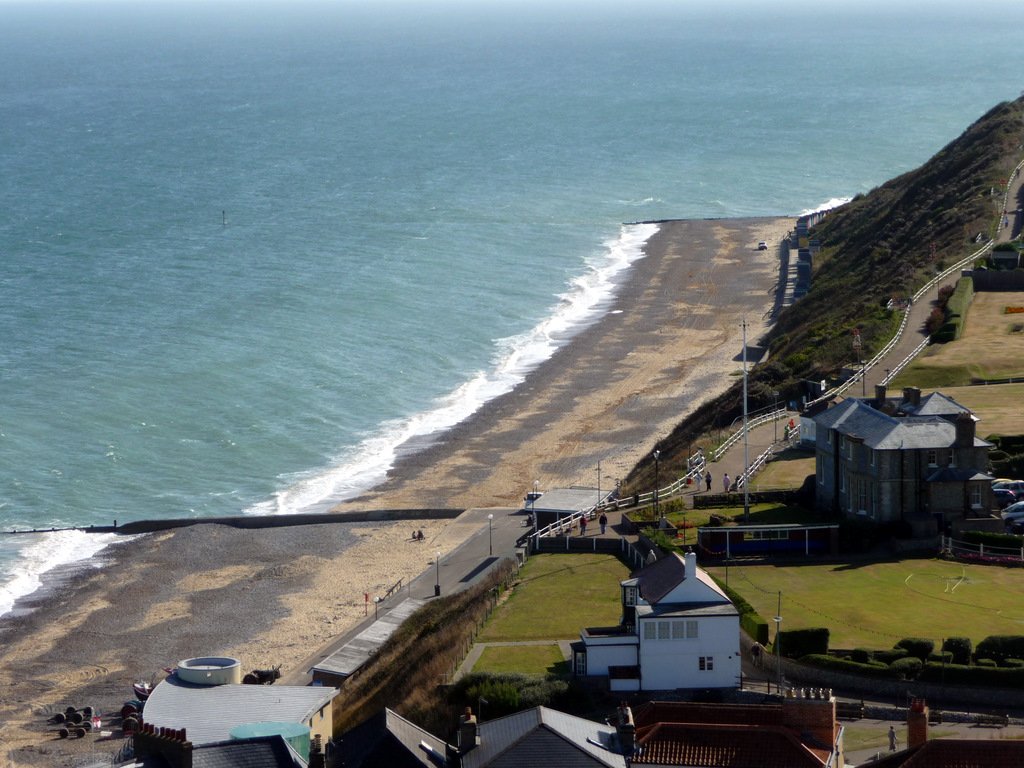
North Norfolk coast vs Norwich suburbs: prices and the commute
A house by the sea need not cost more than one on the edge of Norwich: the median sale in Cromer was £260,000, the same as in Costessey. What separates them is the journey.

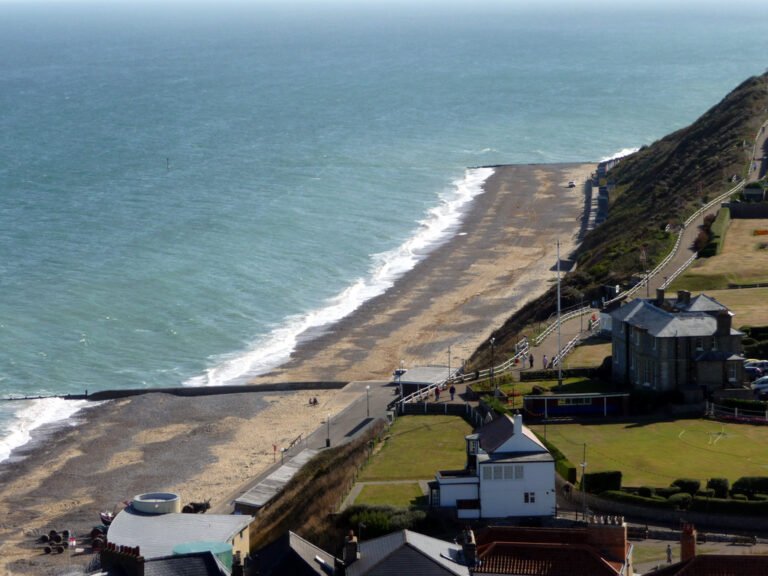
A house by the sea on the north Norfolk coast need not cost more than one on the edge of Norwich. In the year to June 2026 the median sale in Cromer was £260,000, the same as in Costessey and less than in Sprowston or Thorpe St Andrew (HM Land Registry). The expensive coast begins further west, in Holt, Wells and the Burnhams. What separates the coast from the suburbs is the journey: an hourly train or a 45-minute drive, against a bus every quarter of an hour.
Side by side
| Place | Getting to Norwich | State secondary |
|---|---|---|
| Cromer | Train about 47 min, roughly hourly; about 45 min by car | Cromer Academy, 11 to 16, Good (May 2023) |
| Sheringham | Train 57 to 66 min, roughly hourly; about 45 min by car | Sheringham High, 11 to 18, Good (June 2023) |
| Holt | No station; 45 to 50 min by car | Sheringham High, about 15 min away |
| Wells-next-the-Sea | No station; 45 min to an hour by car | Alderman Peel High, 11 to 16, Good (April 2022) |
| Sprowston | Bus about every 15 min, about 25 min; 10 to 15 min by car | Sprowston Community Academy, 11 to 18, expected standard in all areas (May 2026) |
| Thorpe St Andrew | Bus about 11 min to Castle Meadow; 8 to 12 min by car | Thorpe St Andrew School, 11 to 18, Good in every area (April 2025) |
| Costessey | Bus every 20 min, 30 to 40 min; about 10 min by car | Ormiston Victory Academy, 11 to 18, Good (November 2024) |
| Hellesdon | Bus about every 15 min; 10 to 15 min by car | Hellesdon High, 11 to 18, Requires Improvement (October 2023) |
The commute
Of the coast towns, only Cromer and Sheringham are on the railway, at the end of the Bittern Line. Trains run roughly once an hour. From Cromer the journey to Norwich takes about 47 minutes, and the 06:29 arrives at 07:14; from Sheringham it takes 57 to 66 minutes. The last train home leaves Norwich at 22:47 from Monday to Thursday.
Everywhere else on the coast you drive, and the times in the table grow when the summer traffic is on the coast roads. In the suburbs a missed bus means a wait of 15 or 20 minutes; on the Bittern Line it means an hour.
For someone going into a Norwich office two or three days a week, Cromer and Sheringham work, and the rest of the week the distance does not matter. For five days a week, with children to collect, the suburbs are the practical choice.
Still deciding where in Norfolk?
Get the free Norfolk Relocation Pack: all 46 towns we cover on one table, on price, council tax, population, trains and distance to Norwich, plus a week-by-week move checklist. The download appears here as soon as you enter your email.
Unsubscribe any time.
Where the coast premium is
Median sold price, 12 months to June 2026
Bar widths scaled to the highest figure. Source: HM Land Registry Price Paid Data, standard sales, 1 July 2025 to 30 June 2026, counted as in our town guides (the suburbs by postcode sector).
The coast towns with stations cost about what the suburbs cost, and Cromer’s median matched Costessey’s exactly. Detached houses are dearer on the coast: £382,500 in Cromer and £422,500 in Sheringham, against £343,750 in Sprowston and £370,000 in Thorpe. At the other end, flats made up 45 of Cromer’s 127 sales.
West of Sheringham the prices climb. The median in Holt was £335,000 and in Wells-next-the-Sea £415,000. In Burnham Market, which has too few sales for a one-year figure, the median over three years to June 2026 was £715,000. These are the places where second homes set the price. Council tax records quoted in the Wells Neighbourhood Plan put second homes and holiday lets at 34.8% of the town’s homes in 2022, and in Burnham Market about half the homes are not anyone’s main residence.
The district figures point the same way. The UK House Price Index put the North Norfolk average at £292,563 in July 2026, down 3.1% on a year earlier, the largest fall of any Norfolk district, while Broadland, which takes in Sprowston, Thorpe and Hellesdon, averaged £313,407 and rose 2.9%.
A coastal house carries one question a suburban one does not. Insurers and mortgage lenders ask which Shoreline Management Plan policy covers the address, Hold the Line, Managed Realignment or No Active Intervention, and outside Hold the Line frontages that answer can affect whether a home can be insured. The Cromer and Sheringham town frontages are Hold the Line. For anything else, read our coastal erosion guide for buyers before you offer.
Daily life
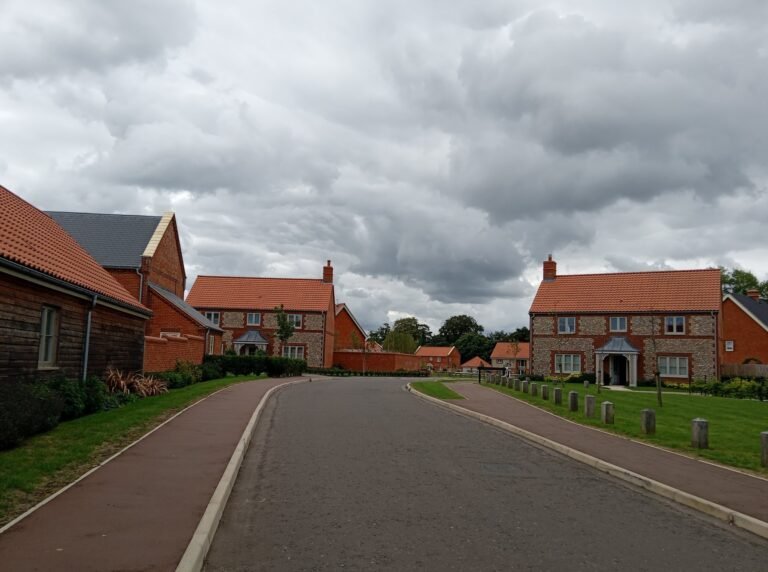
The suburbs run on big supermarkets and short trips: Tesco Extra and Lidl on Blue Boar Lane in Sprowston, a Sainsbury’s superstore on Pound Lane in Thorpe, Asda on Drayton High Road in Hellesdon, with the city centre and the Norfolk and Norwich University Hospital a bus ride away. Sprowston and Hellesdon have no high street of their own.
Cromer and Sheringham cover most weekly needs within the town. Cromer has Morrisons, Sainsbury’s and Lidl on Holt Road, and Cromer Hospital’s minor injuries unit is open from 8am to 7.45pm every day. Sheringham has a Tesco, a Saturday market all year and one GP practice. For A&E both rely on the Norfolk and Norwich, about 50 minutes’ drive from Sheringham. Wells has a Co-op, a health centre and a community hospital with no A&E; the big shop is in Fakenham, about 10 miles away.
Winter changes the coast more than the suburbs. The Cromer Pier Show ran from late June to mid-September in 2026 and returns for Christmas; from January to late June there is no resident show. Renting through a winter before you buy is cheaper on the coast than near the city, at least at district level: the ONS put the average private rent at £865 a month in North Norfolk in August 2026, against £938 in Broadland.
Schools on both sides
Every suburban secondary in the table takes pupils to 18, so a family can stay put from 11 to A-levels. Thorpe St Andrew and Ormiston Victory in Costessey have the best recent reports, and Ofsted judged Ormiston Victory’s personal development Outstanding. Sprowston’s May 2026 report card, which gives no overall grade, found the expected standard in all seven areas. Hellesdon High’s Requires Improvement grade was for behaviour; its teaching and sixth form were graded Good.
On the coast, only Sheringham High School has a sixth form, and Ofsted rated it Good along with the rest of the school. Cromer Academy and Alderman Peel High School in Wells both stop at 16. Students from Cromer go on to Sheringham or to Paston College in North Walsham, and those from Wells to Fakenham, Sheringham or Norwich.
The inland market towns
North Walsham is the middle route with a station. It is on the same Bittern Line, 26 minutes from Norwich and 15 from Cromer, its median sale was £255,000, and Mundesley beach is about ten minutes’ drive. Paston College gives it a sixth form. Aylsham, with a median of £320,000, has no station but is about 25 minutes from Norwich down the A140 and about 20 from Cromer; Aylsham High School, for ages 11 to 16, was confirmed as Good in January 2024. Reepham, at £300,000, is 25 to 30 minutes from Norwich by car and has its own school to 18, but it is the furthest of the three from the sea.
Verdict
Buy in a Norwich suburb if someone in the house has to be in the city every weekday, or if your children need a school to 18 without a long journey. Buy on the coast if you are retired, work from home or go to Norwich two or three days a week, and start in Cromer or Sheringham, which have the station and the supermarkets at prices close to the suburbs; Cromer also has the minor injuries unit. Holt, Wells and the Burnhams suit buyers with more money who will drive for everything. If you want the sea within reach and a train to Norwich at suburb prices, look at North Walsham.
Plan the move
How we produced this guide
Sale prices are HM Land Registry Price Paid Data for standard sales between 1 July 2025 and 30 June 2026, taken on the same basis as our town guides: coast towns by their own address, suburbs by postcode sector. Burnham Market uses three years of sales. District averages are from the UK House Price Index, July 2026, and rents from the ONS. School details are from Ofsted reports. Train times are from Greater Anglia’s Norwich to Cromer and Sheringham timetable valid from 17 May 2026, and bus times from bustimes.org, checked on 24 September 2026. Drive times are typical times on the main roads. Shoreline policies are from the Environment Agency’s shoreline management plan records. See our methodology page for source links.
Frequently asked questions
How big is the coast-vs-suburbs price gap?
It depends where on the coast. Cromer’s median sale in the year to June 2026 was £260,000, the same as Costessey’s and below Sprowston’s £280,000. Further west the gap opens: Holt’s median was £335,000 and Wells’s £415,000.
Can you commute to Norwich from the north Norfolk coast?
From Cromer or Sheringham, yes, by an hourly train that takes about 47 minutes from Cromer and 57 to 66 from Sheringham. Elsewhere on the coast it is a drive of 45 minutes to an hour. It works best two or three days a week.
Where are the strongest schools in this comparison?
Thorpe St Andrew School (Good in every area, April 2025) and Ormiston Victory Academy in Costessey (Good, November 2024) have the best recent reports, and both go to 18. On the coast, Sheringham High is Good and has a sixth form; Cromer Academy and Alderman Peel in Wells are Good but stop at 16.
Is there a compromise between coast and city?
North Walsham, where the median sale was £255,000 and the train reaches Norwich in 26 minutes, with Mundesley beach about ten minutes’ drive. Aylsham, at £320,000, is about 25 minutes from Norwich by car and 20 from Cromer but has no station.
Which coast towns are cheapest to get into?
Cromer and Sheringham, the two with stations. Their medians were £260,000 and £295,000 in the year to June 2026. Most of the cheapest homes in Cromer are flats: 29 of its 36 sales under £200,000.
Data sources: HM Land Registry, ONS, Ofsted, Greater Anglia, bustimes.org, Environment Agency shoreline management plans. Sales for the 12 months to June 2026. Last updated: 24 September 2026. Author: Sarah Ellis, Coast and Broads Editor.
Last reviewed
Planning a move to Norfolk?
Our guides to hiring the firms a move needs.
We earn no commission on these links. Paid placements are sold separately and always labelled. See our advertising and disclosure page.