All area guides
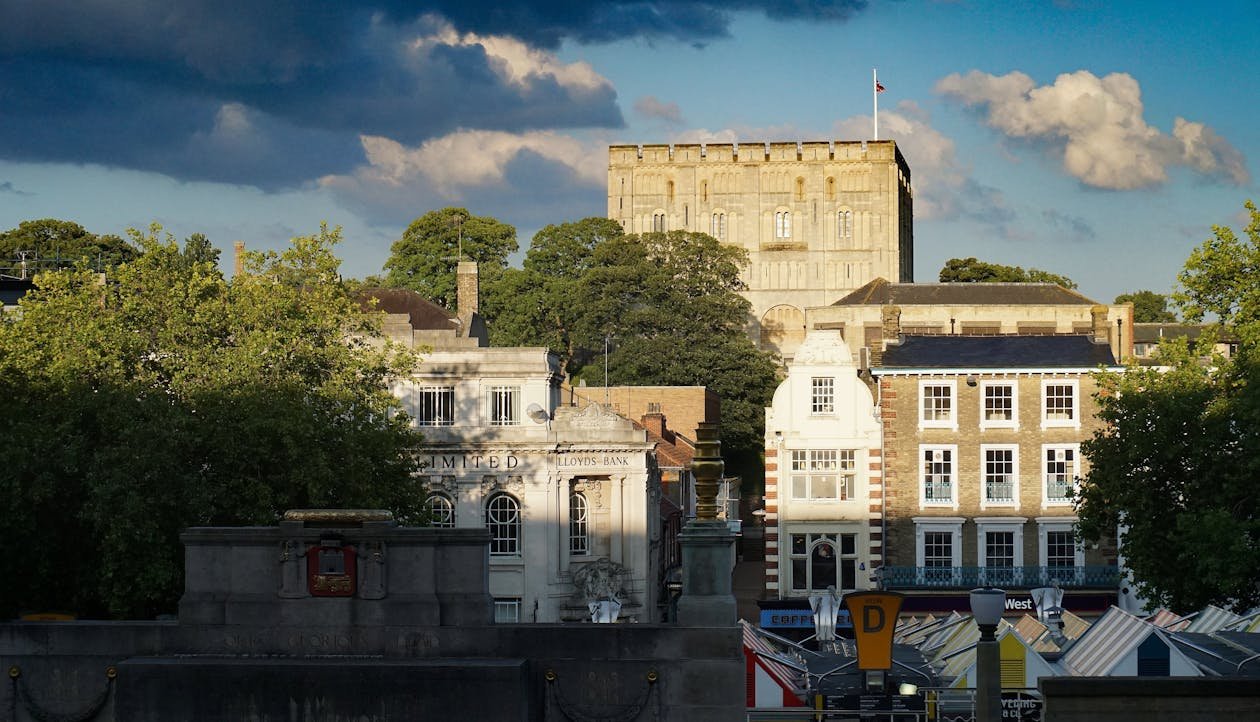
Buying in Norwich city centre: flats, prices and Anglia Square
Buying in central Norwich mostly means buying a flat, and flats are where the city's prices are weakest. Anglia Square is the one large scheme that will change the centre.

Buying in central Norwich mostly means buying a flat, and flats are where the city’s prices are weakest. In the NR1 postcode district 175 of the 380 standard sales in the year to June 2026 were flats, at a median of £150,000. Across the city the average flat was worth £141,187 in July 2026, against £148,870 a year earlier. The one large scheme that will change the centre is Anglia Square, where demolition started in November 2025.
Where it is: the middle of Norwich, in the Norwich City Council area, where the NR1, NR2 and NR3 postcode districts meet.
Prices in the centre
HM Land Registry does not publish a city-centre price, so the nearest official figures are for the three postcode districts that meet in the middle of Norwich. Each of them runs well beyond the centre, which is why the medians below mix city flats with suburban terraces. What they show clearly is the gap between flats and houses.
| Postcode district | Standard sales, 12 months to June 2026 | Median, all types | Median flat | Median terraced house |
|---|---|---|---|---|
| NR1 | 380 | £215,750 | £150,000 | £248,750 |
| NR2 | 376 | £270,000 | £155,000 | £280,000 |
| NR3 | 383 | £215,000 | £140,000 | £230,000 |
In NR1 the middle half of flat sales fell between £130,000 and £185,000. A terraced house in the same district cost about £100,000 more than a flat, and in NR2 about £125,000 more.
For the city as a whole, the UK House Price Index put the Norwich average at £224,323 in July 2026, down 2.3% on a year earlier. Flats fell further, from £148,870 to £141,187, or about 5%. That is the market a flat buyer is entering: low prices that are still falling. It suits a buyer who means to stay and not one who may need to sell in two or three years.
Anglia Square
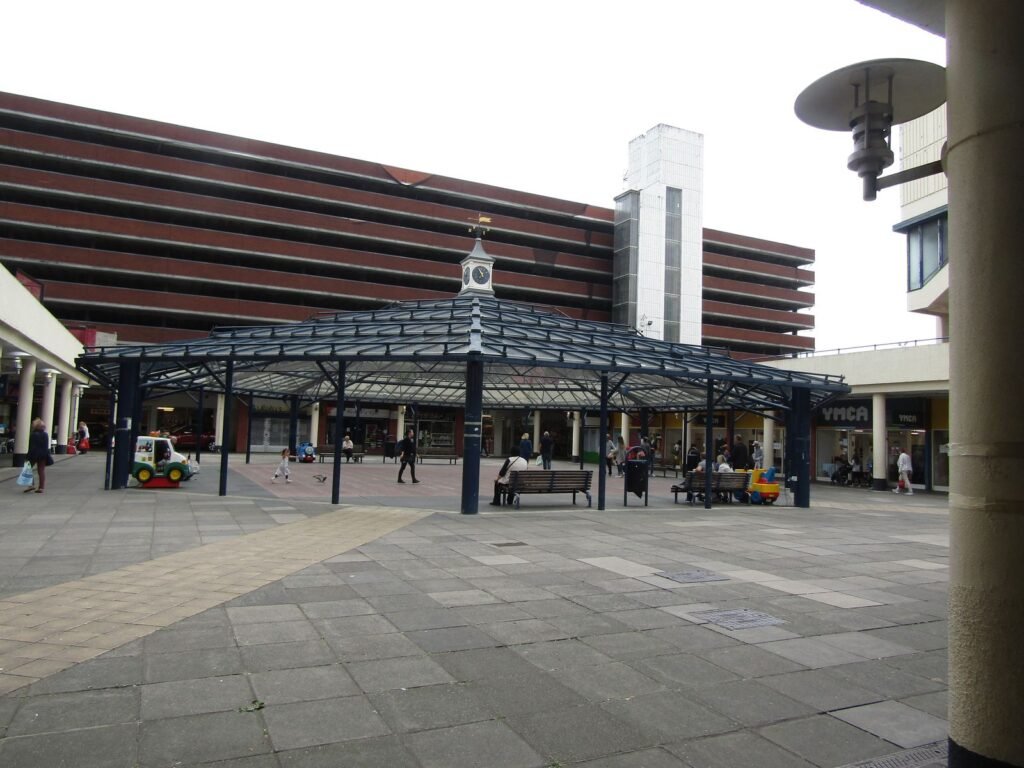
Anglia Square, the shopping centre north of the river in NR3, is the largest regeneration site in the city centre. Weston Homes pulled out of the previous scheme in February 2024. Norwich City Council bought the site in December 2024 with grant funding from Homes England, and demolition began in November 2025. The multi-storey car park came down in February 2026 and the cinema from March.
The plan is for about 1,100 homes, half of them affordable in the first two phases, with shops and community and leisure space. It is being delivered by the Anglia Square Investment Partnership, a joint venture between the council and Aviva Capital Partners. Demolition was due to finish in spring 2026 but has been slowed by asbestos and nesting gulls. In June 2026 the council said building work on new homes would start “in the coming months”, without a date.
For a buyer on the streets around it, that means living next to a demolition site and then a building site for some years. The finished scheme would change the northern edge of the centre. Buying nearby now is a bet on it being built.
Thinking about moving to Buying in Norwich city centre?
Get the free Norfolk Relocation Pack: Buying in Norwich city centre and the other 45 towns we cover on one table, on price, council tax, population, trains and distance to Norwich, plus a week-by-week move checklist. The download appears here as soon as you enter your email.
Unsubscribe any time.
The central areas
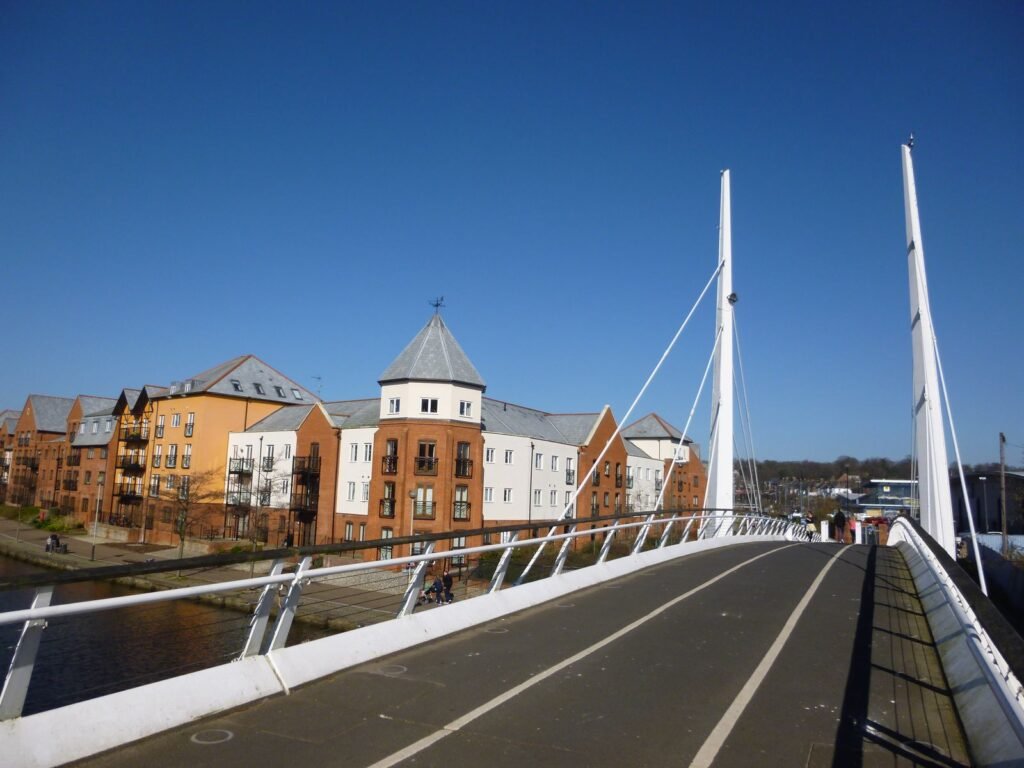
The Cathedral Quarter and the Lanes, around the Norman cathedral, Elm Hill and the market, are the old centre. Many of the buildings are listed, which limits what an owner can change.
Riverside, the development beside the station, has newer apartment blocks and a large leisure complex. It suits a buyer who wants a modern flat a few minutes’ walk from the trains.
The Golden Triangle is the grid of Victorian terraces between Earlham Road and Newmarket Road, with Unthank Road as its shopping street. It is in NR2, where terraced houses had a median of £280,000. It sits between the centre and the University of East Anglia.
North of the river, the streets around Anglia Square are in NR3, which had the lowest flat median of the three districts, £140,000.
Schools, trains and council tax
Notre Dame High School on Surrey Street, NR1, is a Catholic academy for ages 11 to 18. Ofsted inspected it on 28 February 2024 and rated it Good, with personal development Outstanding. It had 1,613 pupils against a capacity of 1,378. City of Norwich School, on Eaton Road in NR4 to the south-west, was inspected on 30 June 2026 under the new report cards: a strong standard for leadership and governance, and the expected standard in the other six areas, including its sixth form. Catchments are set street by street, so confirm with Norfolk County Council before you offer.
Greater Anglia runs 33 trains a weekday from Norwich to London Liverpool Street, 32 of them direct. The fastest journey takes 1 hour 39 minutes and most about 1 hour 50. That works for a day or two a week in London; for five days it is a long commute.
Norwich City Council’s 2026-27 council tax, including the county and police shares, is £1,668.95 at Band A, £1,947.11 at Band B, £2,225.27 at Band C and £2,503.43 at Band D. See the council’s council tax page for the full table.
Renting or buying
The ONS put the average private rent in Norwich at £1,142 a month in August 2026, almost unchanged on a year earlier, with one-bedroom homes at £778 and two-bedroom homes at £972. The student population of UEA and Norwich University of the Arts keeps demand for central rooms and small flats high.
If you buy a flat, the price is only part of the cost. Most are leasehold, so read the lease length, the service charge and the ground rent before you commit, and ask about parking, which many central blocks and conversions do not have. A house a mile or two out, in NR2, NR4 or Thorpe St Andrew, is more likely to come with a garden and parking.
New building in the centre is limited by the medieval street plan, and the Land Registry recorded only four new-build sales across NR1, NR2 and NR3 in the year to June 2026. Anglia Square is the exception to watch.
Verdict
Buy a flat in central Norwich if you want to walk to work, the station and the shops, and you expect to stay long enough that the recent fall in flat prices does not matter. Do not buy one as a short-term investment, or without reading the lease and the service charge accounts. If you need a garden or a school place settled in advance, look a mile or two out instead.
Plan the move
How we produced this guide
Postcode-district prices are from HM Land Registry Price Paid Data, standard sales only, for NR1, NR2 and NR3 in the 12 months to June 2026, which we queried directly. City-wide prices are from the HM Land Registry UK House Price Index for the Norwich local authority, July 2026 release. Rents are from the ONS. Council tax is from Norwich City Council for 2026-27. School details are from Ofsted reports. Train times are Greater Anglia’s published journey times for the route. Anglia Square details are from Norwich City Council’s announcements. We update this guide quarterly. See our methodology page for source links.
Frequently asked questions
Is Norwich city centre a good place to buy in 2026?
For someone who will live in the flat for years, yes: central flats sold for a median of £150,000 in NR1. As a short-term investment, no, because flat prices across the city fell about 5% in the year to July 2026.
How does Norwich city centre compare to the suburbs for renters?
The ONS gives only a city-wide figure: £1,142 a month on average in August 2026, £778 for one bedroom and £972 for two. Central rooms and small flats face competition from students; houses with gardens are easier to find further out.
What is happening with Anglia Square?
Norwich City Council bought the site in December 2024 and demolition began in November 2025. About 1,100 homes are planned, with building work due to start after demolition, for which the council has given no firm date.
Does city-centre hotel and hospitality investment affect local house prices?
Not in any way the price data shows. New restaurants and hotels make the centre a better place to live, but flat prices across Norwich still fell in the year to July 2026.
Is Norwich well connected enough for remote workers who travel occasionally?
Yes. There are 33 trains to London Liverpool Street on a weekday, 32 of them direct; the fastest takes 1 hour 39 minutes and most about 1 hour 50, and the A11 and A47 are the main roads out.
Data sources: HM Land Registry Price Paid Data and UK House Price Index, ONS, Norwich City Council, Ofsted, Greater Anglia. Prices for the 12 months to June 2026 and July 2026; 2026-27 council tax; inspection dates given in the text. Author: Tom Fletcher, Property and Relocation Editor.
Planning a move to Norfolk?
Our guides to hiring the firms a move needs.
We earn no commission on these links. Paid placements are sold separately and always labelled. See our advertising and disclosure page.