All practical guides

Retiring to Norfolk: towns, hospitals and getting about
Whether retiring here works depends on three things easy to miss when viewing in July: the distance to a hospital and a GP, how the house is heated, and how you will get about without driving.

Norfolk is already one of the oldest parts of England: at the 2021 Census North Norfolk had the highest median age of any council area in England and Wales, 54. The county’s average house price, £269,185 in July 2026, was below England’s £293,479, though prices in its coastal and market towns range widely. Whether a retirement here works depends on three things that are easy to miss when you view a house in July: how far it is to a hospital and a GP who will register you, how the house is heated, and how you will get about once you stop driving.
Where to retire
The choice of town matters, because the distances between towns are long and the buses outside them thin out quickly. Six towns are compared below. The prices are medians of HM Land Registry sales in the 12 months to June 2026, for the town itself rather than its villages.
| Town | Median sold price | Without a car |
|---|---|---|
| Holt | £335,000 | No station. The Sanders 45 runs to Norwich, but the last bus back leaves at 17:35 |
| Sheringham | £295,000 | Bittern Line to Norwich roughly hourly, 57 to 66 minutes; Tesco and the medical practice on Cromer Road |
| Wells-next-the-Sea | £415,000 | No station. The Coasthopper bus runs along the coast to Sheringham and Cromer |
| Wymondham | £275,750 | Trains to Norwich in 13 to 16 minutes and direct to Cambridge |
| Diss | £263,000 | Direct trains to London Liverpool Street; two GP practices at the Mount Street health centre |
| Cromer | £260,000 | Bittern Line to Norwich in 44 to 47 minutes; minor injuries unit, GP practice and three supermarkets in town |
Our shortlist of the best places to retire in Norfolk compares these towns, plus Aylsham and Burnham Market, on council tax, house types and GP access. For the houses themselves, start on Rightmove or Zoopla, then register with the agents in the towns you are serious about.
Hospitals, GPs and dentists
Norfolk has three acute hospitals, and all three are some way from the coast. The Norfolk and Norwich University Hospital (NNUH), on the edge of Norwich, serves most of the county; the Care Quality Commission rated the trust Requires Improvement in a report published in August 2024. The Queen Elizabeth Hospital in King’s Lynn serves the west. It is also rated Requires Improvement, and its main building is due to be replaced, with the new hospital expected to open to patients in 2033. Anyone buying west of Fakenham should read up on the QEH first. The James Paget at Gorleston serves the east and is rated Good.
Cromer Hospital has no A&E, but its minor injuries unit is open every day from 8am to 7.45pm.
Check that a GP practice near the house is taking new patients before you buy, not after. NHS Norfolk and Suffolk ICB, which replaced the Norfolk and Waveney ICB in April 2026, has a GP locator on its website, and our guide to registering with a GP in Norfolk covers the process. Practices do close: Blakeney’s surgery shut on 30 June 2025, and its patients now travel to the Holt practice’s sites at High Kelling or Melton Constable.
NHS dentistry is harder still. Check whether any practice near the house is taking NHS patients, get on a list before you move, and expect to wait. There has been some new capacity on the coast, where North Norfolk District Council agreed in May 2025 to let the former visitor centre in Cromer to a five-surgery NHS-backed practice. Age UK Norfolk can help with finding local health and care services.
Planning a move to Norfolk?
Get the free Norfolk Relocation Pack: all 46 towns we cover on one table, on price, council tax, population, trains and distance to Norwich, plus a week-by-week move checklist. The download appears here as soon as you enter your email.
Unsubscribe any time.
What it costs to live here
House prices are lower than the England average, though not everywhere. Parts of the north coast cost far more: in Burnham Market the median sale over the three years to June 2026 was £715,000, and the Lynn News has reported that about half the homes in the village are not anyone’s main residence.
Council tax varies by town as much as by district, because each town council adds its own precept. For 2026-27, Band D in the towns on our shortlist runs from £2,440.73 in Wells-next-the-Sea to £2,624.36 in Diss. If you live alone you get 25% off the bill.
Heating is where Norfolk differs most from the rest of England. At the 2021 Census, 17.3% of Norfolk households were heated by oil alone, against 3.2% across England, and in North Norfolk the figure was 24.6%. Only 56.8% of Norfolk households were on mains gas alone, compared with 74.0% in England. Heating oil is not covered by Ofgem’s price cap, so the bill follows the market. Find out how any village house is heated before you make an offer; our guide to oil heating in Norfolk covers tanks, deliveries and running costs.
Getting around without a car
The question to ask of any house is how you would manage there without a car. Three railway lines out of Norwich help. The Bittern Line runs roughly hourly from Norwich through Hoveton & Wroxham and North Walsham to Cromer and Sheringham. The main line runs from Norwich through Diss to London. The Cambridge line runs through Wymondham. Norwich itself is the easiest place in the county to live without a car.
Away from those lines, a car becomes necessary. Wells-next-the-Sea and Burnham Market have no station, Holt‘s last bus home from Norwich leaves at 17:35, and most of the Broads villages and the rural middle of the county depend on the car.
Sanders Coaches runs the Coasthopper between Wells, Sheringham and Cromer and the routes from Holt and Aylsham to Norwich. Central Connect (formerly Konectbus) runs routes from Norwich into mid and south Norfolk, and First runs the Norwich city routes and the buses around Great Yarmouth. In England an older person’s bus pass, which gives free off-peak travel on local buses, comes at State Pension age. Where buses do not reach, community transport and dial-a-ride schemes may help; gov.uk lists the local ones.
Clubs, walking and volunteering
The u3a, whose members meet to learn in retirement, has branches in Norwich, Aylsham, Diss and Dereham, among others.
On the Broads, the Norfolk Broads Yacht Club is on Wroxham Broad, near Wroxham. The Peddars Way runs 46 miles from Knettishall Heath, just over the Suffolk border, to Holme-next-the-Sea, where it meets the Norfolk Coast Path, which follows the coast east as far as Hopton-on-Sea. Marriott’s Way, a path on an old railway line, runs from Aylsham to Norwich.
Norwich has the Theatre Royal, Norwich Playhouse and Cinema City, and Sheringham has the Little Theatre. The National Trust has Blickling Estate near Aylsham, Felbrigg Hall near Cromer, and Sheringham Park.
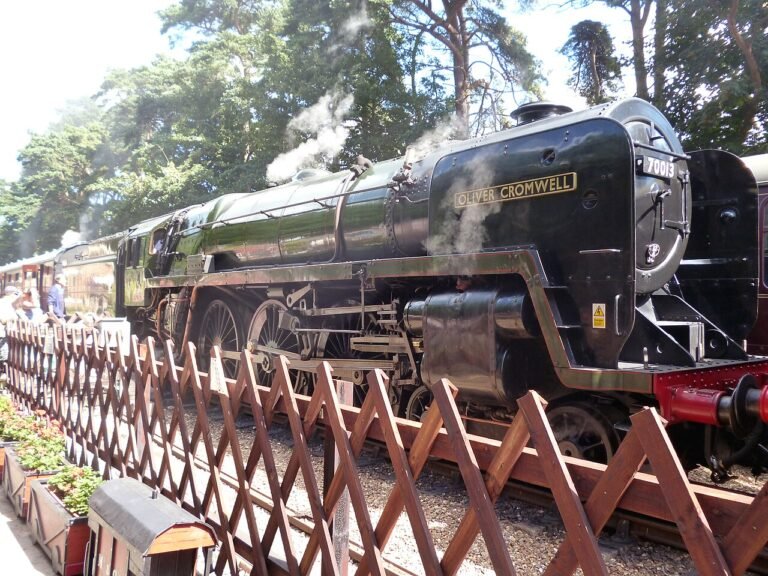
For volunteering, the RNLI has lifeboat stations at Cromer, Sheringham and Hunstanton, and the North Norfolk Railway, the heritage line between Sheringham and Holt also called the Poppy Line, recruits volunteers.
The downsides
The coast in winter is a different place from the coast in summer. Where many houses are second homes, as in Burnham Market, a good share of the village is empty out of season. See any coastal town in February before you commit to it.
Distance from family adds up. The average train from Norwich to London Liverpool Street takes 1 hour 51 minutes, and from Sheringham the train to Norwich adds roughly another hour before that. It is manageable for occasional visits, and harder to manage once you stop driving to the station.
The hospitals are under strain. The NNUH and the QEH are both rated Requires Improvement, and NHS dentistry is hard to find. Plan for both rather than assuming they will sort themselves out.
Verdict
Norfolk suits a retirement planned around the later years as much as the first ones. If you are recently retired and want the sea, Cromer or Sheringham give you the coast, a station and a minor injuries unit nearby. If your family is in London, Diss or Wymondham keeps you on a railway line. If you expect to give up the car, choose a town where the surgery, the shops and a bus or train are within walking distance of the house, such as Wymondham, Aylsham or Cromer. The retirement that goes wrong is the flint cottage bought on a summer holiday in a village with no bus, oil heating and a GP practice twenty minutes away.
Frequently asked questions
Is Norfolk a good place to retire?
Yes, if you choose a town where you can reach a GP, shops and a train or frequent bus without a car. The weak points are NHS dentistry, hospitals rated Requires Improvement in Norwich and King’s Lynn, and public transport in the villages.
What are the best places to retire in Norfolk?
Cromer and Sheringham for the coast with a station, Wymondham and Diss for trains to Norwich, Cambridge or London, and Aylsham for a market town with two GP practices. Wells-next-the-Sea and Holt suit people who will keep driving.
Is healthcare good in Norfolk for retirees?
The Norfolk and Norwich University Hospital is the county’s main teaching hospital, rated Requires Improvement by the CQC in 2024. Cromer Hospital has a minor injuries unit open every day. NHS dentistry is the hardest service to get, so register with a dentist and a GP before you move.
What is the cost of retiring to Norfolk?
Median house prices in the main retirement towns ran from £260,000 in Cromer to £415,000 in Wells-next-the-Sea in the year to June 2026. Band D council tax in those towns is about £2,440 to £2,625 for 2026-27. Budget for oil heating if you buy outside the towns.
Related guides
- Is Norfolk a good place to live?
- Norfolk cost of living
- Safest places to live in Norfolk
- Norfolk transport guide
- Living near the Norfolk Broads
Plan the move
How we produced this guide
House prices are medians of HM Land Registry Price Paid Data, standard sales only, for each town in the 12 months to June 2026 (three years for Burnham Market). Council tax is from the 2026-27 charges published by the district councils. The median age and heating figures are from the ONS 2021 Census. Hospital ratings are from the Care Quality Commission; GP and minor injuries details are from the NHS, the practices and the NNUH. Train times are from Greater Anglia and bus times from bustimes.org. We checked the u3a groups, clubs and venues named here on their own websites in September 2026. See our methodology page for source links.
Data sources: ONS, CQC, NHS Norfolk and Suffolk ICB, district councils, HM Land Registry. Last updated: 24 September 2026. Author: Sarah Ellis, Coast and Broads Editor.
Last reviewed
Planning a move to Norfolk?
Our guides to hiring the firms a move needs.
We earn no commission on these links. Paid placements are sold separately and always labelled. See our advertising and disclosure page.