All best of norfolk
Best places in Norfolk for remote workers
If you work from home, what decides where in Norfolk you live is how often you have to be somewhere else. Four of the six places here have direct trains to London or Cambridge.

If you work from home, the thing that decides where in Norfolk you live is how often you have to be somewhere else. Four of the six places below have a station with direct trains to London or Cambridge. The other two, Holt and Thorpe St Andrew, suit people who rarely travel for work, or who only ever travel to Norwich.
Broadband is less of a problem than it was. On thinkbroadband’s September 2026 figures, full fibre was available to 78% of premises in Norwich, 84% in Broadland, 77% in South Norfolk and 64% in North Norfolk, and at least 96% of premises in each could get superfast speeds of 30 Mbps or more. Those are district averages; the line to one house can still be copper. Prices help too. The UK House Price Index put the average Norfolk home at £269,185 in July 2026, against £293,479 for England.
Norwich and its Golden Triangle
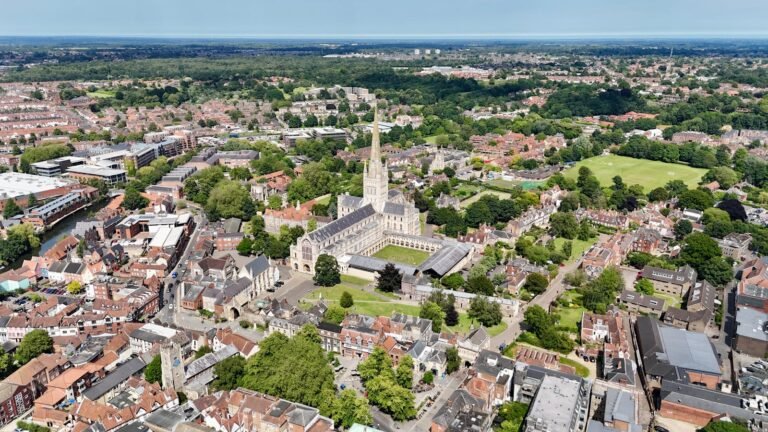
Norwich has the best connection and the most places to work outside the house. Gigabit-capable broadband reached 92.5% of premises in the city in September 2026. Work in Norwich, the city’s business improvement district, lists 11 co-working spaces, among them St George’s Works on Colegate, the Norfolk Chambers Business Hub on Agricultural Hall Plain and The Penthouse on St Vedast Street, all in the city centre.
Greater Anglia runs 33 trains each weekday from Norwich to London Liverpool Street, the fastest taking 1 hour 39 minutes and most about 1 hour 50. Cambridge is 1 hour 11 minutes direct on the fastest train. The Golden Triangle, the Victorian terraces between Newmarket Road, Unthank Road and Earlham Road, is walkable to the centre and the Lanes; terraces in NR2 sold for a median of £280,000 in the year to June 2026. Cinema City, Norwich Arts Centre and the Playhouse are all in the centre.
Wymondham
Wymondham is the pick if Cambridge is where you have to show up. Direct trains reach Cambridge hourly, the fastest in 1 hour 4 minutes, and Norwich in 13 to 16 minutes. There is no direct London train; the fastest weekday journey is 2 hours 1 minute to King’s Cross with one change, or 2 hours 14 minutes to Liverpool Street changing at Norwich (Trainline shows advance fares).
Across South Norfolk, 77.3% of premises could get full fibre in September 2026, and Openreach‘s checker will tell you whether a particular address is one of them. Detached houses in Wymondham sold for a median of £347,500 in the year to June 2026. For a break in the day there is the Abbey, the Friday market, a Waitrose on Norwich Road and a leisure centre with a pool.
Still deciding where in Norfolk?
Get the free Norfolk Relocation Pack: all 46 towns we cover on one table, on price, council tax, population, trains and distance to Norwich, plus a week-by-week move checklist. The download appears here as soon as you enter your email.
Unsubscribe any time.
Diss
Diss is the pick for anyone who still has to get to London. Greater Anglia’s intercity trains stop every 30 minutes in each direction, and the fastest reaches Liverpool Street in 1 hour 22 minutes and most take 1 hour 30 to 1 hour 38. The fastest trains reach Norwich in 17 minutes.
The saving against the Home Counties is large. The UK House Price Index put the Hertfordshire average at £469,474 in July 2026 and South Norfolk’s at £311,587, and Diss is cheaper than its district: the median of 138 sales in the town in the year to June 2026 was £263,000. For time away from the desk there is the six-acre Mere and the park beside it, Diss Publishing’s bookshop on Mere Street, the Corn Hall arts centre and the Cock Inn on Fair Green.
Holt
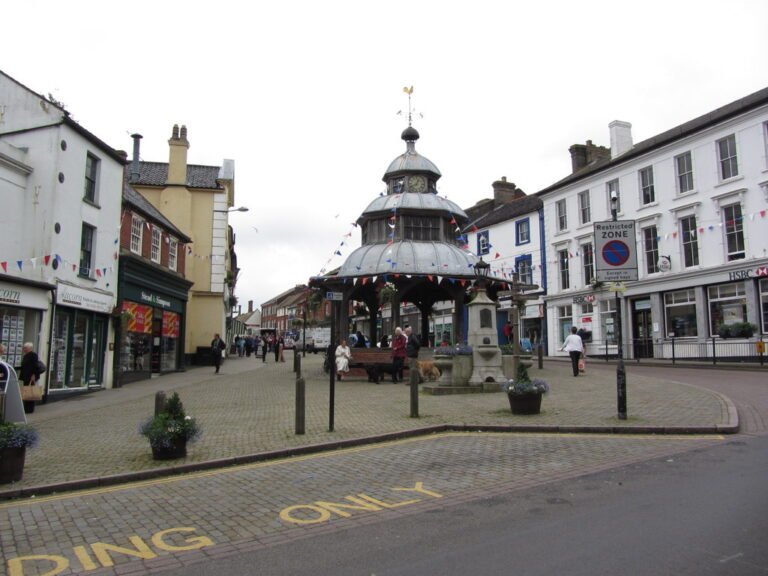
Holt is for people who almost never travel for work. It has no railway station, and North Norfolk has the weakest full-fibre coverage of the districts on this page, 64.1% of premises, although 96.2% can get superfast speeds. Check the address before you buy.
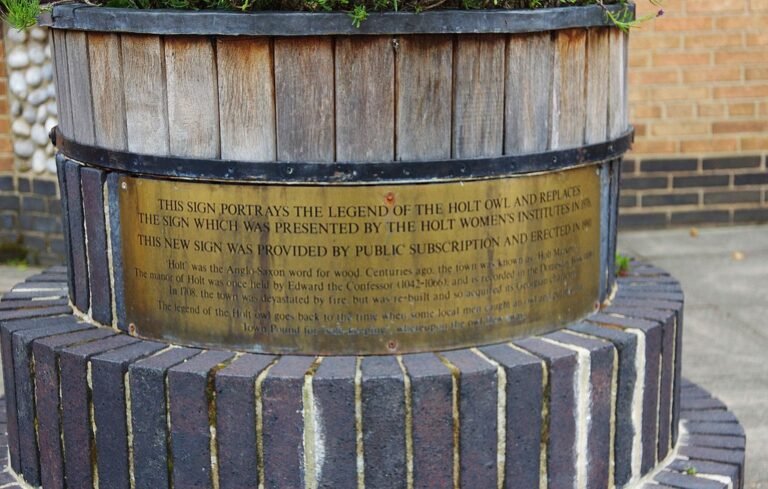
What you get is a town centre of independent shops, Bakers and Larners’ department store and food hall, and the coast about ten minutes’ drive north. The Lawns on Station Road has a bar and restaurant open to non-residents, which is somewhere to meet a client. It costs more than anywhere else on this list: the median of 85 sales in the year to June 2026 was £335,000.

Thorpe St Andrew
Thorpe St Andrew is on the city’s eastern edge with the Yare along its southern side. In September 2026, 84.4% of Broadland premises could get full fibre and 87.6% gigabit speeds. The Green Line 14 and 14A buses run every 30 minutes on weekdays, and the ride from River Green to Castle Meadow takes about 11 minutes, which makes a day at a city co-working desk easy.
For a lunchtime walk there is River Green by the water, and Whitlingham Country Park across the Yare, reached by road through Trowse, has about 2.3 miles of level path round the Great Broad. Thorpe is not cheaper than the city. The median sale in the NR7 0 postcode sector in the year to June 2026 was £300,000, against £236,000 across the Norwich council area, but a semi there cost a median of £282,250, about the same as a Golden Triangle terrace.
Read our full Thorpe St Andrew guideAttleborough
Attleborough is the cheapest place on this list with a station. It is on the same Norwich to Cambridge line as Wymondham, with an hourly Greater Anglia train, and the fastest reaches Cambridge in 57 minutes and Norwich in about 20. Semis in the town sold for a median of £241,000 in the year to June 2026, and across Breckland 75.5% of premises could get full fibre in September 2026. The town has a Sainsbury’s superstore on the High Street and a Thursday market in Queens Square.
Read our full Attleborough guideFrequently asked questions about remote working in Norfolk
Where is the best place in Norfolk for remote working?
Norwich, for gigabit broadband, the most co-working space and 33 direct trains a weekday to London. Choose Diss if you need London often, Wymondham or Attleborough if you need Cambridge, and Holt only if you rarely travel.
Is Norfolk broadband fast enough for remote work?
In the towns, usually. In September 2026 at least 96% of premises in each district on this page could get superfast speeds, and full fibre reached between 64% (North Norfolk) and 84% (Broadland). Rural lanes are where it fails, so check the exact address.
Are there coworking spaces in Norfolk?
Norwich has the most. Work in Norwich, the city’s business improvement district, lists 11, including St George’s Works on Colegate and the Norfolk Chambers Business Hub on Agricultural Hall Plain. Check any market-town option directly before you rely on it.
What are the advantages of remote working from Norfolk?
The main one is the price of space. The average Norwich home cost £224,323 in July 2026, less than half the Hertfordshire average of £469,474, and the fastest train from Norwich reaches London Liverpool Street in 1 hour 39 minutes and most take about 1 hour 50.
Plan the move
How we produced this guide
Broadband coverage is thinkbroadband’s district data for September 2026. House prices are HM Land Registry Price Paid Data, standard sales in the 12 months to June 2026, and district averages come from the UK House Price Index for July 2026. Train times are from Greater Anglia’s and Trainline’s journey planners, and the Thorpe St Andrew bus times from bustimes.org timetables. The co-working count is from the Work in Norwich directory, with addresses checked on the spaces’ own websites. Drive times are typical times on the main roads. See our methodology page for source links.
Data sources: thinkbroadband, HM Land Registry, Greater Anglia, Work in Norwich. Period covered: broadband September 2026; house prices to July 2026. Author: Tom Fletcher, Property and Transport Editor.
Last reviewed
Planning a move to Norfolk?
Our guides to hiring the firms a move needs.
We earn no commission on these links. Paid placements are sold separately and always labelled. See our advertising and disclosure page.